


When cells exert pressure: how the pancreas grows
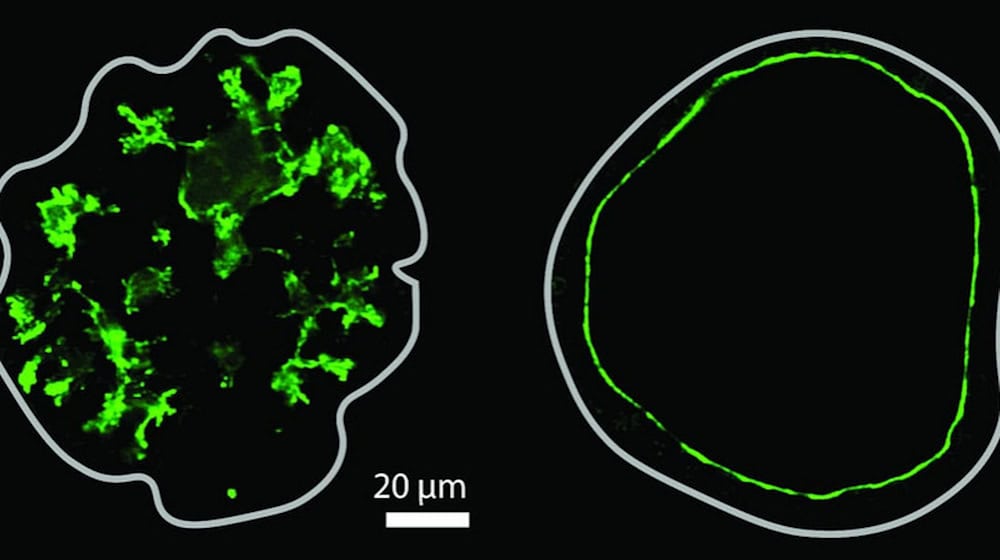
Our pancreas works like a sophisticated transport system. It sends digestive enzymes through fine channels into the small intestine. But how does this branched network of cavities form during development in the womb? Researchers at the Max Planck Institute of Molecular Cell Biology and Genetics in Dresden have now elucidated the central mechanisms of this process.
The scientists cultivated miniature pancreases from mouse cells in a petri dish. These three-dimensional structures are called organoids. "Depending on the medium, pancreatic organoids can form either large spherical lumens or narrow, complex, interconnected lumen structures," explains Byung Ho Lee, lead author of the study. Researchers refer to the fluid-filled cavities in organs as lumens.
Three factors determine the shape
The team combined experiments with computer simulations and found out what the shape of these cavities depends on. Three factors work together: Firstly, the speed at which the cells grow, secondly, the pressure inside the lumen and thirdly, the permeability of the surrounding tissue.
The researchers altered these parameters through targeted interventions. They used chemical agents that influence cell growth and pressure. If there was a lower pressure and strong cell growth at the same time, complex, star-shaped structures were formed. These resemble the branched ducts of a real pancreas. The pressure remains low because the surrounding tissue is permeable and fluid can escape.
Targets for new therapies
The results could have significance beyond the pancreas. Similar mechanisms are also likely to play a role in other organs with branched canal systems. In addition, the model system offers new starting points to better understand the development of diseases and to test the effect of drugs in a targeted manner.
Researchers from the University of Tokyo, the Institute of Physics at Academia Sinica in Taiwan and the Institut de Génétique et de Biologie Moléculaire et Cellulaire in France took part in the study alongside the Dresden team.

