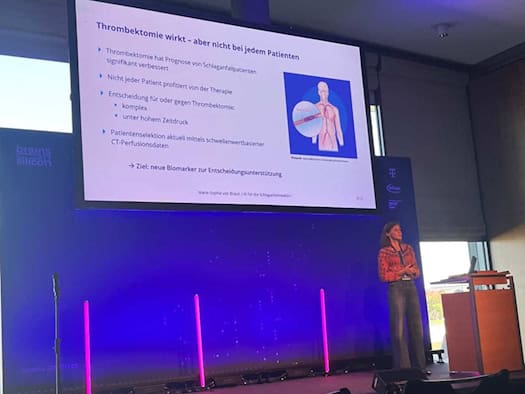
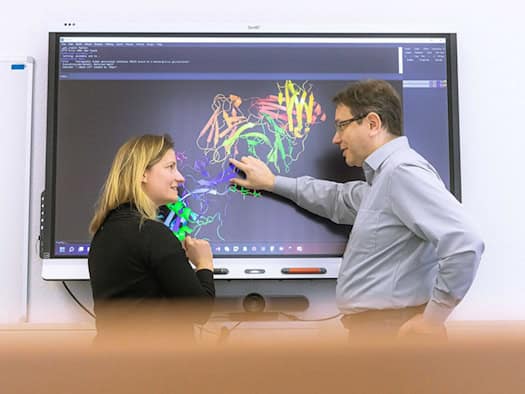
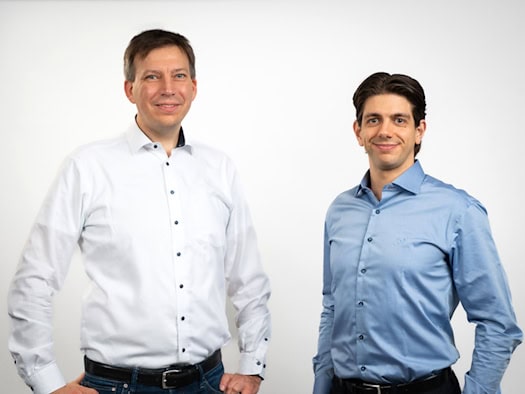
Dresden. Researchers at ScaDS.AI are developing an AI model for stroke care. It is intended to help assess which patients are suitable candidates for thrombectomy on a more individualized basis. | more
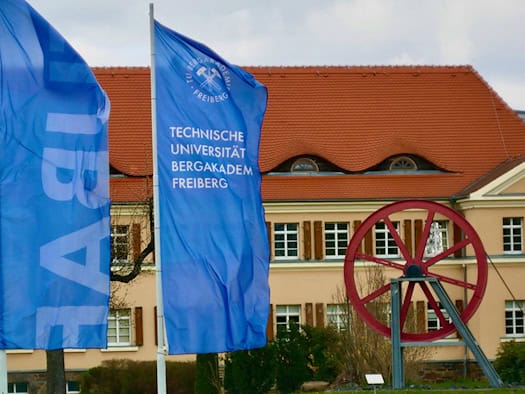
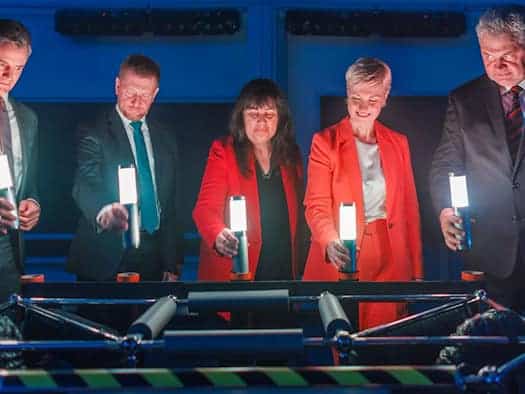
Tiny charges determine how well cell phones, solar cells, and chips function. A new facility in Berlin will soon make their movement visible in real time. The technology behind it was developed by the TU Bergakademie Freiberg in collaboration with partners. | more
Gute Nachrichten tun gut. In unserem freitäglichen Good Newsletter bündeln wir die Geschichten, die Mut machen, inspirieren und zeigen, was in Sachsen vorangeht. Jetzt abonnieren und positive Nachrichten direkt ins Postfach bekommen. | more
With Volkswagen and its suppliers, Southwest Saxony has long been a stronghold of the automotive industry in Saxony. But the future is uncertain. By investing in science, the Free State of Saxony aims to shape its own future. | more
How does heavy metal affect our perception of pain? Researchers from Leipzig turned the Wacken Open Air festival into an open-air laboratory. They measured how heavy metal alters the perception of pain in 122 metal fans right there at the festival. | more
Using a helicopter and drones, researchers in the Ore Mountains plan to explore a tin deposit deep underground from the air. Here’s how it works and where this new method is being used. | more
Die Ostsächsischen Maschinenbautage widmen sich am 28. und 29. Oktober dem Thema „Robotik im Maschinenbau“ und zeigen, wie Automatisierung und Nachhaltigkeit für kleine und mittlere Unternehmen zusammengehen. Nutzen Sie Kolloquium, Kooperationsbörse und Unternehmensbesichtigungen, um wertvolle Kontakte zu knüpfen und die grüne Zukunft des Grenzraums mitzugestalten. | more
Saxony is facing an aging population and a shortage of skilled workers. South Korea is focusing on digitalization and robotics. Could that also serve as a model for the Free State of Saxony? | more
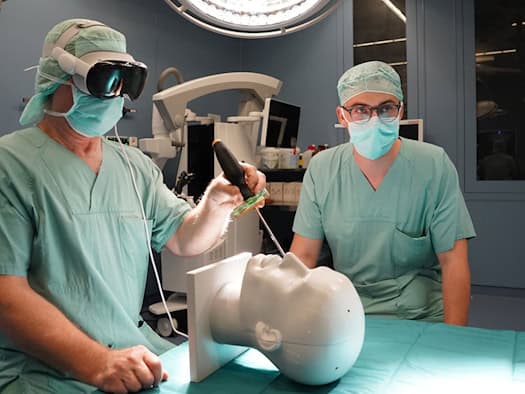
How Apple's Vision Pro smart glasses are helping surgeons worldwide perform surgeries more quickly and with less stress—and why Apple still has to wait for the billion-dollar market. | more
Schon wieder zu viel gegessen oder eine wichtige Aufgabe aufgeschoben? Oft reagieren wir auf solche Verhaltensweisen mit Selbstkritik. Doch damit bekämpfen wir meist nur das sichtbare Symptom – und übersehen, was wir in diesem Moment wirklich brauchen. | more
It is one of 14 centers of excellence: The Cancer Center in Dresden will once again receive financial support in the coming years. | more
It is one of 14 centers of excellence—and the first to span multiple states. The Central German Cancer Center will once again receive financial support in the coming years. | more
In jedem Verein, in jeder Straße, in jedem Treppenhaus gibt es diesen einen Menschen, der einfach da ist – ohne Bezahlung, ohne Applaus, oft ohne ein einziges Dankeschön. DIE SACHSEN NEWS startet eine neue Serie und sucht genau diese Menschen: Sachsens Alltagshelden. Und die Chancen stehen gut, dass Sie selbst schon eine oder einen kennen. | more
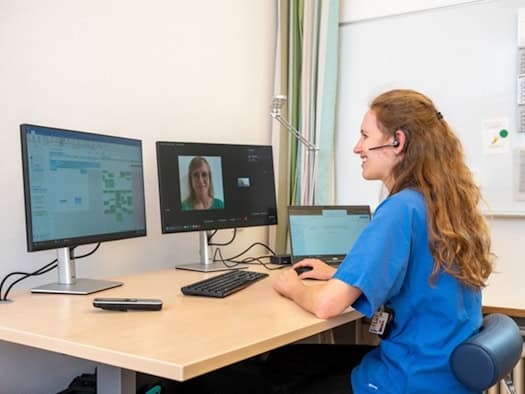
Children with cancer often have to go to the hospital during chemotherapy. A study now shows that many of these appointments can safely be replaced with video consultations, which significantly eases the burden on families. | more
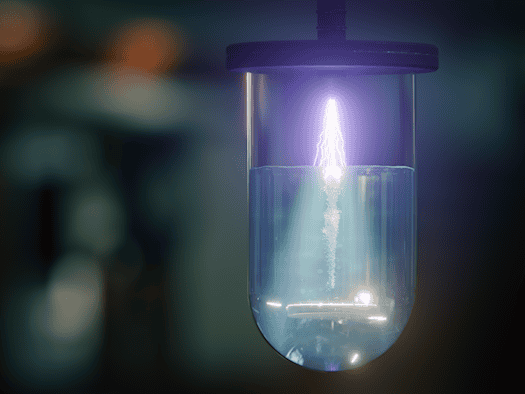
PFAS are considered one of the greatest environmental problems of our time. Researchers at the Helmholtz Center Dresden-Rossendorf have now developed two methods for breaking down these "forever chemicals" in the laboratory. | more
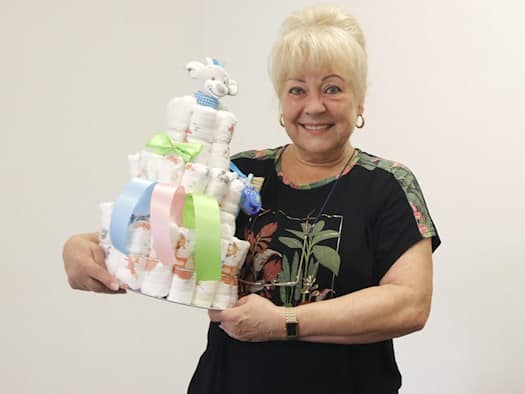
In Dresden-Pieschen fertigt Andrea Rehn im Zentralwerk personalisierte Geschenke für frischgebackene Eltern und deren Familien. Besonders gefragt sind bestickte Windeln mit Geburtsdaten sowie kreative Windeltorten – und das nicht nur online, sondern auch deutschlandweit über DM-Märkte. Jetzt gibt es 10 Prozent Rabatt im Shop. | more
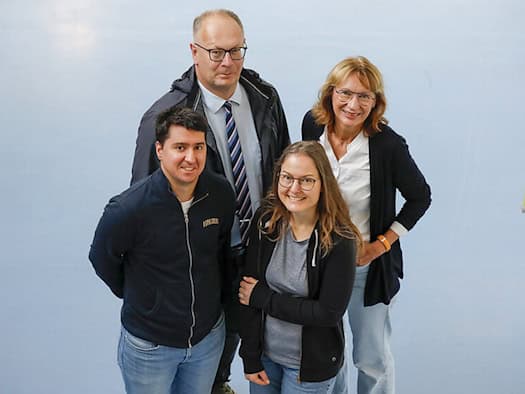
Whether it's COVID-19 or monkeypox, viruses mutate at a rapid pace. A new research consortium involving the University of Leipzig now aims to use computer tools to decode viruses more quickly and thus be better prepared for future outbreaks. | more
How did Hannibal manage to cross the Alps with 37 war elephants? A new computational model provides strong evidence to answer this 2,200-year-old question. | more
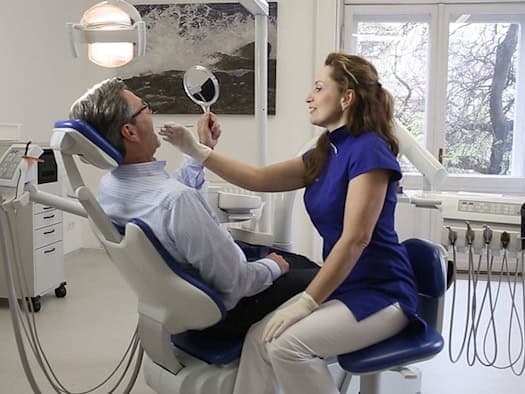
Zahnbehandlungen können in Deutschland schnell zur finanziellen Belastung werden. Besonders bei Implantaten, Kronen, Brücken oder umfangreichem Zahnersatz liegen die Kosten häufig im vierstelligen Bereich. Viele Patienten stehen dann vor einer schwierigen Entscheidung: Behandlung durchführen lassen und hohe Eigenanteile zahlen – oder den Eingriff aufschieben, obwohl er medizinisch sinnvoll wäre. | more
Why do we make certain decisions? A research team from Dresden, Berlin, and Basel is using large language models to uncover the reasons behind our everyday and major decisions. | more
When wounds keep getting infected and antibiotics no longer work, the situation becomes dangerous. Researchers in Leipzig are now turning to an unusual combination: silver particles, dyes, and light. The results point to new possibilities for wound care in the future. | more
Gute Nachrichten tun gut. In unserem freitäglichen Good Newsletter bündeln wir die Geschichten, die Mut machen, inspirieren und zeigen, was in Sachsen vorangeht. Jetzt abonnieren und positive Nachrichten direkt ins Postfach bekommen. | more
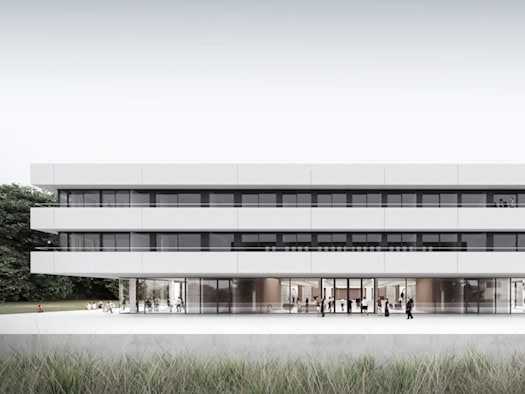
A new research building for digital sciences is being constructed at TU Dresden. In the future, up to 600 people are expected to work there on topics such as artificial intelligence and high-performance computing. The EU and the Free State of Saxony are investing 101 million euros. | more
Electric aircraft need more than just new propulsion systems. Researchers at Chemnitz University of Technology are working on a more efficient power supply system designed to make the flights of the future possible. | more
Die Ostsächsischen Maschinenbautage widmen sich am 28. und 29. Oktober dem Thema „Robotik im Maschinenbau“ und zeigen, wie Automatisierung und Nachhaltigkeit für kleine und mittlere Unternehmen zusammengehen. Nutzen Sie Kolloquium, Kooperationsbörse und Unternehmensbesichtigungen, um wertvolle Kontakte zu knüpfen und die grüne Zukunft des Grenzraums mitzugestalten. | more
Hydrogen, groundwater protection, or environmental education: Saxony and the Czech Republic are supporting new joint projects. The EU is providing approximately 11 million euros for this purpose. | more
Researchers at the NCT/UCC in Dresden, working with an international team, have developed proteins that glow inside the body. The light they emit penetrates deeper into tissue than ever before. The discovery could help detect cancer cells more precisely during surgery. | more
Schon wieder zu viel gegessen oder eine wichtige Aufgabe aufgeschoben? Oft reagieren wir auf solche Verhaltensweisen mit Selbstkritik. Doch damit bekämpfen wir meist nur das sichtbare Symptom – und übersehen, was wir in diesem Moment wirklich brauchen. | more
Tiny particles in the air influence whether clouds form and how much the Earth warms up. Researchers from TROPOS in Leipzig have therefore traveled to the Irish coast together with partners and are sending drones into the air above the ocean. What they discover could fundamentally improve climate models. | more
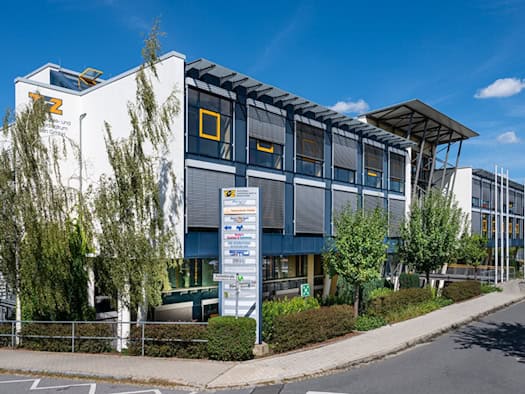
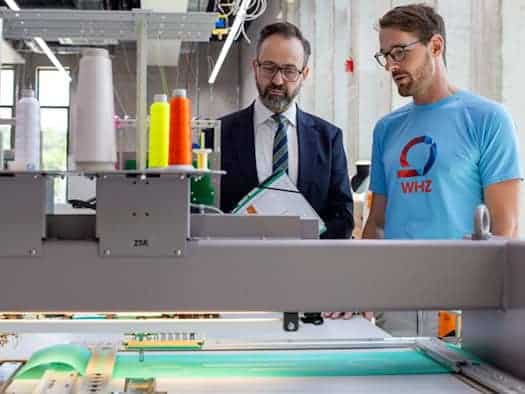
The West Saxon University of Applied Sciences has opened its new technical center in Zwickau. Among other things, sustainable textiles are to be developed in the university’s largest research building in the future. Which materials will be used for this purpose? | more
In jedem Verein, in jeder Straße, in jedem Treppenhaus gibt es diesen einen Menschen, der einfach da ist – ohne Bezahlung, ohne Applaus, oft ohne ein einziges Dankeschön. DIE SACHSEN NEWS startet eine neue Serie und sucht genau diese Menschen: Sachsens Alltagshelden. Und die Chancen stehen gut, dass Sie selbst schon eine oder einen kennen. | more
With their new initiative, Mecklenburg-Western Pomerania and Saxony aim to pool their expertise and continue researching alternatives for energy production. The focus is particularly on one topic. | more
Every time a smart device “thinks,” a data point travels to the data center and back. Zittau/Görlitz University of Applied Sciences wants to change that in collaboration with partners from industry and academia. As part of the EdgeVision joint project, they are developing an AI chip that performs computations directly within the device – quickly, efficiently, and without an internet connection. | more
In Dresden-Pieschen fertigt Andrea Rehn im Zentralwerk personalisierte Geschenke für frischgebackene Eltern und deren Familien. Besonders gefragt sind bestickte Windeln mit Geburtsdaten sowie kreative Windeltorten – und das nicht nur online, sondern auch deutschlandweit über DM-Märkte. Jetzt gibt es 10 Prozent Rabatt im Shop. | more
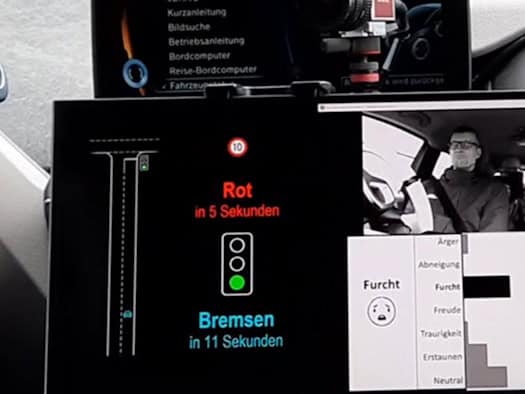
Self-driving cars that can tell when their passengers are feeling unwell—and react immediately: As part of the STADT:up project, researchers at Chemnitz University of Technology have developed a system that analyzes facial expressions in real time and is designed to make autonomous driving in the city safer and more comfortable. | more