


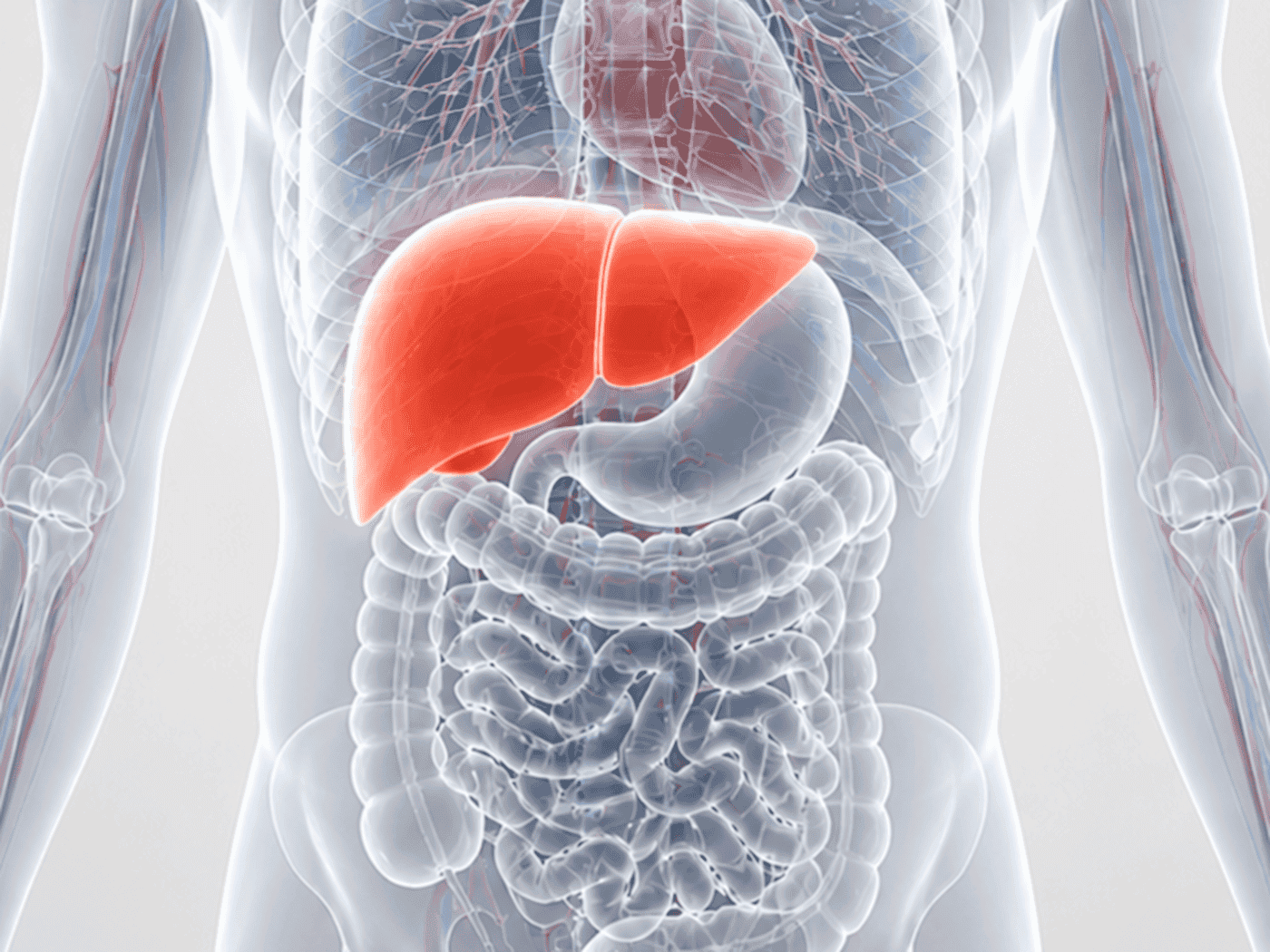
More than 200,000 people in Germany are newly diagnosed with liver cirrhosis each year. The liver becomes scarred and deformed — and at some point, blood can no longer flow properly through the organ. This can lead to life-threatening bleeding or the accumulation of fluid in the abdomen. A team in Dresden has now introduced an improved treatment approach that could benefit patients.
At the end of April, doctors at the University Hospital Carl Gustav Carus Dresden used a new-generation stent for the first time worldwide outside of a clinical trial. The stent is part of the so-called TIPS procedure (transjugular intrahepatic portosystemic shunt). In this procedure, a small tube is inserted into the liver to connect two key blood vessels: the portal vein, which carries blood from the abdominal cavity to the liver, and the hepatic vein, which transports it onward. This artificial connection allows the blood to flow more easily, reducing the dangerous pressure in the liver.
When the liver no longer works properly
In a healthy liver, blood flows through the organ without difficulty. In liver cirrhosis, however — caused by alcohol, hepatitis viruses, fatty liver disease or metabolic disorders — the tissue becomes scarred. Blood flow is obstructed, and pressure increases. Doctors refer to this as portal hypertension. The body then forms alternative pathways through thin-walled vessels. These can rupture and cause severe bleeding. Alternatively, fluid may accumulate in the abdomen, a condition known as ascites.
Doctors initially try to manage these symptoms with medication. If this is not sufficient, a TIPS stent can be inserted. TIPS procedures have been used for years to treat severe complications of liver cirrhosis. The new generation of stents represents a further development designed to tailor treatment more precisely to individual patients. Studies in recent years have shown that early use of a TIPS stent can reduce the need for repeated procedures to remove abdominal fluid and may also improve survival
New generation of stents is more precise and gentler
The new stent generation allows the procedure to be adapted even more precisely. One key advantage is that narrower stents are often sufficient to reduce pressure. This lowers the risk of a serious side effect known as hepatic encephalopathy — a disorder of brain function that occurs when the damaged liver can no longer adequately filter toxins from the blood. Patients may experience fatigue, difficulty concentrating or confusion.
The Dresden Institute of Diagnostic and Interventional Radiology has been involved in developing the new stent for several years. Its director, Ralf-Thorsten Hoffmann, led the international clinical trial. “We are very proud to now be able to use the results of our work in routine clinical practice and to be the first worldwide to apply the stent outside of a clinical trial,” he says. For him, this is both a clinical and scientific milestone.
The Medical Director of the hospital, Uwe Platzbecker, also sees the development as significant: “This example from our interventional radiology department reflects our commitment to translating innovation into clinical practice and continuously improving diagnosis and treatment for the benefit of patients.”

