


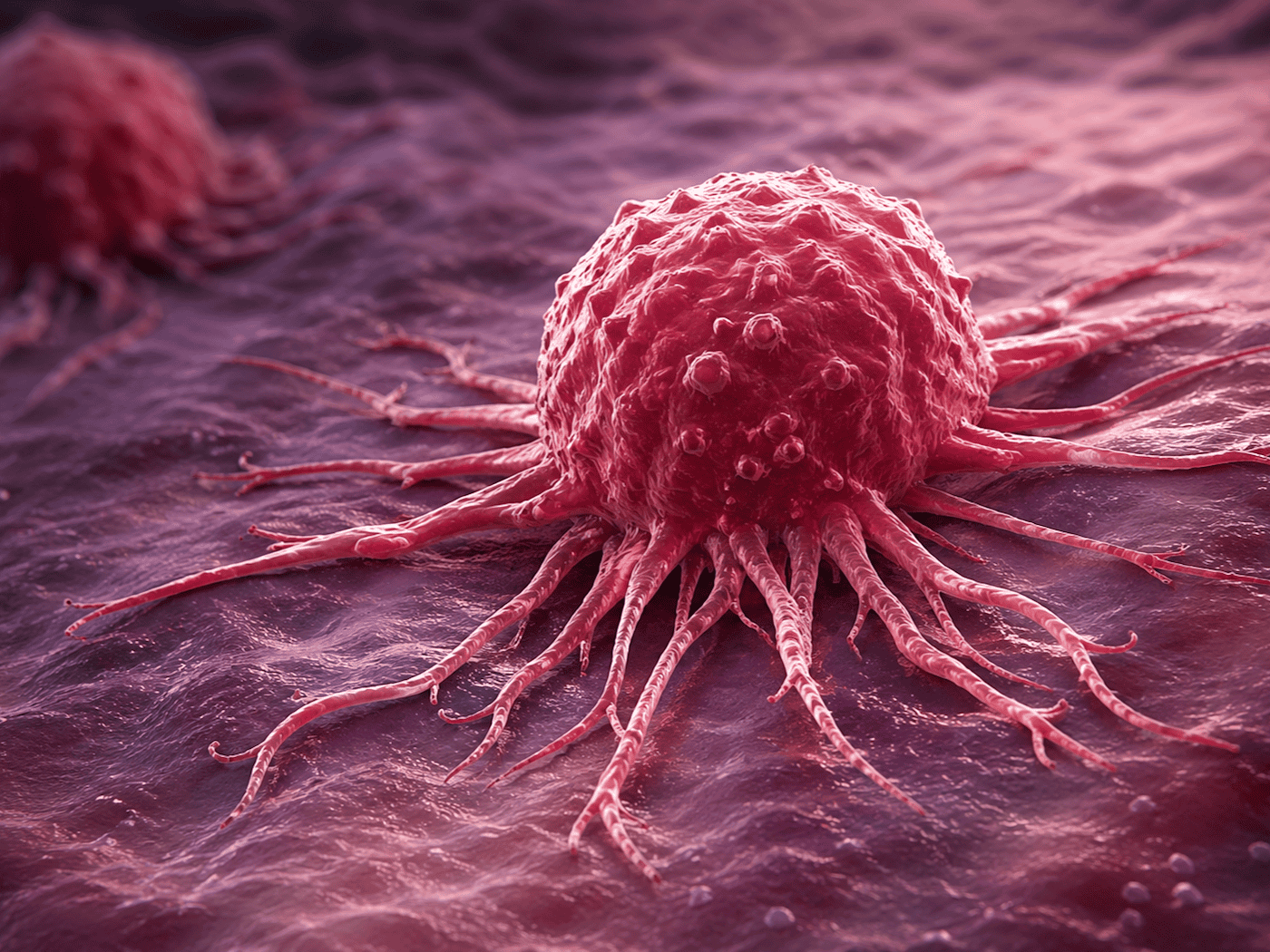
How cancer develops from healthy cells is still not fully understood. A research group in Dresden is working to make these processes more visible. Their tool is a gel.
Prof. Daniela Lössner and her team at the Leibniz Institute of Polymer Research Dresden have developed a so-called hydrogel. This soft, water-rich material behaves similarly to real body tissue. The researchers embed cancer cells in the gel and observe what happens. In this way, they create a model that reproduces important properties of a real tumor.
Why an artificial tumor model?
Researching real tumors is difficult. Inside the living body, many processes are hard to observe or manipulate in a targeted way. In the laboratory, however, scientists can precisely control the conditions surrounding the tumor tissue. The hydrogel can be adapted to mimic the environment of a tumor, including the chemical signals that cells exchange with one another.
The team combines laboratory experiments with computer-based analysis. Large amounts of data are evaluated to better understand how tumors grow and interact with their surroundings. This helps researchers identify which biological processes influence tumor growth.
Better tests, new possibilities
The approach could also offer practical advantages. If drugs are tested not only on simple cell cultures but also on more realistic tissue models, the results may be more transferable to the human body. This could help researchers develop more targeted therapies and reduce animal testing. Three-dimensional tissue models are becoming increasingly important in cancer research because many conventional cell cultures fail to reproduce the complex environment of a tumor. Hydrogels are considered especially promising because they can mimic important properties of human tissue. Researchers hope this will provide more precise insights into tumor behavior and create better conditions for testing new drugs.
The IPF Sponsors’ Association has now honored the team’s work with the 2025 Innovation Award. Daniela Lössner conducted the research together with Dr. Ali Nadernezhad, Dr. Sandra Hauser, and Dr. Verena Kast. The award recognizes an approach that combines materials science and cancer research to investigate tumor processes in greater detail.

