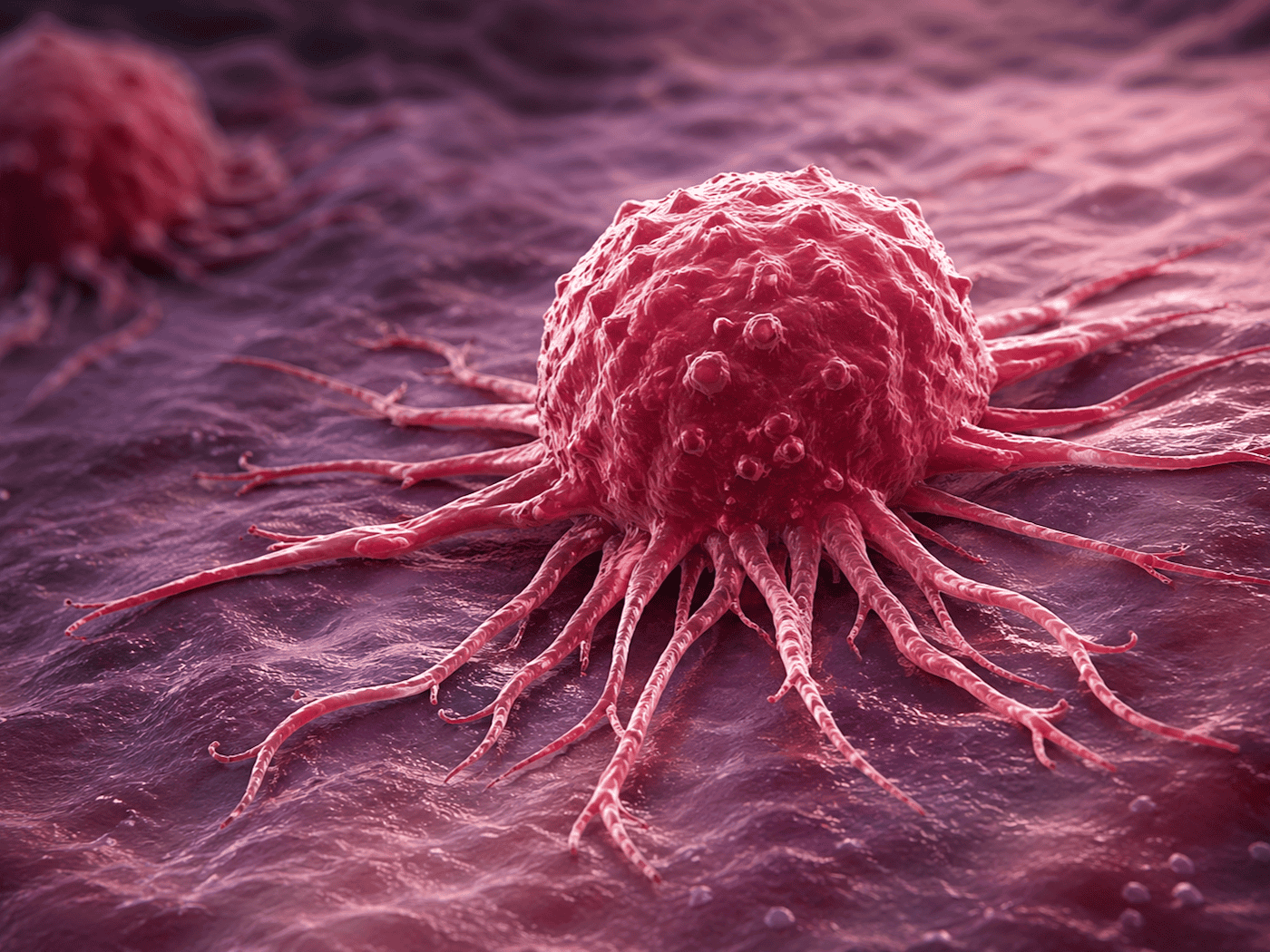
When breast cancer affects the bone, it begins behind the scenes. Until now, this process could hardly be observed. Researcher Jana Sievers-Liebschner from the Leibniz Institute of Polymer Research Dresden and her colleagues have developed a gel model that mimics bone tissue in a deceptively realistic way. This makes it possible for the first time to observe how cancer cells penetrate the bone - and what can stop them. | more
The smartphone, the solar cell, the electric car battery - each of these everyday objects is the result of years of materials research. In Dresden, two Leibniz Institutes want to radically shorten this process with artificial intelligence. Their joint project aims to predict which materials and combinations will work before the first experiment even starts. | more
Das europäische Austauschprogramm Erasmus für Jungunternehmer eröffnet nicht nur sächsischen Gründern und etablierten Unternehmen neue internationale Perspektiven. Das TGZ Bautzen begleitet das Netzwerk auch künftig als erfahrener Partner. | more
In future, nanoparticles will be used to distribute drugs in the body in a targeted manner. But how does the blood react to these tiny helpers? A study from Dresden shows that both the mass and number of particles are crucial. | more