


Researchers test new approach against precursor of leukemia
Fatigue, pale skin, brittle bones: people affected by a certain bone marrow disease often suffer from several serious symptoms at the same time. A research team in Dresden has now investigated a substance that could potentially target two of these problems simultaneously. The results were published in the journal HemaSphere.
The disease is called myelodysplastic neoplasia, or MDS for short. In people with MDS, the bone marrow produces too few healthy blood cells, often leading to anemia. At the same time, bones can become more fragile because inflammatory processes in the bone marrow damage bone structure. MDS is considered a precursor to leukemia, a form of blood cancer. Existing treatments have often focused on individual aspects of the disease rather than addressing multiple processes at once.
A substance with a dual effect
Researchers at the National Center for Tumor Diseases Dresden, known as NCT/UCC Dresden, investigated the drug tasquinimod. The substance has anti-inflammatory properties and affects signaling pathways involved in inflammation. In laboratory experiments and preclinical models, the researchers observed two important effects: tasquinimod improved impaired blood formation while also reducing damage to bone tissue.
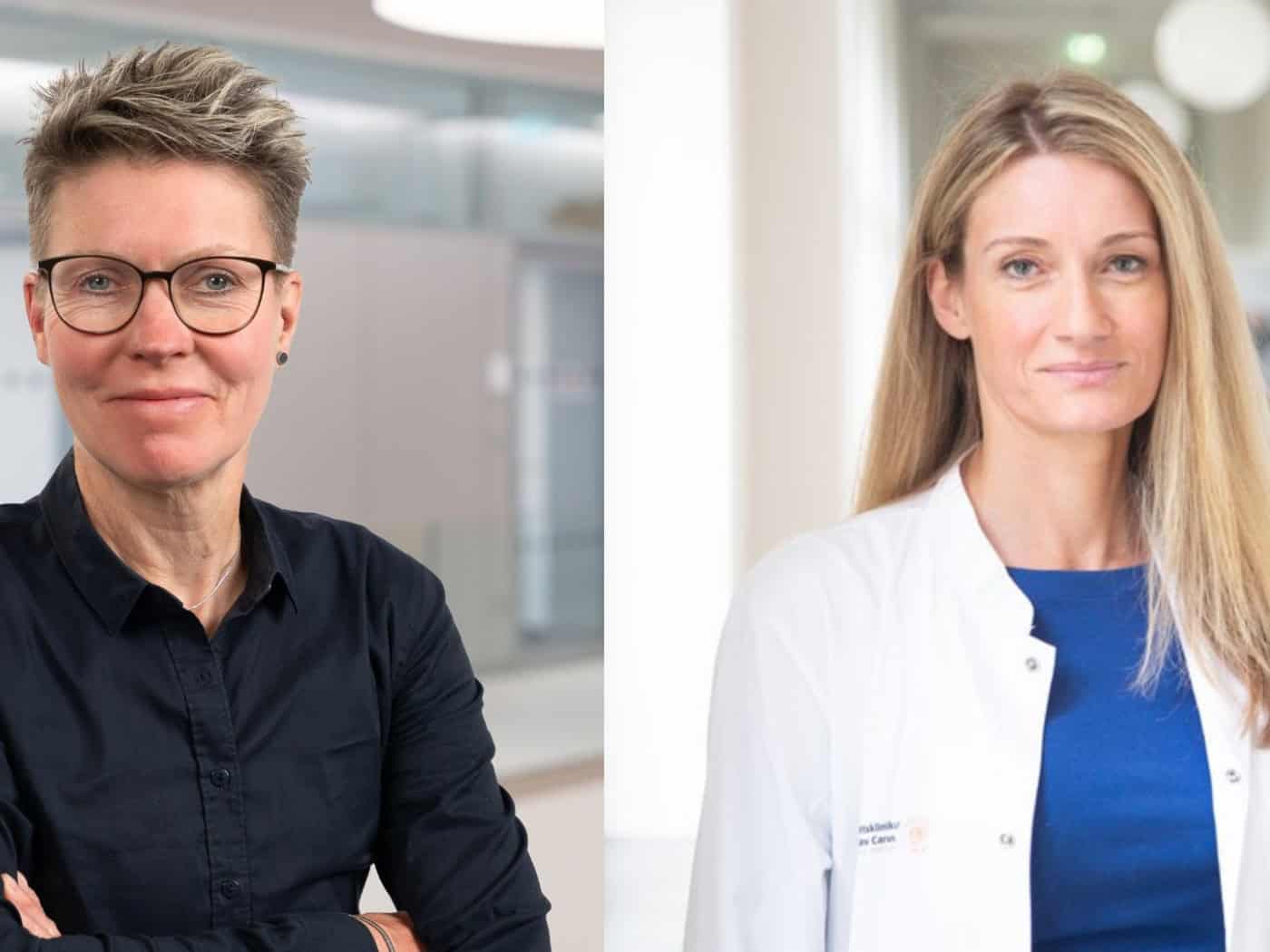
“We were able to show in vitro that adding tasquinimod improves the function of important support cells in the bone marrow and increases the production of red blood cells,” explains Prof. Manja Wobus, first author of the study and group leader at the Laboratory for Experimental Hematology at University Hospital Carl Gustav Carus Dresden. “In vitro” means that the experiments were conducted outside a living organism in the laboratory. “In addition, an MDS mouse model showed improved bone structure, suggesting that the substance could potentially address two central aspects of the disease at the same time.”
Why MDS research matters
In myelodysplastic neoplasia, treatments have traditionally focused mainly on impaired blood formation. At the same time, inflammatory processes in the bone marrow are attracting growing attention because they may also influence bone loss and disease progression. Substances that could affect several of these processes simultaneously are therefore considered especially promising. The next step will be to further develop the substance for possible clinical studies. “From my perspective, this would be the next logical step toward an integrative treatment strategy that considers both blood formation and bone health and could improve long-term care, especially for patients with low-risk MDS,” says Dr. Katja Sockel, a specialist in internal medicine and hematology.
The collaboration between a biologist and a physician was a deliberate part of the Dresden research approach. “Joint research by a biologist and a physician working as a tandem has proven highly successful in Dresden for tackling complex cancer research projects,” says Prof. Martin Bornhäuser, Director of Medical Clinic 1 and one of the managing directors of the NCT/UCC Dresden. Several research groups from Dresden University Hospital and the Faculty of Medicine at Technische Universität Dresden were involved in the study..
Publication:
Wobus, M., Weidner, H., Wehner, R., Baumann, A.-L., Möbus, K., Balaian, E., Törngren, M., Vahtola, E., Eriksson, H., Winter, S., Platzbecker, U., Chavakis, T., Hofbauer, L.C., Rauner, M., Bornhäuser, M. and Sockel, K. (2026), Preclinical efficacy of tasquinimod in myelodysplastic neoplasms: Restoring erythropoiesis and mitigating bone loss. HemaSphere, 10: e70352.

