


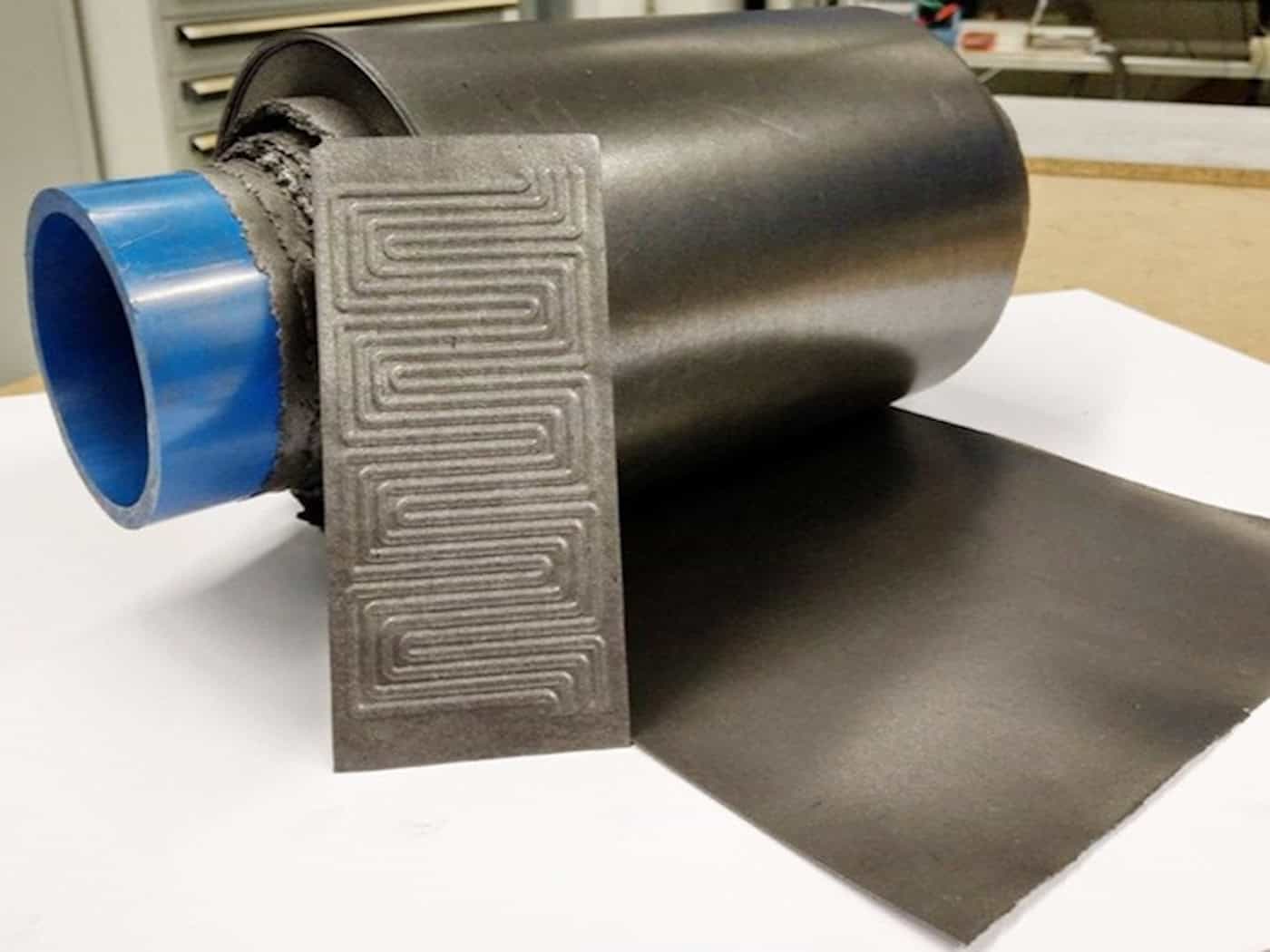
Hydrogen is seen as the beacon of hope for the energy transition. However, the technology is often still expensive. One reason is the central components in fuel cells. Researchers from Dresden are working on a solution.
A new coating has been developed at the Fraunhofer Institute for Electron Beam and Plasma Technology. It could make important components cheaper and more durable at the same time.
Expensive titanium, low-cost alternative
Bipolar plates are used in fuel cells and electrolysers. They conduct electricity and ensure the distribution of gases and liquids.
These plates are often made of solid titanium. The material is stable and corrosion-resistant, but expensive. Cheaper alternatives made of plastic and graphite already exist. However, they lack a protective surface.
This is precisely where the research comes in. The Dresden researchers are developing a thin layer of titanium that is applied to these composite materials. This should give them similar properties to solid titanium.
This is also a key topic internationally. Studies show that the costs of hydrogen technology depend heavily on such components. Lighter and cheaper materials are seen as the key to widespread use.
Coating without heat damage
The challenge lies in the detail. The plastic base of the panels is sensitive to heat. Conventional processes would damage it. The team therefore uses a special vacuum process. Titanium is vaporized and deposited as a thin layer. At the same time, the temperature is precisely controlled.
This creates dense layers with good conductivity and protection against corrosion. "Our investigations show that composite bipolar plates with thin titanium layers can be functionally equipped in such a way that they can become a real alternative to solid titanium plates - while maintaining the temperature limits of the polymers," says Stefan Saager, head of the Coating, Metal and Energy Technology Group at Fraunhofer FEP.
The technology is designed in such a way that it can later be used industrially. Continuous production processes in which large quantities are coated are conceivable. This could make hydrogen technology more affordable. This is crucial if it is to become established in everyday life.

