


Cloud Puzzle: Leipzig researchers aim to improve climate models
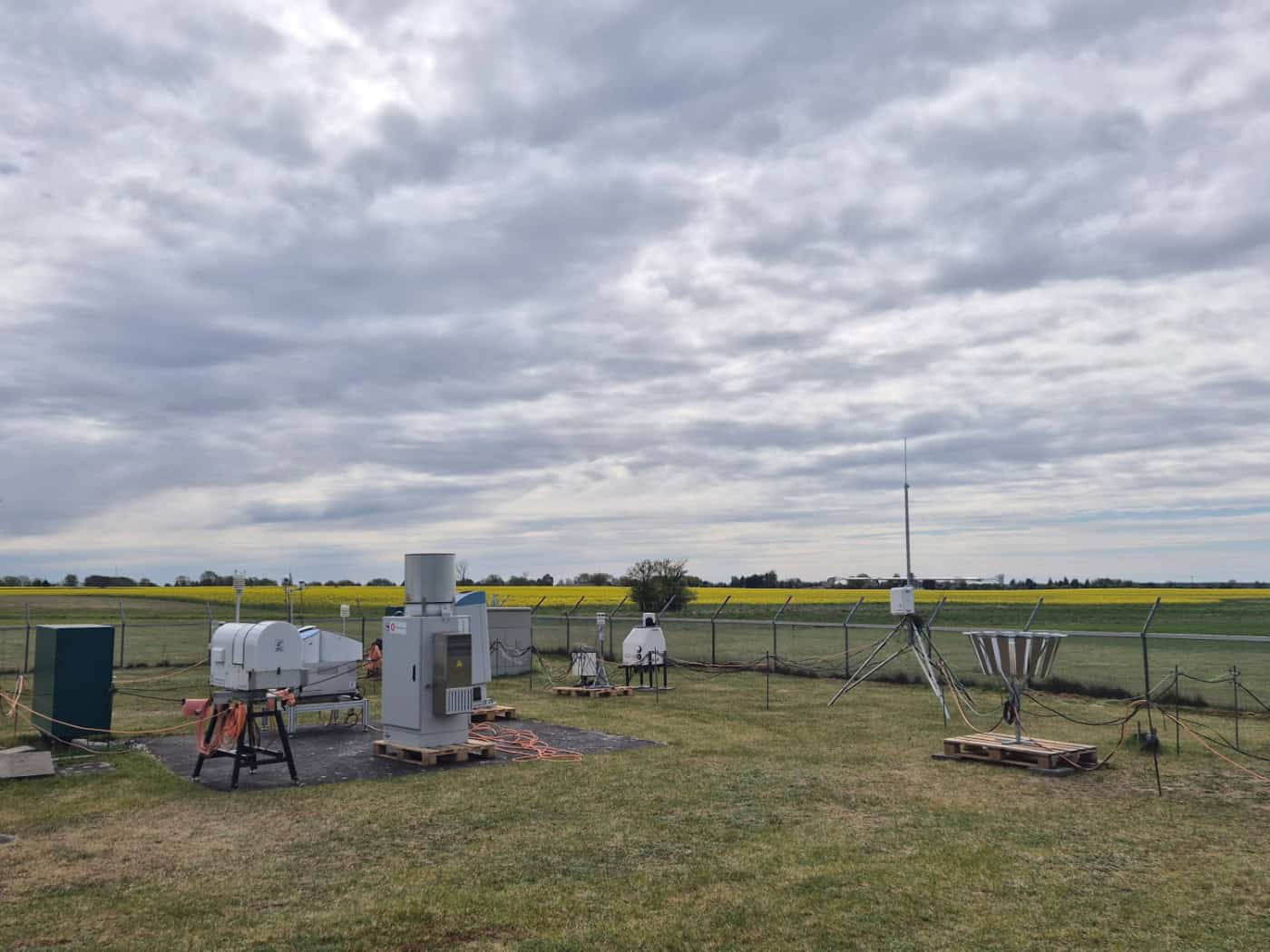
When you look out the window in the morning and see clouds, you rarely think about how difficult they are for scientists to understand. Yet clouds remain one of the biggest uncertainties in weather and climate models. They influence how much sunlight reaches the Earth, how strongly the atmosphere warms and how weather and climate patterns evolve. This is exactly what researchers from Leipzig, together with more than 40 scientists from across Europe, now want to investigate in greater detail.
The C3SAR measurement campaign — short for “Cloud 3D Structure and Radiation” — will take place southeast of Berlin from May to August 2026. For the first time, researchers aim to measure in detail how the three-dimensional structure of clouds affects solar radiation. Many weather and climate models still simplify clouds considerably. In reality, however, clouds have highly complex structures that influence how sunlight is scattered, reflected and absorbed.
Sensors, drones and a helicopter
At the center of the campaign is the Lindenberg Meteorological Observatory of the German Weather Service. Scientists have been studying the atmosphere there for more than 120 years. More than 35 instruments will be used during the campaign. The Leibniz Institute for Tropospheric Research (TROPOS) in Leipzig is leading the project and has set up a network of 45 small sensors. These so-called pyranometers measure how much solar radiation reaches the ground across an area of nearly ten by ten kilometers.
At the same time, drones operated by the University of Tübingen, the Technical University of Braunschweig and the Finnish Meteorological Institute will fly through the clouds. TROPOS will also deploy one of the campaign’s most unusual instruments: ACTOS, a platform suspended beneath a helicopter on a 150-meter cable. The system is pulled through clouds to measure, among other things, the size and number of water droplets. These properties help determine how strongly clouds influence solar radiation..
Why the measurements matter
The data collected during the campaign should help researchers represent clouds more realistically in weather and climate models. In the long term, this could improve both weather forecasts and climate projections. Andreas Macke from TROPOS expects that combining measurements from the ground, the air and satellites will provide a much more accurate picture of how clouds influence solar radiation.
In a second phase, the research is expected to expand to sites across Europe, Africa and the polar regions, allowing scientists to compare cloud structures around the world more systematically.

