


Lynx migrates from the Bohemian Forest to Saxony
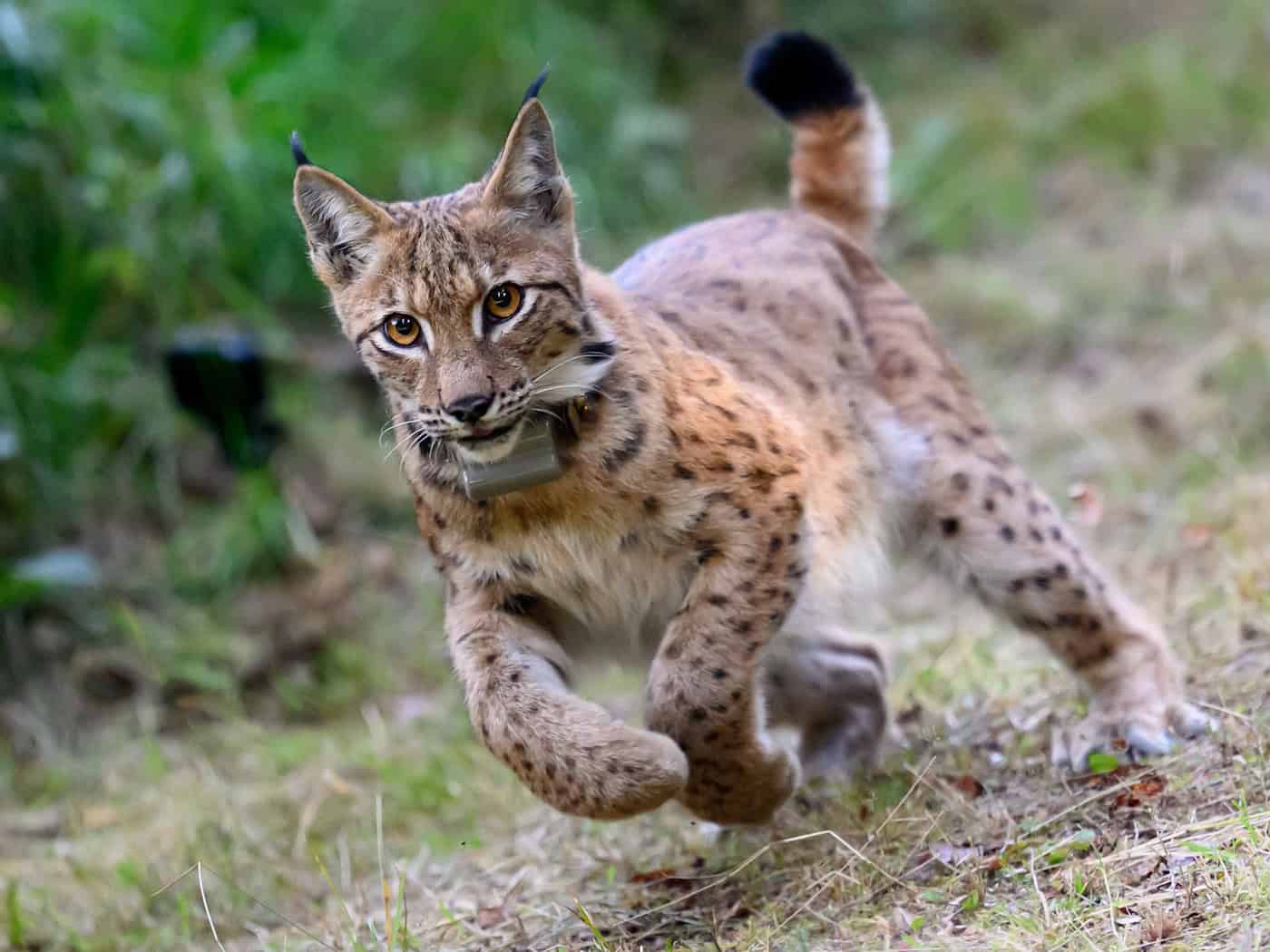
Saxony's small lynx population has grown thanks to an immigration from Bohemia. After the feline predator fell into a photo trap several times in the Eibenstock area since the beginning of February, the animal has now been identified, according to the State Office for Environment, Agriculture and Geology. According to the Czech National Park Administration, it is Bardi from the Bohemian Forest. Its unmistakable characteristic spot pattern quickly led to this result when comparing images. The lynx is just under two years old and was born in the spring of 2024 in the Bohemian Forest, it said. "In the winter of 2025, Bardi left the territory of his lynx mother and set off in search of his own territory. On his migration to the Western Ore Mountains, he was only captured once by wildlife camera traps in the Klatovy region south of Pilsen in the summer of 2025. Therefore, neither its exact migration route nor the kilometers covered are known," said the state office. As the crow flies, the distance from the region where the lynx was born to the Westerzgebirge is around 160 kilometers. The long migration is considered to be of great importance for the Saxon lynx project. This is because Bardi meets the lynxes that have been released into the wild here in recent years in the Westerzgebirge. It is very likely that Bardi competed with the male lynx Chapo for the female Alva. The lynx mating season is between February and April. Should Bardi settle permanently in the Westerzgebirge, he could strengthen the local, still small and developing population. According to the state office, the Bohemian-Bavarian-Austrian lynx population is one of the most important in Central Europe and plays a central role in connecting other European populations. It was founded in the 1970s and 1980s as part of reintroduction projects based on a small number of animals from the Western Carpathians. This means that Bardi belongs to the same subspecies as the lynxes previously released into the wild in Saxony. Since 2024, seven lynxes have been released into the wild in the Eibenstock Forest in Saxony, including the two wild-caught animals Alva and Nova from Switzerland. Anton is no longer alive, he was run over by a car. Two more lynx are due to be released into the wild in late summer 2026. Copyright 2026, dpa (www.dpa.de). All rights reservedBardi ended up in Saxony in search of its own territory
Lynx from the Bohemian Forest could refresh Saxony's population
Seven lynxes released into the wild in Saxony so far

