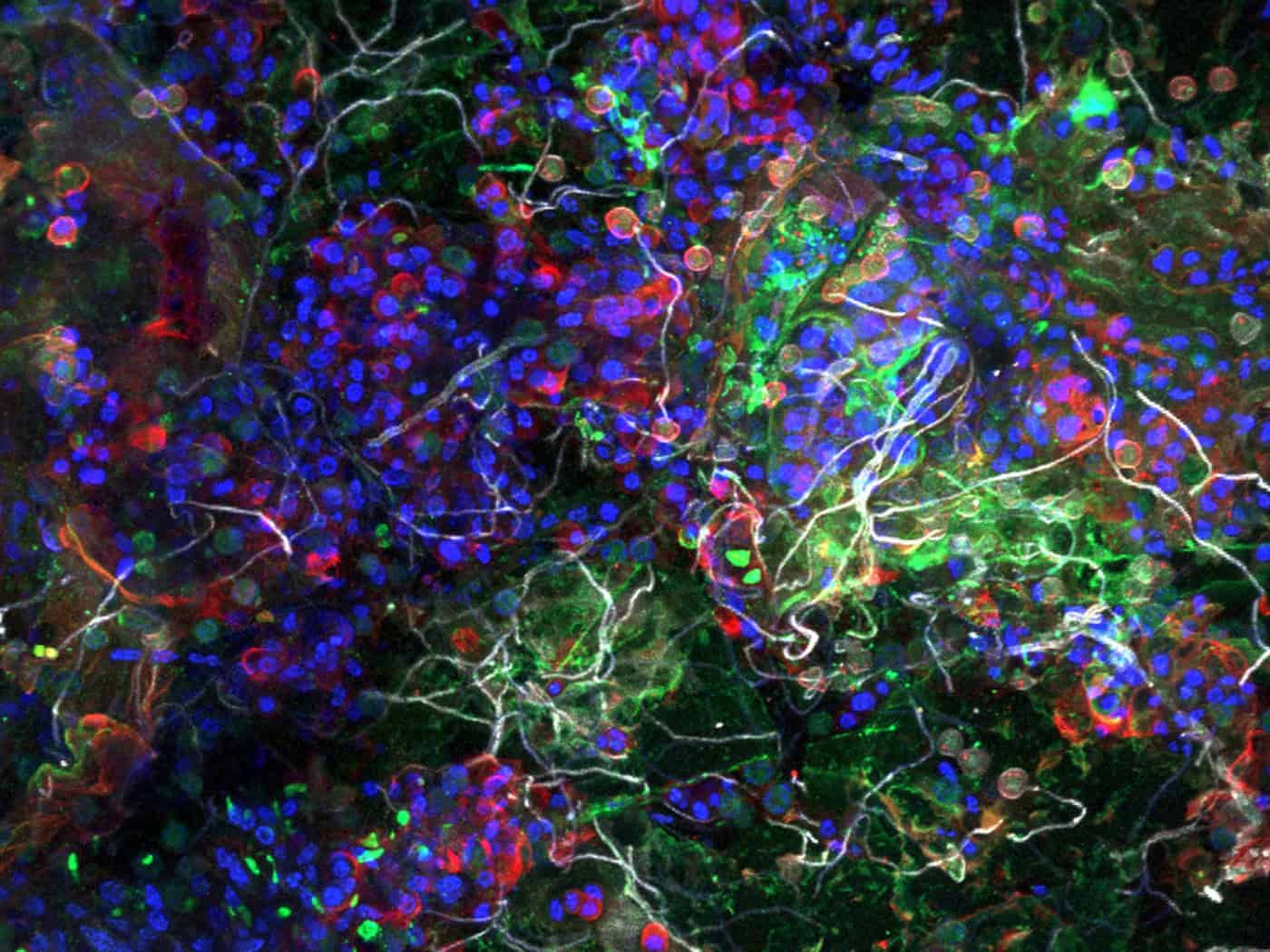
Every year, millions of tons of plastic end up in the sea. We are familiar with images of dead birds and turtles entangled in plastic waste. But what happens to the tiny particles we can't see? Researchers from Leipzig and Kiel have gained important new insights – insights that are as surprising as they are worrying.
Trillions of plastic particles float in the world's oceans. Many of them collect in huge ocean eddies, known as garbage patches. Something unexpected has developed there: an ecosystem of its own. Scientists call it the plastisphere. Bacteria, fungi, algae, and viruses live densely packed on tiny plastic surfaces.



No reason to sound the all-clear
So is this a success story for nature? It is not. "This is not a good sign for the oceans, because only their original state is considered healthy – and any deviation from this is seen as deterioration," says Lips. The microbes can even form comparatively large amounts of biomass on plastic, creating nutrient-rich microhabitats in the otherwise nutrient-poor ocean. The plastic creates new habitats, but it does not disappear as a result.
The study is one of a growing number of international research projects on the plastisphere. While scientists have long focused on which microorganisms live on plastic, there is now increasing attention on how these communities function. The new results show that microbes on plastic are not there by chance, but are specifically adapted to this habitat. "Since microbes use plastic primarily as a habitat, it is not to be expected that they will eliminate it," adds GEOMAR microbiologist Dr. Erik Borchert. The study, published in Environmental Pollution, makes it clear: reducing plastic pollution is the only way to address the problem.
Publication:
Stefan Lips, Mechthild Schmitt-Jansen, Erik Borchert: Metagenomic analyses of the plastisphere reveals a common functional potential across oceans. Environmental Pollution, 395, 127830 (2026).