


Tracking trafficked turtles: Dresden researcher helps return animals to the wild
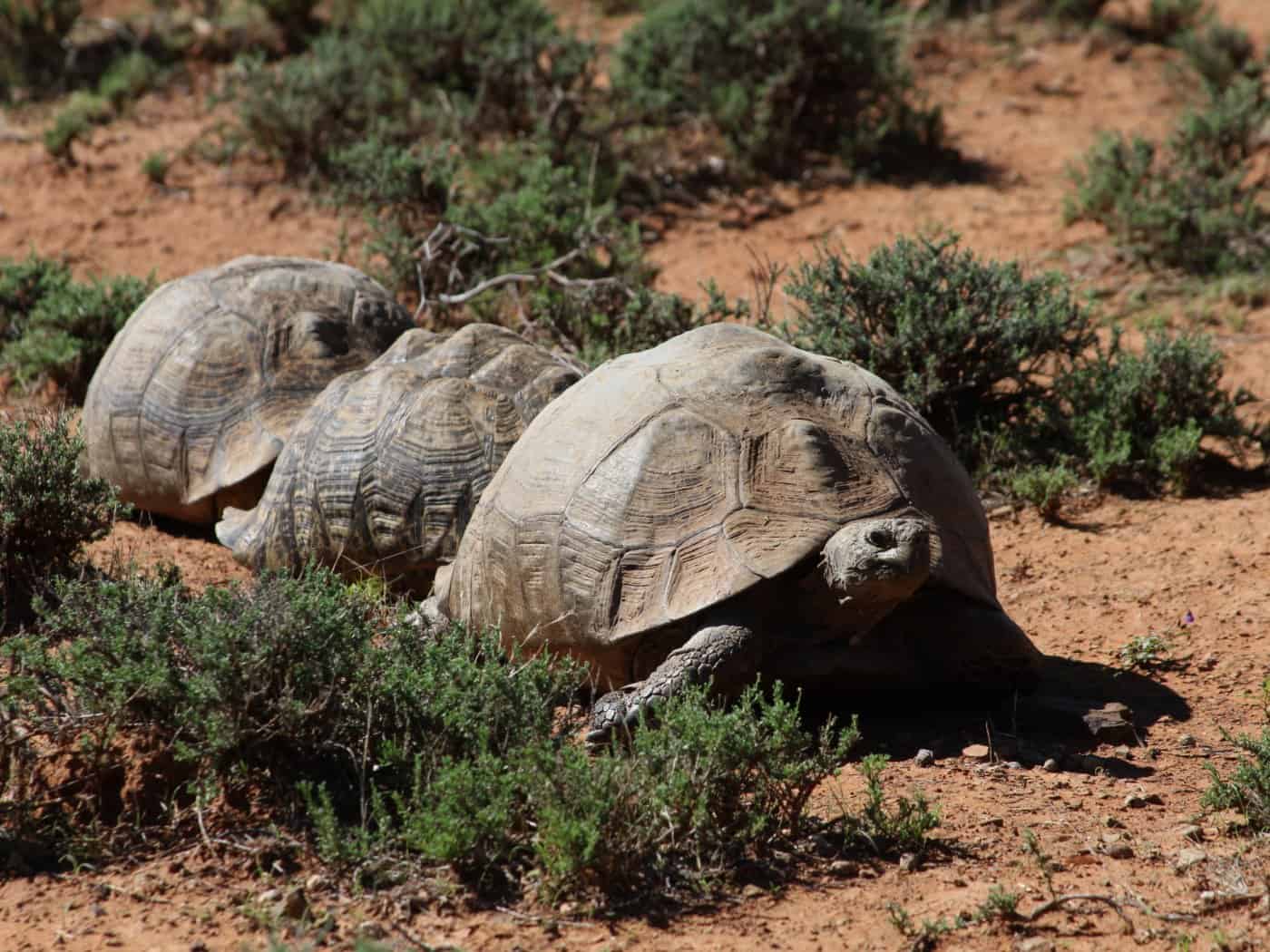
Whoever removes an animal from the wild tears it from its natural habitat. These animals often also lose any connection to their place of origin. This is exactly what happens to many panther tortoises in South Africa. They are illegally captured, traded and passed on, eventually ending up in sanctuaries far from where they were born. A researcher at the Senckenberg Natural History Collections in Dresden has now developed an approach to return them to their native habitats using DNA.
Dr. Melita Vamberger, together with South African scientist Dr. Adrian J. Armstrong, has established and expanded a genetic reference database for panther tortoises. Such a database works much like a genetic fingerprint. It stores the characteristic DNA profiles of animals from specific regions. When a confiscated tortoise is examined, its genetic profile can be compared with this data to determine its region of origin.
What the genes reveal
The results surprised the researchers. Of the 50 animals examined from a sanctuary in KwaZulu-Natal Province, only one actually originated from that region genetically. “This shows how strongly illegal trade, translocations and private keeping disrupt the natural distribution patterns of this species,” says Vamberger. According to the International Union for Conservation of Nature, the panther tortoise is officially classified as “not threatened.” However, the animals still face significant risks in South Africa, including illegal trade and possession, use as a food source and in traditional medicine, fatal accidents at electric fences, and habitat loss due to urban expansion, overgrazing and slash-and-burn agriculture.
Releasing a tortoise into the wild without proper planning carries serious risks. The animals may end up in unsuitable habitats, spread diseases to native populations or disrupt local genetic diversity. This is why two things are essential before reintroduction: knowing the animal’s exact origin and ensuring careful preparation.
Freedom after six months of preparation
So far, 27 of the 50 genetically analyzed animals have been released back into the wild. All underwent an acclimatization phase of around six months. During this time, they were kept in secure enclosures within their future habitats, allowing researchers to monitor how well they adapted. Only then were they fully released. Depending on their genetic origin, the tortoises were released into different protected areas in the Eastern Cape, Northern Cape, Free State and Limpopo provinces. “This is crucial to ensure they are returned to the right place and that existing populations are strengthened in a meaningful way,” Vamberger explains.
Looking ahead, she calls for closer cooperation between conservation authorities, sanctuaries and research institutions – not only within South Africa, but across borders. The study was published in the journal Conservation Genetics.
Original publication:
Armstrong, A.J., Kropff, A.S., Kotze, A. et al. Back Home: first successful geographical assignment of rehabilitated leopard tortoises Stigmochelys pardalis using a conservation genetic database. Conserv Genet 27, 41 (2026).

