


New special camera detects rotten tomatoes and plastic counterfeits

Is the tomato really fresh? Is the jacket made of pure cotton or polyester? And how much fertilizer does the field really need? In future, questions like these can be answered in a matter of seconds. This is made possible by a new type of camera that researchers at the Fraunhofer Institute for Photonic Microsystems IPMS in Dresden are developing with partners in the OASYS project. It recognizes chemical properties that are invisible to the human eye.
The camera works with so-called hyperspectral technology. Put simply, it can not only see colors, but also analyze what a material is made of. This makes it possible to identify bruises on fruit, the composition of plastics or the nutrient requirements of plants. "With the compact hyperspectral camera, we are creating a technology that brings analytical processes to where they are needed: directly into production lines, sorting systems or onto the field," explains Heinrich Engelke from Fraunhofer IPMS.
Artificial intelligence decides where to measure
The Dresden research team combines two technologies. First, a conventional camera takes a high-resolution image. Then artificial intelligence takes over. It automatically recognizes interesting areas in the image and marks them. A built-in spectrometer only measures the chemical composition there. This clever trick saves an enormous amount of time, energy and storage space. Previous hyperspectral cameras analyze each image completely. This takes a long time and generates huge amounts of data.
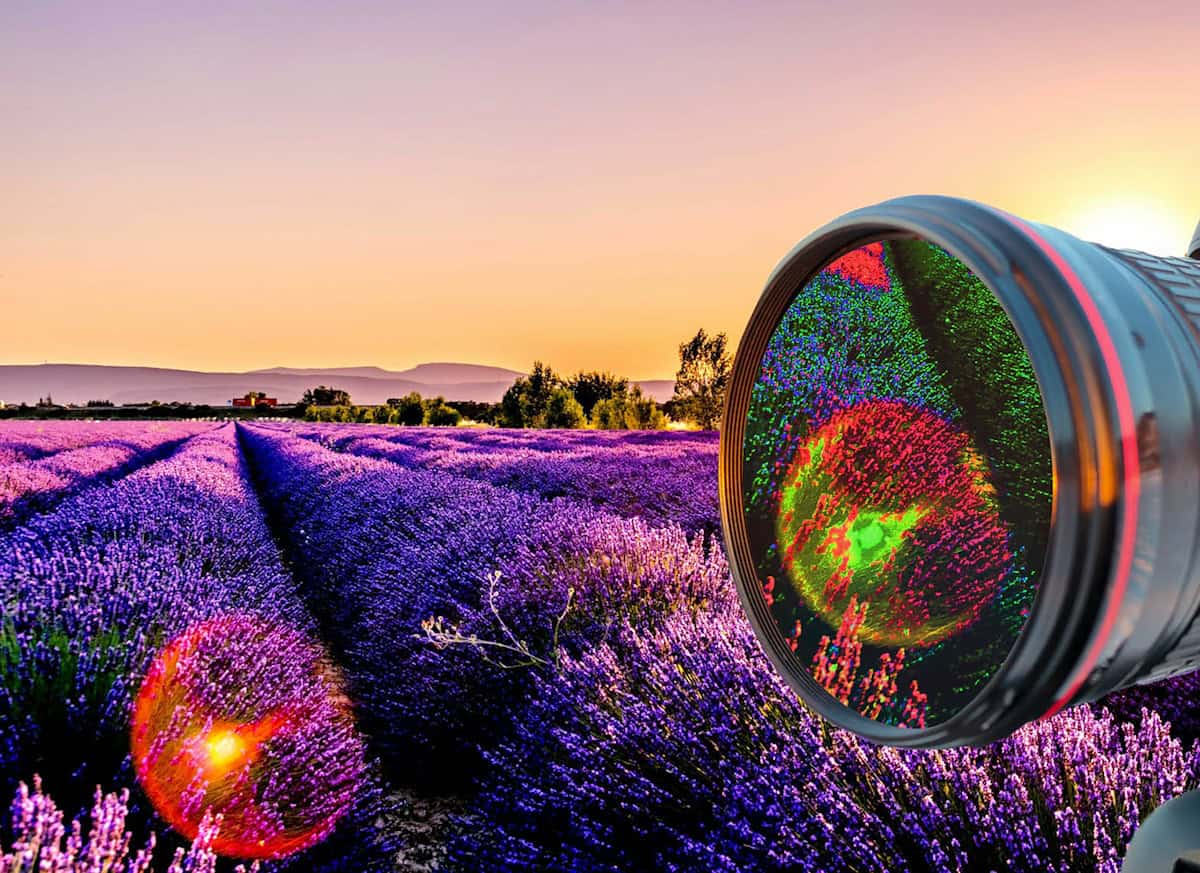
The new method makes the technology suitable for everyday use. Previously, such measurements were complex and expensive. The compact design now allows them to be used directly in factories, recycling plants or in agriculture. Decisions are made faster and more reliably. At the same time, resources are conserved.
From the sorting plant to the field
The possible applications are diverse. In the food industry, the camera detects defects before spoiled goods reach the market. Recycling companies can sort plastics more precisely and separate textiles according to material composition. This significantly improves the quality of recycled products. Product pirates also have a harder time: the camera recognizes counterfeit goods based on their chemical signature. In agriculture, it helps to use fertilizer in a more targeted manner.
Engelke emphasizes that the combination of miniaturization, energy efficiency and artificial intelligence opens up completely new application possibilities and at the same time makes an important contribution to resource conservation and process reliability. The project is being funded by the Federal Ministry of Education and Research with 12.5 million euros until 2028. In addition to the Fraunhofer IPMS, the Brandenburg University of Technology Cottbus-Senftenberg, the Ferdinand-Braun-Institut FBH and the IHP - Leibniz Institute for Innovative Microelectronics are also involved.

