

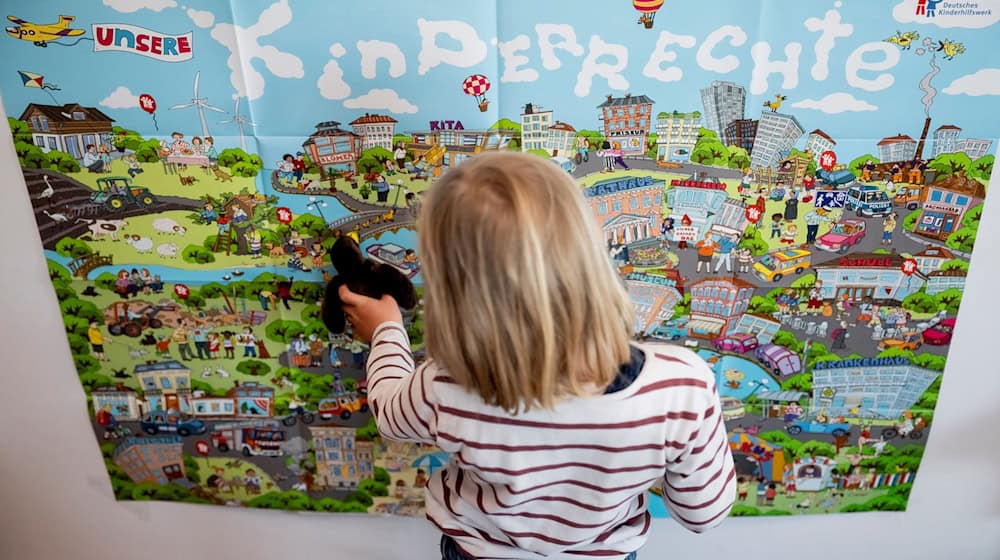
Too little say and a poor childcare ratio: there is a need for action on children's rights in Saxony. This is according to the "Children's Rights Index 2025" presented by the German Children's Fund in Berlin. According to the index, the Free State is in the middle of the pack compared to the other federal states and shows light and shade when it comes to implementing the UN Convention on the Rights of the Child. Saxony should lower the voting age at state and municipal level. In the Free State, people are generally only allowed to vote at the age of 18. In some federal states, the voting age for state and local elections has already been lowered to 16. In addition, support measures should increase the number of representative children's and youth committees and a state program should promote the establishment of municipal prevention networks against child poverty. According to Deutsches Kinderhilfswerk, there is a lack of an explicit legal entitlement to inclusive schooling in the education sector. In addition, there is still a lot of room for improvement in the staff-child ratio in early childhood education. According to the index, Saxony has strengths in the right to health and the right to rest and leisure, play and recreation as well as participation in cultural and artistic life. Particularly noteworthy are the good provision of pediatricians, the high number of hospital beds in pediatric and adolescent medicine and the low infant mortality rate. The low at-risk-of-poverty rate among children and young people as well as cultural offerings such as music schools and the quality and condition of school playgrounds and break areas or school toilets were also rated positively. Berlin, Brandenburg, Hamburg, Schleswig-Holstein and Thuringia were found to have implemented children's rights the best. Hesse, North Rhine-Westphalia, Rhineland-Palatinate, Saarland and Saxony-Anhalt were ranked below average. The Children's Rights Index 2025 of the Deutsches Kinderhilfswerk clearly shows "that the opportunities of young people in our country are not only distributed very differently depending on their parental home, but also regionally," said Anne Lütkes, Vice President of the Deutsches Kinderhilfswerk. There can be no talk of equal living conditions, rather the place of residence determines the extent to which children's rights are realized. Copyright 2025, dpa (www.dpa.de). All rights reservedThere is some catching up to do
Things are already going well
Who scored best in a comparison of the federal states?


