

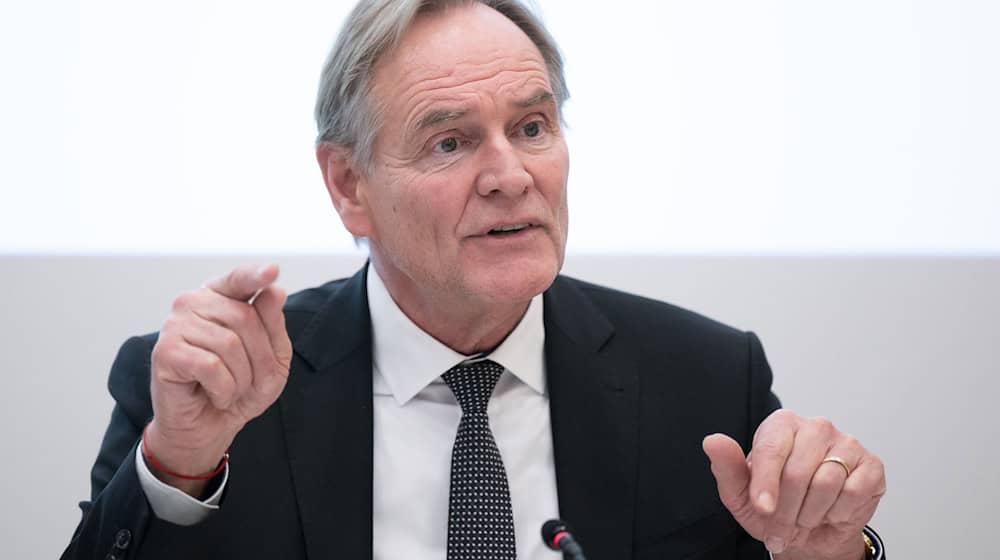
In view of the catastrophic financial situation of local authorities, the Association of German Cities is calling for immediate aid and far-reaching reforms at federal level. "We need help, otherwise essential areas that we finance locally will be massively jeopardized," said the President of the Association of German Cities, Lord Mayor Burkhard Jung from Leipzig, following consultations of the municipal umbrella organization in Dresden. This concerns the areas that municipalities implement in addition to their mandatory tasks, such as swimming pools, support for sports clubs, cultural activities, playgrounds and vacation care for children and young people. "The result is that citizens are increasingly experiencing a state that is no longer accessible to them, where they lose trust," warned Jung. "This is about the functioning and cohesion of our society," added Claudia Kalisch (Greens), newly appointed Vice President of the Association of German Cities and Mayor of Lüneburg. In her city, for example, voluntary expenditure has been reduced to three percent of the budget, so every additional hour of childcare has to be discussed. "It's hard to imagine that this message isn't getting through. Nobody can want that." Around 3,200 cities and municipalities with around 54 million inhabitants are members of the Association of German Cities. More than 100 city leaders came together for the two-day consultations in Dresden. The focus was on the largest deficit in municipal budgets in the history of the Federal Republic of Germany, according to the Association of Cities and Towns. Jung put it at over 30 billion euros for 2025 - almost five times as high as in 2023. In 2022, there was even a slight budget surplus. Social costs are a particular burden on local authorities. Jung specifically addressed the personal contribution to care costs, which the social welfare offices pay in full or in part if those in need of care are unable to afford the nationwide average of 3,245 euros per month themselves. "This is increasingly becoming standard financing," said Jung. According to him, costs in this area in Leipzig have doubled from 25 to 50 million euros per year over the past five years. Jung expressed confidence that solutions would be found in the coming weeks and months. In talks with Federal Chancellor Friedrich Merz (CDU), it had been agreed that the federal government, minister presidents and municipal umbrella organizations would meet in a confidential circle. The two sides will jointly consider how the municipalities can be relieved and where, for example, federal laws that are implemented in the municipalities are not sufficiently covered financially. This should also involve streamlining bureaucratic processes and more efficient structures. As examples, Jung cited a nationwide immigration authority and a central office for vehicle registrations instead of over 400 corresponding offices in the cities, municipalities and districts. Copyright 2026, dpa (www.dpa.de). All rights reservedAssociation of Cities calls for help - otherwise cuts are imminent
Record deficit puts pressure on cities and municipalities
Jung hopes for solutions in the coming months


