loading

Nachrichten werden geladen...

Fertility treatment: How Saxony helps couples financially

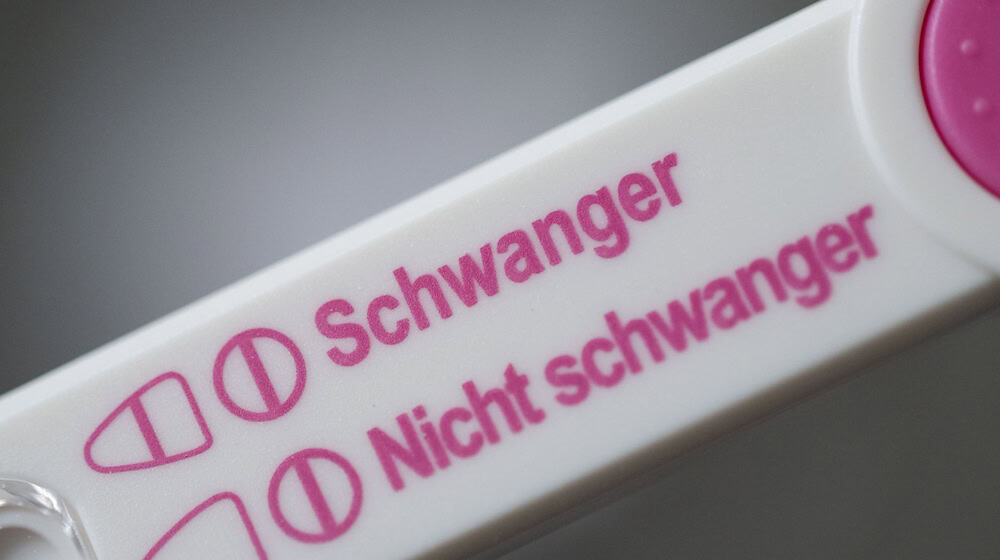
Anyone who wants fertility assistance in Saxony must comply with strict rules - and same-sex couples are excluded. (Symbolic image) / Photo: Marijan Murat/dpa

The number of funded fertility treatments in Saxony has fallen significantly. Who gets how much money and why same-sex couples who want to have children are left empty-handed.

Many couples in Saxony remain unintentionally childless - not only for medical reasons, but also for financial reasons. To make it easier for them to access treatment, the Free State of Saxony supports certain fertility therapies with subsidies. This is the responsibility of the Saxony Municipal Social Association, which awards grants for fertility treatments. Since the beginning of 2024, only state funds have been available for this purpose; the federal government is currently no longer involved.

According to the KSV, 1,051 treatments were funded in Saxony in 2025. Accordingly, funds amounting to around 325,000 euros were provided. On average, around 309 euros were paid out per treatment. At 1,088, the number of applications to the KSV last year was significantly lower than in previous years (2023: 1,542 applications). This means that the number of applications has fallen by almost 30 percent since federal funding was discontinued.

Who is eligible for funding in Saxony? On the one hand, married couples consisting of a man and a woman with their main residence in Saxony are eligible. On the other hand, opposite-sex couples in a non-marital partnership can be supported, provided they live together permanently and the partner acknowledges paternity.

The woman must be between 25 and under 40 years of age, the man between 25 and under 50. Only treatments in which the partner's egg and sperm cells are used are supported; the program does not provide for treatments using donor sperm.

The treatment must also take place in a federal state bordering Saxony or in Berlin. A doctor must also certify that the treatment is necessary and that there are "sufficient prospects of success".

Why are same-sex couples not eligible for funding?

Same-sex couples are not eligible for funding. This is different in Thuringia, for example, where the state also provides grants for same-sex female couples, explained the "HandinHand" foundation, which is responsible for distributing the funds there. Saxony's Ministry of Social Affairs refers to a response from Social Affairs Minister Petra Köpping (SPD) to an earlier motion by the Left Party parliamentary group in the Saxon state parliament, which had called for the funding to be extended to other groups. According to this, the restriction does not violate the Basic Law and the constitution in accordance with several court rulings.

A conscious decision was made to only support married couples consisting of a man and a woman as well as stable non-marital partnerships consisting of a man and a woman. When asked, the ministry clarified that financial support for same-sex couples is not planned for the future either.

How much money is actually available per treatment?

Saxony grants subsidies for so-called artificial insemination treatments in which the egg cell is fertilized in the laboratory (in-vitro fertilization) or a single sperm is inserted directly into the egg cell (intracytoplasmic sperm injection). Depending on the method, the necessary co-payment is between 375 and 450 euros for the first to third treatment. A maximum of 800 to 900 euros is available for the fourth treatment. The funds must be applied for separately for each treatment.

Additional services such as freezing eggs or embryos, special laboratory procedures and treatments in the natural cycle are expressly not eligible for funding.

Have there been any changes to the conditions at the turn of the year?

Despite a decrease in funding from the federal government, the Free State of Saxony has not changed its funding, the KSV announced in response to a dpa inquiry.

The reason for this is that Saxony has no longer received federal funding for fertility treatments since February 2024 and now only provides funding from its own state budget. It remains to be seen whether the federal government will step in again in future: Neither the KSV nor the Ministry of Social Affairs currently have any concrete information on this, it continues.

What about births in Saxony?

The support for fertility treatments is set against the backdrop of falling birth rates in the Free State. According to figures from the State Statistical Office, fewer children were born in Saxony in 2024 than at any time since 1995. According to the figures, 24,697 children were born alive. This is around 1,500 or 5.7 percent fewer than in the previous year. The trend towards fewer births, which has been ongoing since 2017, thus continued.

The average number of children per woman also fell in 2024. Statistically speaking, every woman aged 15 to under 50 gave birth to 1.22 children. Ten years ago, the figure was 1.57.

Copyright 2026, dpa (www.dpa.de). All rights reserved

🤖 Die Übersetzungen werden mithilfe von KI automatisiert. Wir freuen uns über Ihr Feedback und Ihre Hilfe bei der Verbesserung unseres mehrsprachigen Dienstes. Schreiben Sie uns an: language@diesachsen.com. 🤖