


Drought despite rain: water balance not balanced
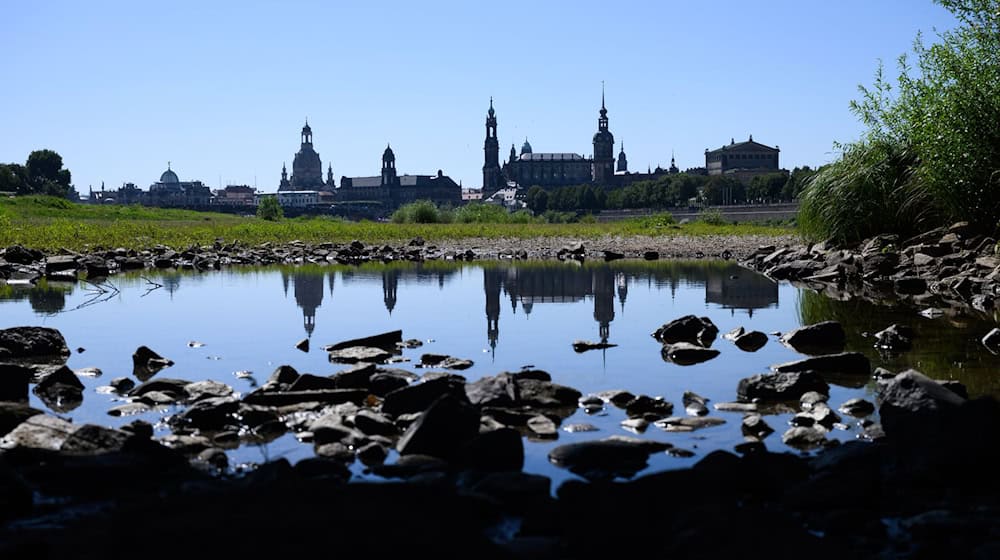
Saxony needs more water. 2025 will once again go down in the history of the Free State as a dry year - even though there was significantly more precipitation than usual in January, July, October and September. "The months with excess precipitation are mostly the result of heavy rainfall events. The classic "land rain" is still on the decline in Saxony," said the State Office for the Environment, Agriculture and Geology. Referring to the reference period from 1960 to 1991, the amount of precipitation fell by 19 percent in the previous year. This corresponds to around 130 liters per square meter. It's not just from above that there is a lack of water. Groundwater levels were below the long-term average for the twelfth time in a row - with one of the largest deficits since measurements began over 100 years ago, according to reports. "We lack winter precipitation, we lack snow reserves," said water expert Andy Philipp from the state office. Without snow, groundwater recharge is significantly restricted in the winter months. The current deficit will be exacerbated by the ongoing drought this winter. In rivers and streams, the flow rates were only 30 to 70 percent of the annual average. In terms of watercourses, 2025 was one of the driest in the past ten years. In many places, the inflows in winter were not sufficient to reach the storage targets in the reservoirs. The distribution of precipitation over the course of the year is becoming increasingly uneven, it said. December had the largest deficit - minus 70 percent. In total, 2025 was the tenth warmest year with a deviation of 1.6 degrees Celsius in relation to the reference period. The highest deviation was in January (plus 3.6 degrees). Seven of the past ten years have been among the top ten in terms of warmth since records began in 1881. 2025 was also extremely sunny - the duration of sunshine increased by 31 percent, in Saxon Switzerland and the Ostergebirge mountains by as much as 41 percent. Not a year of extremes, but clearly characterized by differences, was the overall conclusion. The experts at the state office also provided information on the effects of the weather on forests, agriculture, fruit growing and viticulture. The drought further thinned the crowns of the trees in the forests and increased the risk of forest fires. The harvest of some crops such as winter wheat and rapeseed resulted in mostly good yields because the precipitation came in time after the drought in spring. In the case of wine, the weather ensured a good vintage. Fruit growing suffered from late frost in soft fruit, among other things. The trend towards early flowering continues. In nature conservation, the experts chose the snipe as the "loser of the year" - a bird that needs a moist habitat and is threatened with extinction in Saxony. Its range has shrunk considerably, they said. While the common snipe was still present as a breeding bird in 18 percent of the areas under observation between 1993 and 1996, the areas shrank to seven percent between 2022 and 2024. Experts are cautious when it comes to forecasts. It is expected to remain dry for at least the next three months. Temperatures are predicted to rise by 0.5 to 1.5 degrees compared to the reference period. In conclusion, the experts clarified one current phenomenon. Northern lights in Germany are not an effect of climate change. They are caused by solar winds that hit the Earth's magnetic field and have nothing to do with current weather phenomena. The part of the atmosphere that is relevant for weather and climate is at an altitude of 20 kilometers or slightly more. Auroras occur at an altitude of more than 100 kilometers. Copyright 2026, dpa (www.dpa.de). All rights reservedSaxony suffers from groundwater drought
Effects on watercourses and reservoirs
2025 is one of the ten warmest years in Saxony
Weather brings Saxony plenty of sunshine last year
Drought has consequences for forests, agriculture and fruit growing
Bassin "loser of the year" in nature conservation
Forecast and auroras

