The forestry sector is not giving the all-clear for Saxony's forests. With 35 percent of trees clearly damaged, the condition of the forests in the Free State has only improved very slightly, announced Forest Minister Georg-Ludwig von Breitenbuch (CDU) and State Forest President Utz Hempfling. Only a quarter of the trees examined showed no damage - that was three percent more than in 2024.
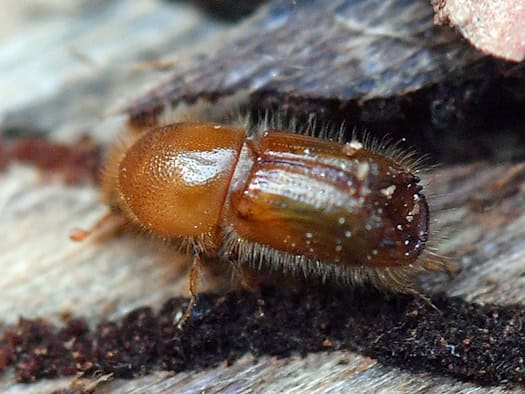
"The crown condition of the main tree species has not yet recovered significantly overall. The amount of damaged timber in 2025 was significantly lower than in previous years. A key reason for this is the significantly lower bark beetle activity," it continued.

The minister sees a glimmer of hope
Minister von Breitenbuch still considers the condition of the trees to be problematic. "The frequently unfavorable weather conditions of recent years, especially the prolonged periods of drought, but also heavy rain and storms, mean considerable stress for the forest and encourage the development of harmful insects." In addition, 2025 saw the largest forest fire in recent decades.
"But there is also a glimmer of hope: the infestation of bark beetles has decreased enormously," said von Breitenbuch. This is visible in the reduced amount of damaged timber, which makes proper forest management possible again in many places. Thanks to the positive price development on the timber market, the income from timber harvesting is also increasing, which can be used to finance the operating costs for reforestation in the state forest.
Saxony wants to consistently continue the conversion of forests
"The results show how important it is to convert forests into climate-stable forests," emphasized State Forestry President Utz Hempfling. The persistently high risk of forest fires due to the precipitation deficit continues to cause concern. The major fire in the Gohrischheide showed what fatal consequences the persistent soil dryness can have. "That's why we must continue the forest conversion with determination in this regard too."
How is the condition of the forests recorded?
In order to record the condition of the forest, 6,672 trees were assessed for needle and leaf loss and the degree of yellowing, as well as other characteristics such as flowering, fruiting and the number of coniferous years. The overall assessment also takes into account damage caused by insects and fungi or by drought, storm and fire. The condition is characterized by damage levels.
What are the specific results?
In total, 35 percent of the trees showed significant damage (damage level 2 to 4), 40 percent showed slight damage (damage level 1) and 25 percent showed no recognizable damage (damage level 0). The dry and warm weather of recent years was cited as the main reason for these high values.
At 24.5 percent, the average needle loss as a key assessment criterion was the sixth-highest value ever recorded for spruce. "The long periods of dryness to drought in combination with favorable conditions for wood- and bark-breeding insect pests had a particularly negative effect in the lower mountainous areas and in the hilly regions," it said. Around 71 percent of all spruce trees show damage.
Only 14 percent of pine trees still show no crown damage
At 23.8 percent, pine needle loss is slightly above the previous year's level. Only 14 percent of trees still have no crown damage. In contrast, the proportion of significantly damaged trees increased by eight percent to 28 percent. The infestation by harmful beetles - a total of 19,000 cubic meters - is down slightly compared to the previous year.
In the group of other conifers, the average loss of needles was 23.9 percent. Compared to the previous year, this value decreased slightly (1.6 percent). In Saxony, this group includes tree species such as European larch, Serbian spruce (Omorika spruce) and Japanese larch.
Almost three-quarters of oaks are damaged
After the 2024 survey for oak produced a record value of 45 percent for mean leaf loss, an improvement to a value of 38.5 percent was recorded this year. However, 74 percent of all oaks - five percent less than in the previous year - are still classified as damaged. The infestation of oak trees by insects such as the oak splendid beetle also remains at a high level.
"The crown condition of beech trees has improved slightly with 38.5 percent undamaged trees compared to 2024 (35 percent). The proportion of significantly damaged beech trees fell from 37 to 30 percent. Pests only occur sporadically on this tree species and mostly benefit older trees that are already damaged by the drought," the report continued.
The group of other deciduous trees is dominated by birch. Here, the value of the average leaf loss is 23.4 percent. Overall, 35 percent of the trees, 9 percent more than in the previous year, are considered undamaged.
Copyright 2025, dpa (www.dpa.de). All rights reserved