

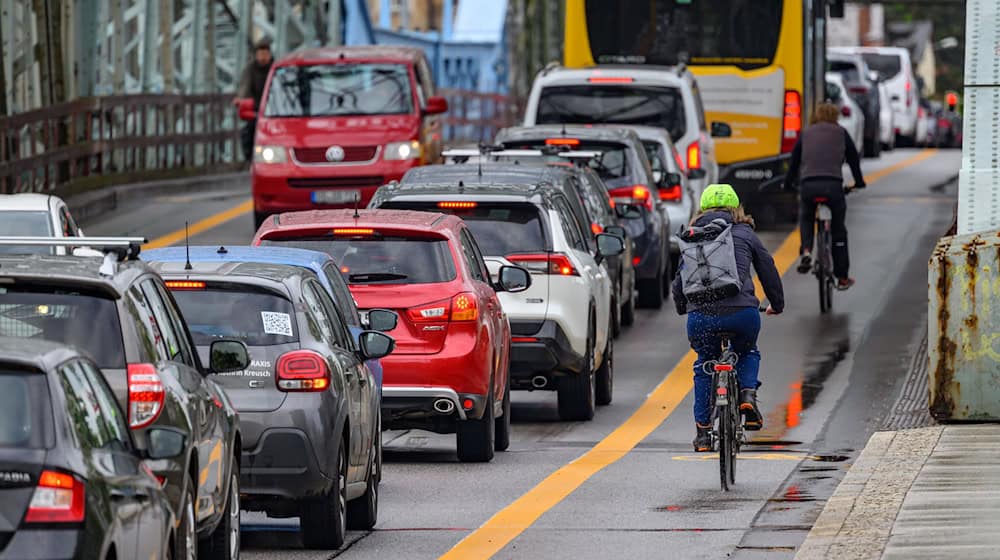
Last year, drivers in the Leipzig area were stuck in traffic jams for a total of almost five and a half days or 131 hours. In Dresden, it was almost five days (116 hours) during rush hour, as the evaluation of the TomTom Traffic Index shows. A lack of infrastructure and growing traffic pressure have led to a significant worsening of the traffic situation in Saxony. According to the results of the analysis by mapping specialist TomTom, heavy traffic flow during rush hour causes drivers to travel at an average speed of 38.5 kilometers per hour through the greater Leipzig area. The congestion level here has risen to 34.5 percent. It describes how much additional time you need to travel a certain distance. If you actually need 30 minutes for a route without congestion, you can plan around ten additional minutes with a congestion level of 34.5 percent. Dresden has recorded one of the sharpest increases in congestion levels in Germany: around 30 percent growth compared to the previous year. In 2025, it took nine minutes longer to cover a distance of 30 minutes in the greater Dresden area. This is partly due to bottlenecks in the road system, such as the missing Carola Bridge. The bridge collapsed in September 2024 and traffic has been rerouted ever since. The average travel speed was around 44 kilometers per hour. In addition to bottlenecks in road and infrastructure construction, it is the increasing commuter traffic that is clogging the roads at peak times. Fewer people working from home and a growing number of people moving from the city to the surrounding areas are exacerbating this trend. Copyright 2026, dpa (www.dpa.de). All rights reservedIncreasing commuter traffic is clogging up roads


