


From infusion to ultrasound: 15 million euros for smart medical technology from Dresden
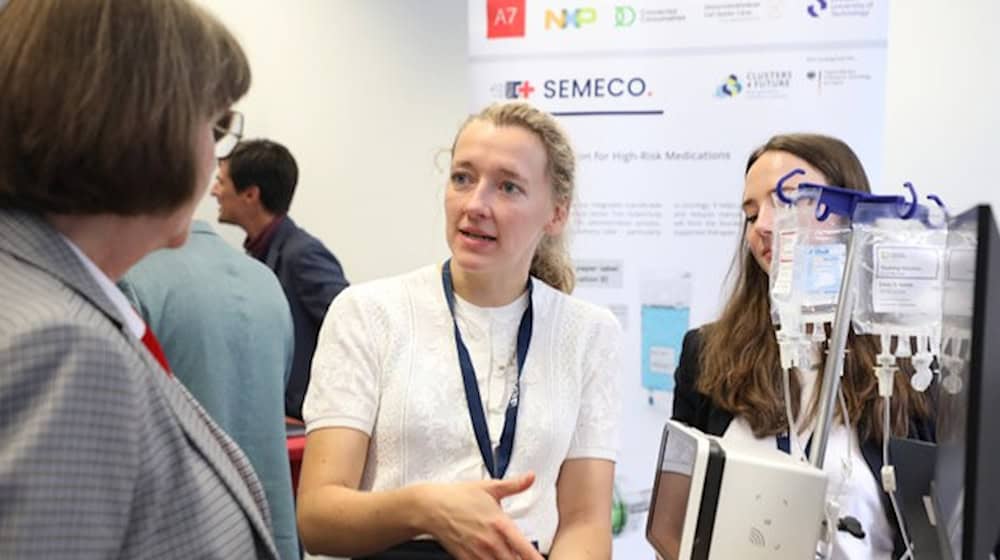
An incorrectly set infusion pump can be life-threatening. An ultrasound device that is only in the hospital is of no help to the emergency doctor. And people with hearing and speech impairments often need several bulky devices. Dresden researchers are working on solutions to change all this.
The future cluster SEMECO is receiving a further 15 million euros from the federal government. TU Dresden and its partners are using it to develop medical semiconductors. These are tiny computer chips that are specially built for use in medicine. They can measure, calculate and transmit data while meeting the highest safety standards.
Networked devices and portable technology
The researchers are focusing on a modular approach. Instead of developing each medical device from scratch, they combine standardized components. This makes the technology cheaper and speeds up approval. Artificial intelligence helps to simplify the complex testing procedures. Specifically, the team is working on networked infusion systems that automatically detect errors. They are developing ultrasound devices that are so small and light that doctors can take them with them wherever they go. And they are building communication implants that combine several functions in one tiny device.
Prof. Esther Troost, Dean of the Faculty of Medicine at TU Dresden, emphasizes the practical benefits. SEMECO combines medical issues directly with cutting-edge technological research. The early collaboration between doctors, technicians and industry partners creates the prerequisite for aligning innovations with actual clinical needs, Troost continued.
Utilizing Dresden as a chip location
The region around Dresden is one of the leading microelectronics locations in Europe. Chip factories, research institutes and suppliers are located close together here. SEMECO makes targeted use of this environment. The Silicon Saxony network, which brings together over 400 high-tech companies, supports the project.
The Free State of Saxony sees SEMECO as an important building block for new, future-oriented applications. The Federal Ministry of Education and Research can fund the project with up to 45 million euros over a total of nine years. The second phase will start in May 2026.

