


Digital troubleshooting: TU Dresden develops new test for automotive mechatronics technicians
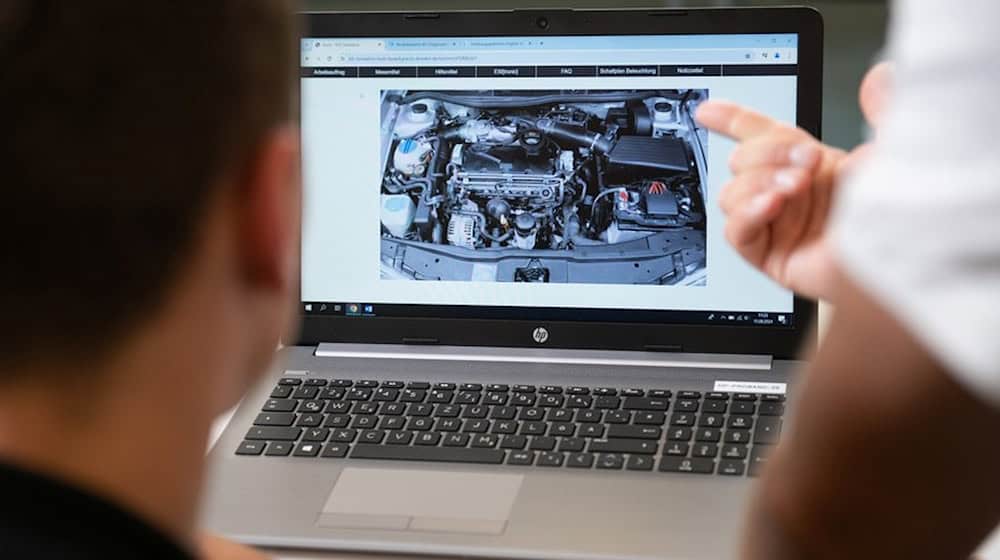
When you take your car to the garage, you expect the mechanic to find the fault and fix it. But it is precisely this ability that many newly qualified automotive mechatronics technicians lack. Studies show that many trainees do not fully achieve the desired level of skill at the end of their training. Another problem is that the practical examinations are often not comparable because each trainee works on different vehicles with different faults.
A pilot project is now being launched in Dresden to solve these problems. From January 28 to February 2, around 100 prospective automotive mechatronics technicians will be taking their final practical exam not only on real cars, but also on a computer simulation for the first time. The digital examination station was developed by the Chair of Vocational Education at TU Dresden.
Everyone works on the same faults
The new examination station creates identical conditions for everyone. Every trainee is given the same error patterns to diagnose. This makes the exam fairer and more comparable. "The computer simulation enables us to present complex fault scenarios realistically and reproducibly - situations that would be difficult or impossible to implement on real vehicles as part of an exam," explains Max Hustig, Head of Vocational Training at the Haus des Kfz-Gewerbes Dresden.
The simulation was developed as part of the "InnoVET-Kfz" project in close cooperation with partners from the vocational training sector in Dresden. The system was tested over several months in other examination districts in the region. The responsible journeyman's examination board has approved the new form of examination.
Craftsmanship remains important
Despite digitalization, working on real vehicles remains a central part of training. "The manual skills remain a central part of the training and will continue to be tested on real vehicles in order to ensure the practical competence of the candidates," emphasizes Hustig. A complete digitalization of all examination content is not possible and is not planned.
Parallel to the examination station, the TU Dresden team is developing a digital self-learning course for trainees. Dresden is taking on a pioneering role with this project. The computer simulation could also be used for other final exams in Saxony and throughout Germany in the future.

