


When robots understand where we are looking
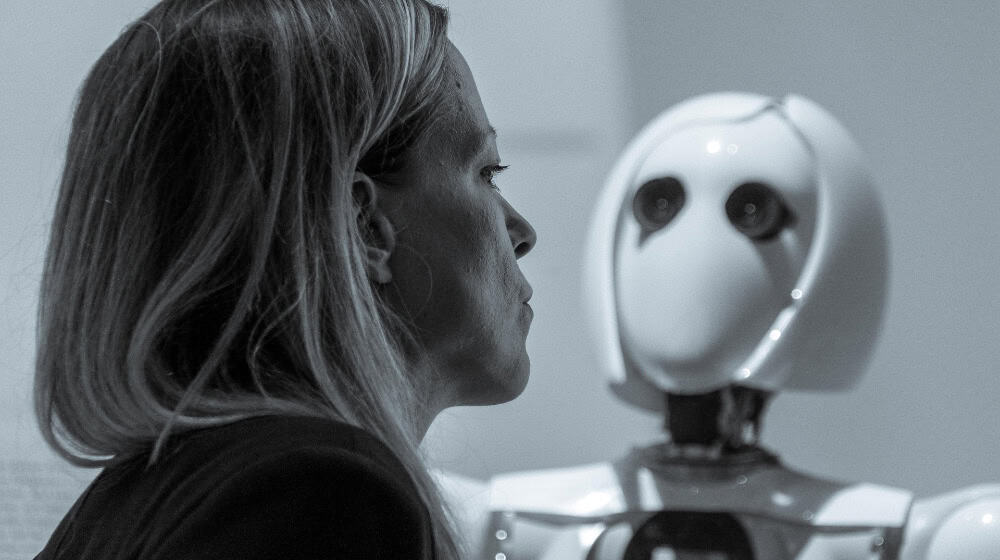
In many factories today, humans and robots work side by side. But working together is laborious. Employees either have to keep a constant eye on the robot or approve each of its steps individually. This costs time and nerves. A new research group at Chemnitz University of Technology wants to change this. The scientists are working on making robots recognize where people are looking and what they are doing.
Robot adapts to attention
The project is called MaTraB. There is a clear idea behind it. The researchers want to find out how robots can communicate their movements in such a way that humans can understand them. At the same time, the robot should adapt its behavior. If an employee is looking somewhere else, the machine behaves differently than if it is being observed directly. "This requires transparent communication between humans and robots, which provides information about who is working where and when," explain the scientists.
The technology behind this is called eye tracking. It can be used to measure where someone is looking. The robot receives this information and reacts accordingly. Special computer programs ensure that everything works in real time. The goal is clear. The aim is to make collaboration safer and create more trust. In addition, both sides should be able to work more efficiently.
Six professorships conduct joint research
Six young scientists from five faculties at Chemnitz University of Technology are working together on the project. The professorships involved are Neurorobotics, Ergonomics and Innovation Management, Artificial Intelligence, Smart Systems Integration, Predictive Behavior Analysis and Physics of Cognitive Processes. The project is led by Professor Florian Röhrbein from the Chair of Neurorobotics.
The project is being funded with more than one million euros. The money comes from the European Social Fund Plus and funds from the Saxon state parliament. The funding enables the young researchers to gain further qualifications. Their results are intended to raise the profile of Chemnitz University of Technology and form the basis for further research work. The project started in December 2025.

