


Pine needles become clothing: Researchers develop textiles from forest waste
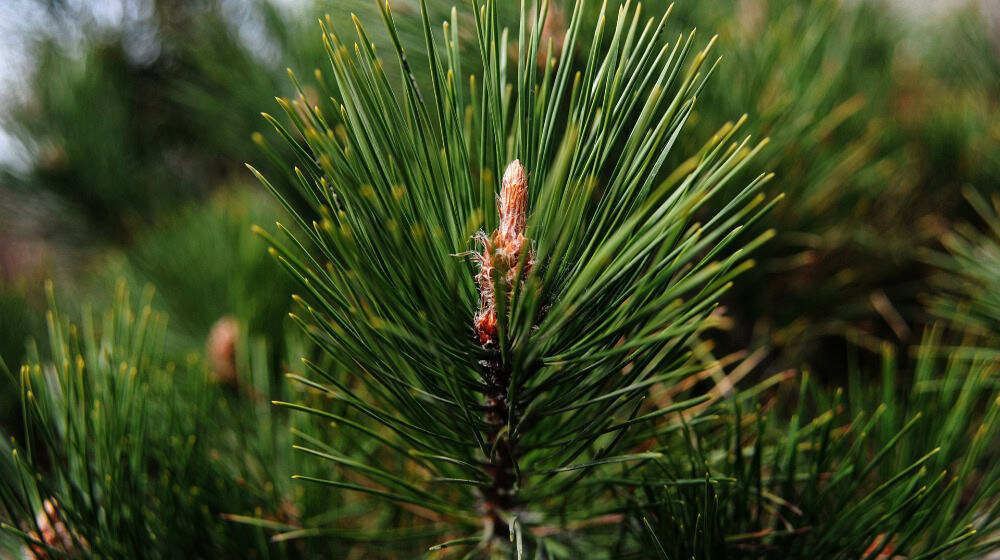
Every year, tons of pine needles accumulate in Saxony's forests. So far, they have simply rotted away. But what if they could be turned into T-shirts, towels or jackets? Researchers at the West Saxon University of Applied Sciences Zwickau (WHZ) are working on exactly that. The "ConFiTex" project has been running since November 2025. The goal sounds simple, but it is revolutionary for the textile industry: to produce fully compostable fibers from local conifer needles.
"Local conifer needles, which were previously considered waste, offer considerable potential as a renewable raw material," explains project manager Prof. Katharina Jebsen-Plättner. Pines belong to the conifer family. The material could make important contributions to achieving the goals of the European Green Deal in resource use, waste avoidance and the circular economy.
From the forest to the finished material
The interdisciplinary team at WHZ is investigating every single step. First, the needles are chemically broken down. Then the scientists extract the fibers. Finally, they refine and dye the material with natural dyes. The end result is yarn that is produced in accordance with the OekoTex standard.
Six young researchers work together with five professors. The Technical University of Dresden is involved as a partner. Regional companies and institutes such as the Saxon Textile Research Institute in Chemnitz are also involved. "A particular strength of the project is the interface expertise between the STEM subjects and design practice," says the university. Designers look over the engineers' shoulders. Engineers think about colors and shapes.
Prototypes for concrete applications
The project goes beyond pure basic research. The researchers are developing a collection of different yarn qualities with matching colors. This will result in prototypes for specific products. It remains to be seen exactly which ones. The important thing is that the fibers should decompose completely when they are no longer needed. No microplastics, no toxic residues.
The European Social Fund Plus and the Free State of Saxony are funding "ConFiTex" with almost 1.4 million euros. The total volume is around 1.5 million euros. One focus is on training young scientists. They gain practical experience and network with companies. The aim is to make Saxony's economy more innovative and sustainable.
It remains to be seen whether pine needle textiles will soon be hanging in our closets. But the research in Zwickau shows: Waste is not always just waste. Sometimes it contains the fashion of tomorrow.

