


The greener beer bottle comes from Freiberg
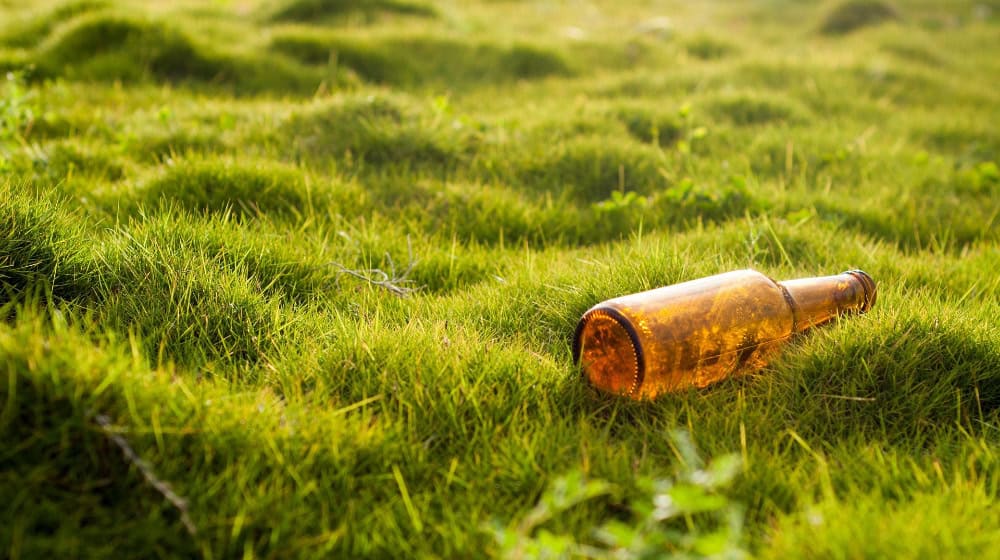
When you open a brown beer bottle, you hardly think about how much it costs to make. Not in euros, but in CO₂. In Germany alone, glassworks emit around 580,000 tons of this climate-damaging gas every year when melting amber glass. This corresponds to the annual emissions of around 77,000 households. Researchers at TU Bergakademie Freiberg are working to change this.
Brown glass protects contents from light. This is why beer, medicines and other light-sensitive products are often packaged in brown bottles or jars. Until now, the glass has been melted in huge vats at up to 1,500 degrees Celsius using natural gas. A team from the Institute of Glass and Glass Technology has now converted this process to electricity in the laboratory. Around 86 percent of CO₂ emissions could be saved in this way.
Electricity instead of gas - why it's so difficult
The switch sounds simple, but it's not. The biggest problem lies in the so-called cold-top process, which is used in electric melting. In this process, a layer of cool, still unmelted raw material lies like a lid on the glowing liquid underneath. "Although this saves a huge amount of energy, it makes it much more complicated to precisely control the chemical reactions and the escape of gases inside," explains project manager Dr. Khaled Al Hamdan.
In addition, there is the color: a special color carrier made of sodium sulfate, iron oxide and reducing agent is required for the typical brown color. In the electrical process, this color carrier behaved unpredictably for a long time. The color was not uniform and the process was unstable.
Breakthrough on a laboratory scale
The Freiberg team has now found the right mixture. In the laboratory, the team was able to prove that the production of amber glass in the all-electric melting plant is reliable and of high quality. According to Dr. Al Hamdan, the researchers had to readjust the mixture of raw materials, the additives for the amber coloration and the temperature control. It was only through these adjustments that the electric melting process became stable and reliable in terms of color. In addition, the amount of colorant required can be halved.
The experts are impressed by the result. "We were able to guarantee an absolutely constant color and at the same time stabilize the so-called cold batch blanket," says the project manager. Now we are going one step further. The new process is being tested under real conditions together with industrial partners. The Federal Ministry for Economic Affairs and Energy has funded the project from 2023 to 2026.

