


Drones reveal hidden particulate matter over large cities
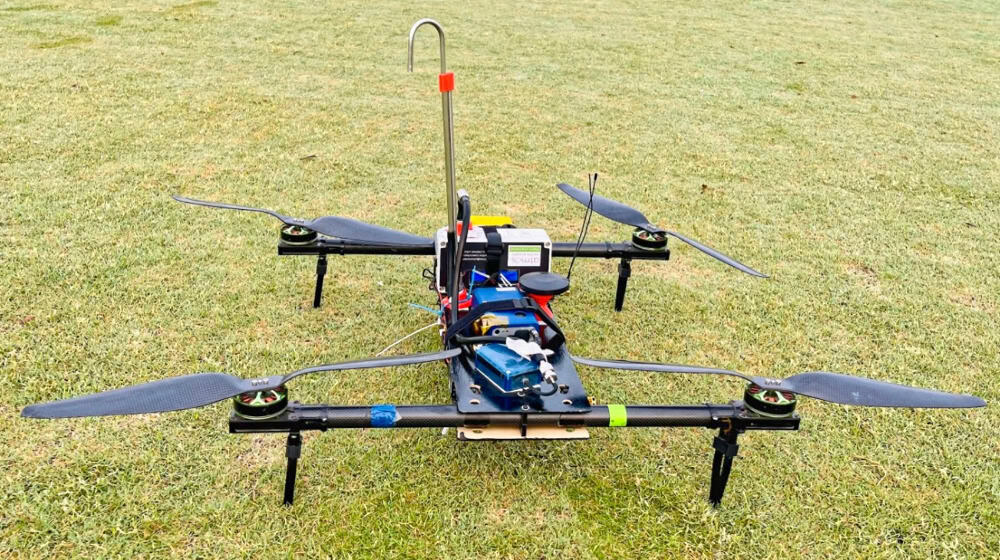
If you want to know how clean the air is, you usually look at readings from ground stations. But they only show part of the picture. At an altitude of 100 meters, the air can be significantly more polluted than on the ground. An international study involving the Leibniz Institute for Tropospheric Research (TROPOS) in Leipzig now shows how drones with inexpensive sensors can close this knowledge gap.
The researchers tested their method in Delhi, one of the most polluted megacities in the world. On individual smoggy days, they measured up to 60 percent more particulate matter at an altitude of 100 meters than at ground level. Particulate matter consists of tiny particles that are smaller than a twentieth of a millimeter. They are so small that they can penetrate deep into the lungs and even reach other organs via the bloodstream, which increases the risk of respiratory and cardiovascular diseases. The results of the study have been published in the journal npj Clean Air.
Special technology against air turbulence
One technical challenge was that the drone's rotor blades can swirl the air and thus falsify measurements. The researchers therefore developed a special air inlet for the particulate matter samples, which was positioned around 30 centimetres above the rotor blades. This allowed them to record the air almost unaffected.
Another problem was the high humidity in Delhi. Humid air causes particles to grow and makes precise measurements difficult. The team therefore installed a small dehumidifier in the drone. This allowed them to take measurements at different heights and at different times of day.
Models underestimate pollution
The data shows a clear pattern: at night and in the early morning, pollutants accumulate particularly strongly in the lower layers of air because the air is hardly mixed. On an example day in March, the concentration of particulate matter rose from around 100 micrograms per cubic meter at ground level to around 160 micrograms at higher altitudes. With increasing warming after sunrise, the smog dissipated again.
A comparison with a computer model used worldwide to predict air quality also showed that the simulation significantly underestimates the particulate matter pollution in morning smog phases. The model probably does not adequately reflect the extent to which particles absorb water in high humidity and grow as a result.
The new drone method could help to improve air monitoring and forecasting worldwide. Especially in fast-growing cities, measurements from the lower air layers have been lacking until now. As the sensors are now small and inexpensive, they are comparatively easy to integrate into existing monitoring systems.

