


Instead of plastic waste: compostable rapid tests made from bioplastics
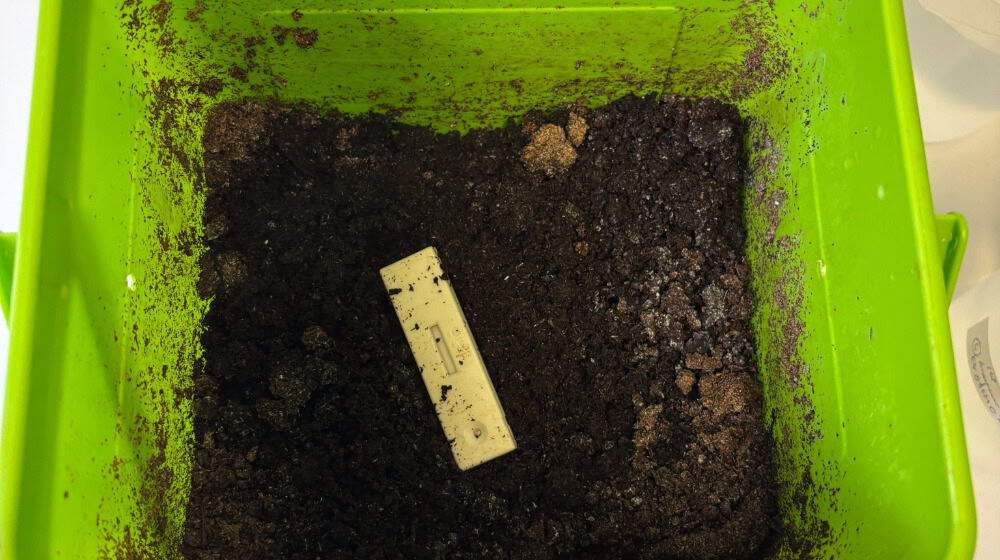
During the coronavirus pandemic alone, millions of tons of additional plastic waste were produced worldwide. Rapid tests played a large part in this. They are made from petroleum-based plastics and end up in the trash after a single use. The Dresden University of Applied Sciences (HTW Dresden) is now working on an environmentally friendly alternative. In the "BioMat" project, scientists are working with partners from Saxony to research biodegradable materials for medical tests.
A novel test for the detection of hepatitis D serves as an application example. The virus triggers chronic liver inflammation and can cause liver cirrhosis and liver cancer. Rapid tests are particularly important for regions without laboratory access. They could quickly identify infected people and enable diagnostics even in countries with limited medical infrastructure.
Plant starch instead of petroleum
"The requirements for the material are very high," explains project manager Marc-Peter Schmidt from HTW Dresden. The surface must be easy to microstructure. The components should be durable and stable on the one hand, and completely biodegradable under certain conditions on the other.
After testing various material combinations, the researchers found a suitable material. Polybutylene succinate, or PBS for short, can be obtained from plant starch. The material is stable, easy to process and storable. In industrial composting, it degrades almost completely within 90 days at 60 degrees Celsius and high humidity. This process even takes place in landfill or in nature, but then takes longer.
From laboratory to approval
The test components are manufactured using the injection molding process. The material is made liquid and pressed into a mold under pressure. "Together with the Fraunhofer IWU and the Saxon industrial partners Bergi-Plast and Otto Injection Molding, we have already succeeded in optimizing the standard process for processing PBS," says project team member Matthieu Fischer. The researchers are now investigating how small electrical circuits can be applied to the material.
The biological substances for virus detection are being developed jointly by the Leipzig-based company Roboscreen and the Fraunhofer IZI. There are still obstacles before the compostable tests can actually be used. "At present, medical waste such as used rapid tests have to be sent for thermal recycling, especially if they contain blood," explains Schmidt. This means they have to be incinerated. Melting down and reusing the material is also prohibited. Given the huge quantities of waste, the petroleum-based products urgently need to be replaced. The project runs until May 2027 and is funded by the European Union and the Free State of Saxony.

