


Farmers' associations: Vaccinations not a blanket solution against epidemics
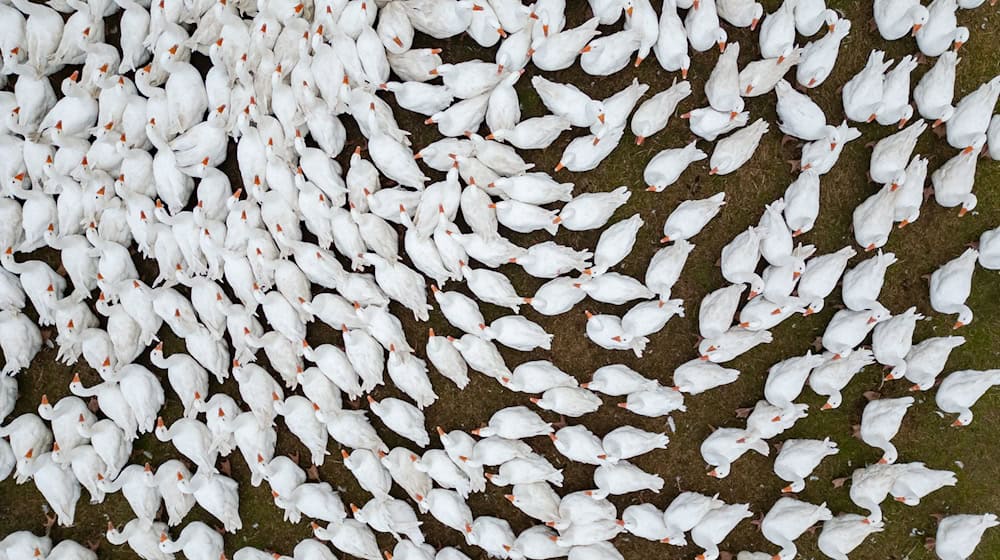
East Germany's farmers' associations do not consider nationwide vaccinations to be a blanket solution against the occurrence of animal diseases among livestock farmers. "Then there is always the question of how expensive vaccination is and how long the animals are actually kept", said Juliane Streubel, specialist for livestock farming at the Saxon State Farmers' Association (SLB), to the German Press Agency. Vaccinating laying hens against avian flu, which is still rampant on farms in eastern Germany, may make sense. Fattening animals that are slaughtered within a very short time may be more expensive than the benefits. In addition, in vaccinated livestock, it is sometimes difficult to determine whether an animal is contaminated with actual pathogens or only has residues of killed pathogens from vaccines. This may increase the cost of testing during slaughter. Erik Hecht, spokesman for the Saxony-Anhalt Farmers' Association, also shares the fears of infectiologists and virologists: "If poultry is vaccinated against avian flu, for example, they can still spread the pathogen." This means that apparently healthy animals can still pose a risk to other animals. In addition, in flocks with many tens or even hundreds of thousands of animals, "the virus can take a developmental step and then have a stronger impact than if you try to contain it as much as possible", says Hecht. There are currently several commercial vaccines against the bird flu virus, but they have not yet been approved in Germany. The Friedrich Löffler Institute (FLI) is currently testing their safety in geese. The institute in Greifswald still considers the risk of bird flu, which has been on the rise since October, to be high. The incidence of the disease among wild birds has decreased. Nevertheless, the virus is still circulating. On Thursday, there was another bird flu outbreak in Saxony in the district of Meißen. In a large farm in Ebersbach near Radeburg in the district of Meißen, the entire livestock had to be killed. Around 310,000 more animals are affected, after more than 100,000 animals had to be killed previously. Leipzig Zoo was also recently affected and had to kill all of its pelicans. Experts estimate that the impact of bluetongue serotype 8, which was also detected in the Meißen district this week for the first time in 16 years, will be lower. A restriction zone with a radius of 150 kilometers affects the whole of Saxony as well as southern Brandenburg, parts of Berlin, Saxony-Anhalt and Thuringia. Animals susceptible to the bluetongue virus, such as cattle, sheep or goats, may only be moved from the zone to virus-free regions within Germany and the EU under certain conditions. According to Saxony-Anhalt Farmers' Association spokesperson Hecht, the herds usually recover after an infestation. In addition to vaccination, for which there is currently no financial aid in Saxony-Anhalt and Saxony, protection with mosquito repellents is also possible. Bluetongue is a viral infection transmitted by certain blood-sucking mosquitoes. "We were surprised at a time of year when this is actually not so common," says SLB specialist Streubel. Animal transportation is still possible with prior blood testing. However, this also increases costs and effort. Basic immunization using the available vaccine takes several weeks. The approximately 1,000 cattle farmers in Saxony are now hoping for colder weather so that the mosquitoes that transmit the pathogen can no longer spread. Financial aid for vaccination against bluetongue is also available in Thuringia as well as Brandenburg. There, vaccination subsidies were also extended for the coming years in the recently adopted double budget. "We are happy about that," said Beate Köber-Fleck, Managing Director of the Thuringian Farmers' Association. Federal Agriculture Minister Alois Rainer had also recently dampened expectations of a blanket avian flu vaccination. In addition to the cost-benefit ratio, the CSU politician also referred to trade restrictions because certain countries no longer accept vaccinated poultry. A survey is to be carried out with trade and poultry associations to find out what they think about vaccination. Copyright 2025, dpa (www.dpa.de). All rights reservedFears of new virus variants in large livestock
Associations: Impact of bluetongue disease lower

