


Bulgarian mountains are 40 million years younger than thought
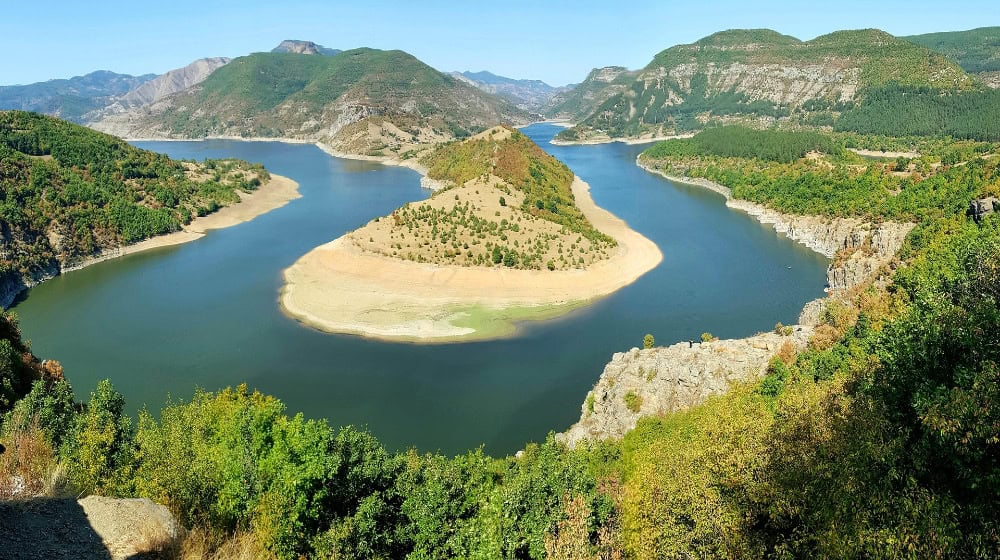
Huge geological processes are taking place deep beneath the Balkans. The African tectonic plate is pushing under the European one. But sometimes this process is reversed. Huge masses of rock first plunge over 100 kilometers deep into the earth - and then rise up again. Like an elevator that makes its way through layers weighing tons.
Two researchers at TU Bergakademie Freiberg have now used computer models to show how this process works. Their findings provide a new explanation for the formation of the Rhodope Mountains in southern Bulgaria. The mountain range was formed 40 million years ago - and is therefore significantly younger than previously assumed.
30 to 50 million years younger
Dr. Iskander Muldashev and Prof. Thorsten Nagel have investigated the phenomenon known as vertical extrusion. In this process, submerged rocks rise vertically again. "Our computer models of the formation of the Rhodopes explain the tectonic process of this so-called vertical extrusion," says Muldashev. The models show how the mountain range was formed only 40 million years ago by the rise of rocks from the African plate. Previously, scientists assumed it was around 80 million years old.
Nagel has been researching the mountain range for 20 years. Together with colleagues from various universities, he has examined numerous rock samples. "Mineralogical studies show that large parts of the Rhodopes were buried at depths of up to 100 kilometers," he explains. Isotope geochemical data - i.e. measurements of radioactive elements in the rock - showed that this process took place around 40 to 45 million years ago. This means that large parts of the Rhodopes could originate directly from the African plate.
Upwelling pushes crust apart
The computer models answer a crucial question. How can submerged rock rise upwards against enormous compressive forces? The answer lies in buoyancy. The buoyancy of the submerged crust is strong enough to push the overlying European crust apart horizontally. "The special thing about the Rhodopes is that despite more than 100 kilometers of apparent stretching, the earth's crust in this area remained particularly thick," adds Nagel. This is a further indication that large amounts of material came up from the depths and penetrated the overlying European crust.
The scientists used the computing capacities at the TU Bergakademie Freiberg's computer center for their calculations. Special software was used to simulate complicated deformation processes such as the fracturing and flowing of rocks. The researchers published their results in the journal Geology. Nagel collected further rock samples in Bulgaria in September. Planned age determinations could soon provide further evidence for the computer models.
Original publication:
Iskander A. Muldashev; Thorsten J. Nagel: The Rhodope Metamorphic Complex as a case for extreme vertical extrusion

