


Lighter than aluminum: How to make magnesium fit for industry
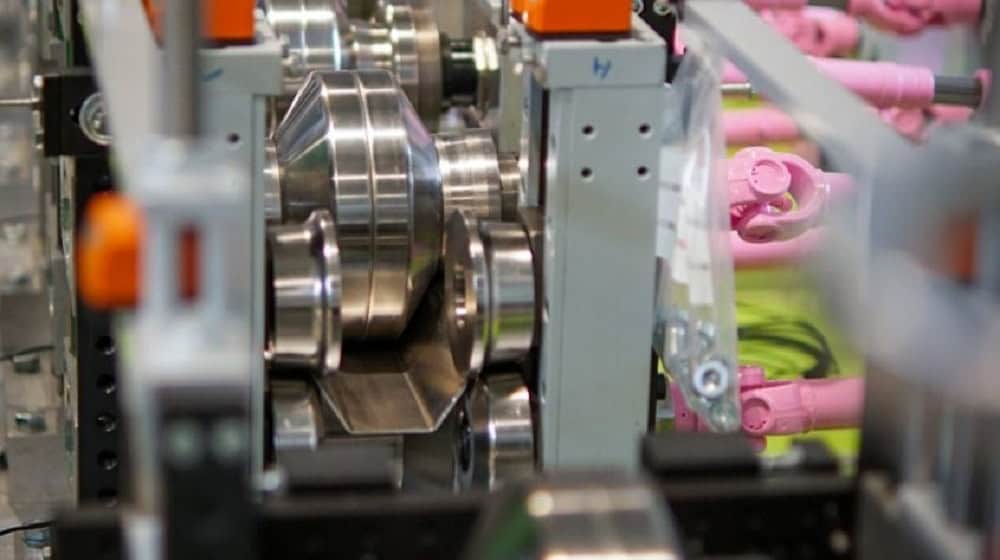
Many high-quality laptop cases today are made of aluminum - sturdy, elegant, but not exactly light. But there is a metal that is even lighter: magnesium. It is around a third lighter than aluminum, but was previously considered too expensive and energy-intensive to process. A research team at TU Bergakademie Freiberg has now shown how this can be changed.
For three years, researchers from various departments worked together with twelve industry and research partners to make magnesium suitable for industrial use and at the same time process it in a more climate-friendly way. The result is an end-to-end process chain from the melt to the functional prototype. Energy requirements and CO₂ emissions have been reduced across all steps.
The first demonstrators have already been created: computer housings, rear seat panels for high-speed trains such as the TGV, hinge parts for transport containers and an airflow channel for a hovercraft rescue vehicle. The components are around a third lighter than corresponding aluminum solutions with comparable strength. "Our aim was to make magnesium usable as an industrial lightweight construction material through new, shorter manufacturing processes," says Prof. Ulrich Prahl from the Institute of Metal Forming at TU Bergakademie Freiberg.
Hydrogen instead of fossil fuels
A key lever is the energy supply. When melting and heating the metal, the researchers rely on hydrogen instead of fossil fuels such as natural gas. "Converting the melting and heating processes to hydrogen and making them more energy-efficient is an important step towards producing magnesium in a climate-neutral and more cost-effective way," explains Prof. Hartmut Krause from the Chair of Gas and Thermal Engineering. Digital twins, i.e. virtual images of the production processes, help to optimize the workflows.
At the same time, the team is significantly shortening the production chain. In the so-called casting-rolling process, liquid magnesium is formed directly into sheets or wires, whereby the heat contained in the material is immediately utilized. This eliminates the need for additional heating steps. The researchers also developed the GieWaCon process, which combines two proven techniques and successfully applies them to magnesium for the first time. This allows wires with a diameter of 1.6 millimetres to be produced.
The right alloy makes all the difference
A third component is the magnesium alloy ZAX210. It contains calcium and can be easily formed at around 200 degrees Celsius. This is a comparatively low temperature for magnesium. "The alloy allows us to carry out forming processes at significantly lower temperatures without compromising on the component properties," says Prahl. The project team also investigated suitable surface coatings for corrosion protection and adapted welding processes. Using the specially developed CLEAN-Mag CO₂ calculator, companies can also compare different process chains and calculate their emissions.
The CLEAN-Mag joint project was funded as part of the Federal Ministry for Economic Affairs and Energy's lightweight construction technology transfer program. The aim is to make magnesium more widely usable in the future as a lightweight, economical and climate-friendly material, for example in vehicle construction, e-mobility, mechanical engineering and medical technology.
Publications:
Kaden, C.; Kittner, K.; Ullmann, M.; Prahl, U. Twin-roll casting of wire of magnesium alloys. Frontiers in Metals and Alloys, 2025
Ullmann, M.; Kittner, K.; Prahl, U. Cold Formability of Twin-Roll Cast, Rolled and Annealed Mg Strips. Metals 2024, 14, 121.

