


6G network: TU Dresden researches the future of mobile communications
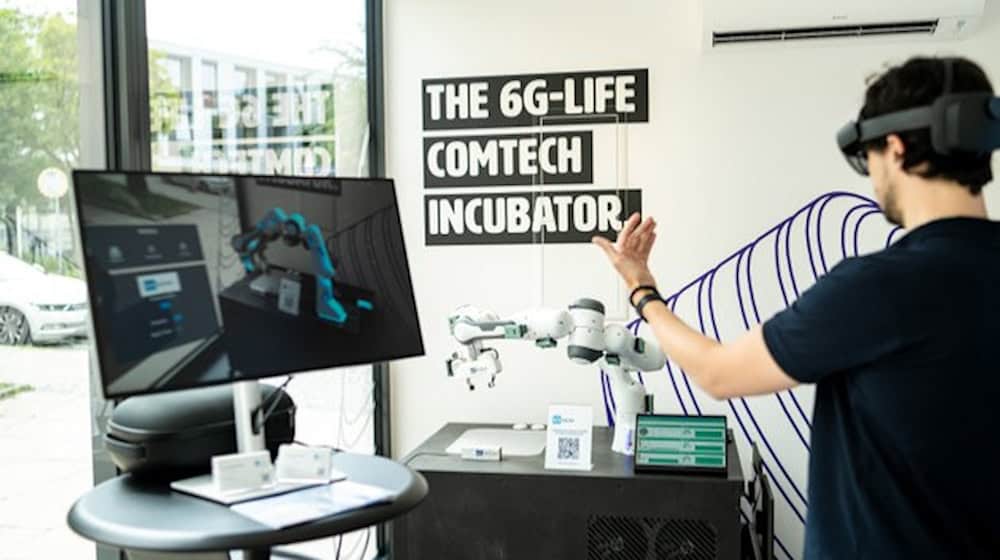
A robot supports a person in need of care in everyday life. A doctor performs an operation remotely while the patient is in a hospital in their own home town. What sounds like science fiction today could become reality in just a few years. The Technical University of Dresden and the Technical University of Munich are working together on this. The basis for these developments is 6G - the sixth generation of mobile communications.
The Federal Ministry of Education and Research is supporting the "6G-life²" project with 25 million euros over four years. The first phase of the project began in 2021 and laid the initial foundations. The researchers want to develop technologies that focus on people. "The infrastructure of the future must not only be efficient and reliable, but above all safe, sustainable, flexible and ultimately also cost-effective to implement," says Wolfgang Kellerer, Professor at TU Munich. The necessary concepts and technologies are being developed together with TU Dresden.
Fast calculations and virtual factories
While today's 5G standard is primarily used by machines to communicate with each other, 6G is intended to improve the connection between man and machine. The researchers in Dresden and Munich are focusing in particular on networked robotics. They are working on energy-saving and fast calculation methods to ensure that applications function in real time, i.e. without any time delay. They are also developing virtual images of factories, the so-called industrial metaverse.
A demonstrator will show whether the developed technologies work reliably. The commercial launch of 6G is expected in 2030. The current project phase runs until December 2029.
Strengthening Germany's position
"The fact that the German government is so clearly emphasizing the importance of technological sovereignty for prosperity and social resilience strengthens our claim for the upcoming funding period," says Frank Fitzek, Professor at TU Dresden. Cutting-edge research will be translated into innovations even faster.
An important part of the project is the promotion of start-ups. An incubator has already been set up in Dresden to support young companies. The researchers want to use this to strengthen Germany's technological independence - especially compared to Asian companies, which dominate the telecommunications sector.

