

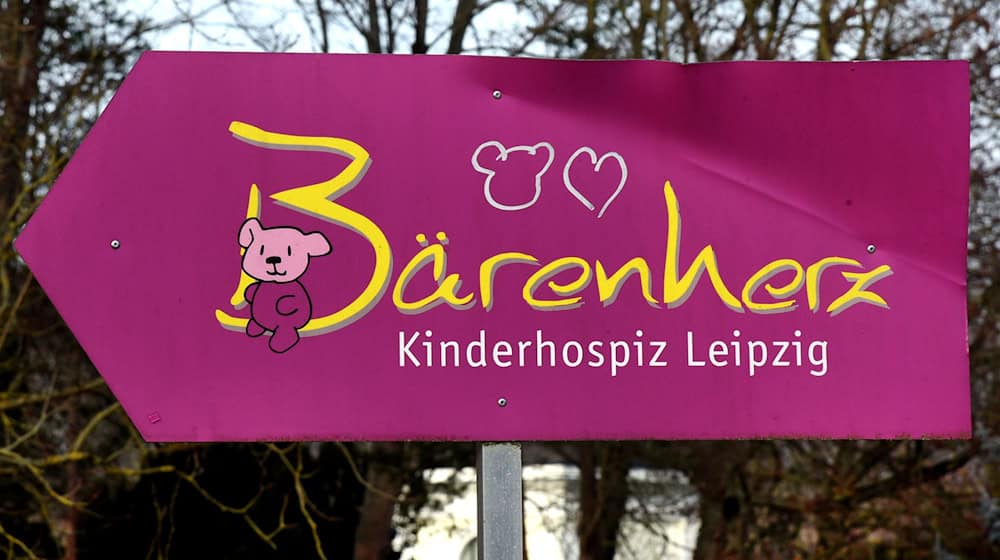
"I'm not here to watch my son die" - Lisa's little boy is ill, so seriously ill that he will die early. The 31-year-old from the district of Meißen is sitting in the large lounge of the "Bärenherz" children's hospice in Markkleeberg near Leipzig. She is not talking about death, but about the vacation and recovery time she experiences here. For her, the children's hospice is not primarily a place to die, but a place to relieve and support the whole family. A year ago, Lisa had a healthy daughter. Because of the extensive care for her son, the little one often gets the short end of the stick and there simply isn't enough time in everyday life, explains the mother. She is at "Bärenherz" with both children and can enjoy the time. "I went swimming with the little one. Something that simply isn't possible with both of them together." While mother and daughter enjoy their bathing time, Lisa knows that her son is perfectly cared for. The "Bärenherz" is the only inpatient children's hospice in Saxony. There are ten rooms for sick children. "We also have seven apartments where the families live and have the chance to take a breather and receive professional help," said Ulrike Herkner, Managing Director of the Bärenherz Leipzig children's hospice. The focus is not primarily on end-of-life care, but on providing relief and help for the families. More than 80 employees, mainly in the nursing, psychosocial and therapeutic fields, look after the families around the clock in a three-shift system, including two doctors. According to the German Children's Hospice Association, an estimated 100,000 children, teenagers and young adults in Germany live with an illness that severely limits their lifespan. Every year, around 5,000 die from such an illness. There are currently a total of 24 inpatient hospices for children and young people across Germany. February 10 is "Children's Hospice Work Day", which was launched by the German Children's Hospice Association in 2006. "An inpatient children's hospice takes in children, teenagers and young adults who are affected by a life-shortening or incurable illness," explains Franziska Kopitzsch, Managing Director of the federal association. Last year, "Bärenherz" provided inpatient care for 163 families from all over Germany, many of whom came several times. Two children died in the house last year, and since the children's hospice opened in 2008, there have been almost 200. In the garden of remembrance, there are nests made of wicker baskets that relatives fill with photos, jewelry, porcelain figurines, necklaces and even their favorite Lego toys. Such rituals are important for the relatives, but also for the staff, says Adeline Kremer, art therapist and grief counselor at "Bärenherz". There is an illuminated memorial stele at the entrance, in which a small child's hand lies protected in two adult hands. When a child has died in the house, the light is switched off. In another place, a photo of the young person is placed on a memorial shelf and a candle is lit. It burns until the body has left the house. Both are silent signs that the time in the "Bärenherz" is now different since the young person is missing. The illness can last for many months or years until death. The children's hospice accompanies the long and often painful journey and is itself dependent on support. Numerous volunteers help. Although health insurance companies cover the majority of the costs for patients, the services for parents and siblings are financed almost entirely by donations, as Ulrike Herkner explains. The donation budget is therefore just under two million euros per year. Numerous celebrity ambassadors such as Prinzen frontman Sebastian Krumbiegel are helping. The 59-year-old is involved in fundraising campaigns and comes to the house several times a year to play music for the children and families. "Life can deal you a blow and many are certainly glad that they are not affected. That's why it's important to develop empathy and compassion for this cause," says the 59-year-old. He plays the piano this afternoon and sings "Somewhere in the world there's a little bit of happiness". Corinna, who is seriously ill, is fascinated by the piano. The six-year-old plays four-handed with the professional musician and accompanies him with a rattle or guitar. She is beaming all over her face. Carolina from Leipzig doesn't have her head free to enjoy the little concert. She has 17-day-old Eva in her arms, wrapped in warm blankets. Eva also has a life-shortening illness. "I'm staying here for 14 days. I want to prepare myself for the transition so I can continue caring for the little one at home," says the young mother. Copyright 2026, dpa (www.dpa.de). All rights reservedThe focus is on relieving the family - not saying goodbye
Many remembrance rituals for deceased children
Offer for parents depends on donations - celebrities help


