

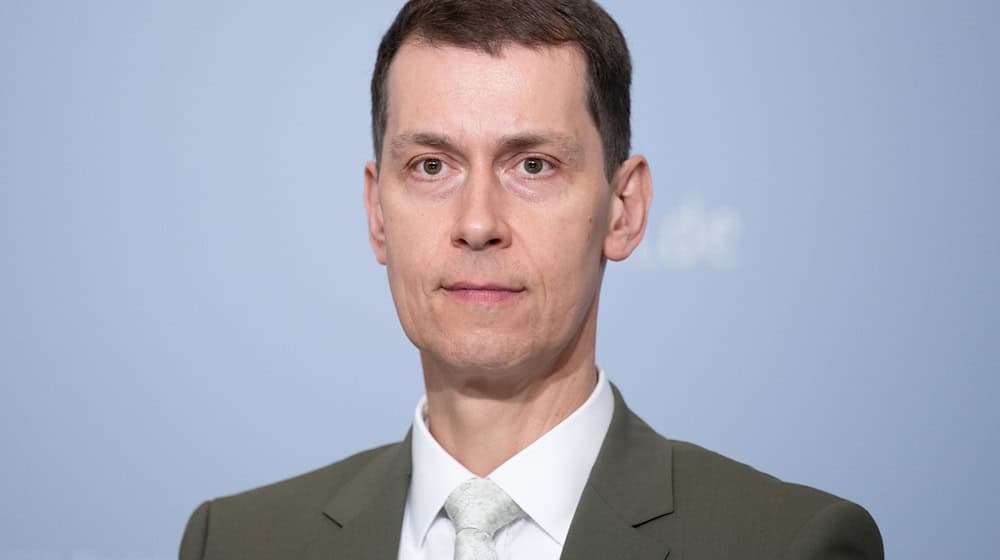
The President of the State Directorate of Saxony believes the time is ripe for far-reaching state and administrative reform. Local authorities should be given more freedom, processes should be bundled and artificial intelligence should be used to a greater extent, Béla Bélafi told the German Press Agency in an interview. "We have a great weather situation that makes far-reaching state modernization possible," the head of administration explained. Difficult times always offer opportunities. "When there is a lot of money in the coffers, people often don't dare to tackle structures. That's different now." The state directorate is a link between the state government and local authorities and primarily has coordination, approval and supervisory tasks. Bélafi recalled the "Initiative for a state capable of acting", which presented its final report last year. Some points have already been implemented. For example, the topic of digitalization has now been bundled in a federal ministry. There is now an urgent need to implement the "construction turbo", the temporary special regulation in German building law. On the other hand, local authorities must be given more freedom to shape their own policies. Saxony implemented the last major adjustment in this area with the 2008 district reform. Even then, the question of which decisions should be in the hands of the local authorities in future was raised. "Now is the time to ask the questions: What should administration look like in the future? Is it possible to give the municipalities even more creative freedom?" Bélafi himself answers the question with a clear yes. There are also tasks that should be pooled more closely. The ten districts, three independent cities and the municipalities should not have to manage everything themselves. However, the head of the state directorate did not want to anticipate a catalog of proposals that recently came from the district councils and is not yet public. They agree on many points. The reform commission commissioned by the Ministry of the Interior will also present its results soon. It is also important for the Free State of Saxony to make its administration fit for the future, said Bélafi, a lawyer by training. "How will we be able to provide good administration with fewer staff in the future? The structures we have at the moment will no longer be there in 15 years' time." There is an urgent need to bundle and centralize processes. This is where the state directorate comes into play as a higher-level authority. "Artificial intelligence is an important point for us here," explained the LDS President. He cited, among other things, the planning approval procedures, which usually involve many objections from citizens and comments from public institutions. "This is currently all processed manually. This is a classic case where an AI can help to create a summary and filter out the important points." "We have many areas in the state directorate where artificial intelligence can help us," said Bélafi. Although the AI will not ultimately make the decision, it will systematize the basics beforehand and take over activities for which many people would otherwise have to be deployed. "That doesn't mean that these employees will no longer have anything to do, but they will be available for other important tasks." According to Bélafi, administrative decisions are being scrutinized more closely today than in the past. The period after reunification in the 1990s was characterized by euphoria. "Society was ready for big changes. People were happy about investments. Today, concerns prevail in many areas. There are fewer questions about the opportunities associated with a new infrastructure or settlement." Bélafi cited the example of the chip industry as an example of effective administrative action. The state directorate is solely responsible for such large-scale procedures at state level. The companies would have all the relevant experts at one table and would not have to run from A to B for the necessary approvals. "In the case of GlobalFoundries, we completed such a complex procedure in just four months. That is unique in Germany." Copyright 2026, dpa (www.dpa.de). All rights reserved
Bélafi: Local authorities should be given more freedom to shape their own policies
Administration to be made fit for the future
Artificial intelligence to help with administrative processes
There should only be one point of contact for large-scale settlements


