

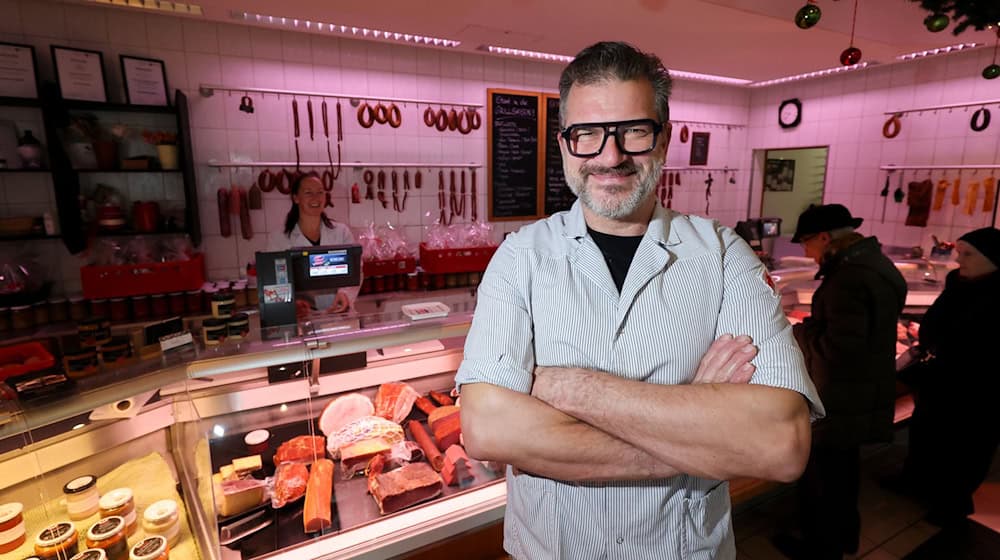
Master butcher Franz Richter in Leipzig is making sure that his customers are not left without a festive roast for Christmas these days. That's why he has brought some of his Christmas produce, which he would otherwise offer fresh for the festive season, in early. He freezes them because farms in the surrounding area had to slaughter them earlier due to the risk of bird flu. "Otherwise we would risk shortages before Christmas and would have to resort to foreign goods." He has around 160 geese and ducks on offer, as well as game and rabbits. Deer and venison are increasingly in demand, as are roulades. "December is our most important month economically." The regional goose is priced at the same level as last year, while lovers of roast beef for the festive season have to dig deeper into their pockets. Richter sees a trend: the "roast to go" - prepared or already cooked pieces - is going strong. Almost a fifth of customers are now using the service. Despite bird flu, the Saxon Butchers' Guild Association does not expect any gaps in supply. The average goose price in Germany for businesses purchasing goose averages 19.30 euros per kilogram, says Managing Director Lars Bubnick - an increase of 53 cents on the previous year. End consumers would therefore pay an average of 20 to 30 euros per kilogram for fresh poultry. "A moderate increase. Everyone will get their festive roast." However, the fact that many orders are not received until mid-December is making work more difficult for farms. "Livestock farmers and processors have to plan early." The trend is towards pieces of meat instead of whole animals, and many people are celebrating on a smaller scale. The demand for roast goose to pick up is increasing - usually in a box, with gravy and, if desired, with side dishes. Independent of the Christmas business, meat consumption in Germany increased again for the first time in years to 53.2 kilograms per person, according to the latest figures from the butchers' guild. "Poultry meat in particular is becoming more popular every year," says Bubnick. Despite bird flu and general price increases: The Saxon Poultry Industry Association is also happy that the general price in the Free State for geese from farms with high standards can continue to be between 18 and 22 euros per kilogram, says managing director Katharina Standke. However, she expects prices to rise significantly from next year due to the minimum wage increase. Imported goods, on the other hand, have become significantly more expensive in some cases due to avian flu - Polish geese have wholesale price mark-ups of up to 120 percent. "Looking ahead to Christmas, it can be assumed that Polish fresh produce will be in short supply due to the many cases of bird flu there," said Standke. In Saxony itself, the situation is relaxed: Four hatcheries produce around 406,000 chicks a year. Only one turkey flock was affected by bird flu this year. Restaurants in Saxony are also in full swing with preparations for the festive season. "Christmas parties are fully booked in many places", says Axel Klein from Dehoga Sachsen. Advance bookings for roast goose and other dishes are also good: "Most places are reserved for the festive period, with a few still available during the week." Those who want to save money are increasingly opting for duck breast. In the run-up to Christmas, the demand for game meat rises sharply, observes Udo Lüttschwager from Sachsenforst, Adorf forest district (Vogtland). "Especially in densely wooded areas of the Erzgebirge and Vogtland, the game stores are emptied at this time of year." Red deer and wild boar are on offer, but roe deer meat is the most popular. "It's very fine, short-fibred and tasty." Up to 700 deer are shot in the Adorf district every year and some of the meat is prepared directly for customers - the rest is sold to restaurants or retailers. "The prices are stable." A kilogram of leg costs 21 euros, back 28 euros - regardless of the species. Meanwhile, the vegan butcher's shop in Dresden is gearing up for a record year. Last year, it produced 5,000 festive roasts, this time it is offering 12,000, as Managing Director Nils Steiger said. "We assume that we will be sold out before the holidays." The manufactory focuses on high-quality seitan roasts with gravy and Christmas flavors such as gingerbread, apricots or dates. The vegan sauerbraten and plum sausage are also popular. Customers want to avoid meat because of the conditions in the animal industry, but not the festive meal, says Steiger. Families often order because their children or grandchildren are vegetarian or vegan. In Großröhrsdorf (Bautzen district), alternatives to the classic festive roast are also being created - through fermentation. The company Nosh.bio is expanding its production of koji protein - a mycelium that is suitable for meat-like applications. The focus is on alternative minced products. "Our koji protein provides a natural, nutritious and meat-like texture," says the company. For Christmas, it is suitable for meatloaf casseroles, an alternative to Beef Wellington or sauces, for example. The mycelium base made from mushrooms scores with low production costs and a small carbon footprint - properties that are increasingly in demand, especially in festive cuisine. Copyright 2025, dpa (www.dpa.de). All rights reservedPre-orders are slowly starting
Increasing prices for Polish geese
Christmas in restaurants
Vegan alternatives


