


When the zebrafish heals itself with electricity
Whoever cuts themselves usually presses on the wound and waits until it stops bleeding. But what happens in the body at this moment is far more complicated - and more electrical - than expected. Researchers at the Max Planck Institute of Molecular Cell Biology and Genetics (MPI-CBG) and the Cluster of Excellence "Physics of Life" (PoL) at TU Dresden have discovered that electrical signals play an important role in the healing of organs. Not only in nerve cells, but apparently also in other cell types that are involved in regeneration.
A fish shows how healing works
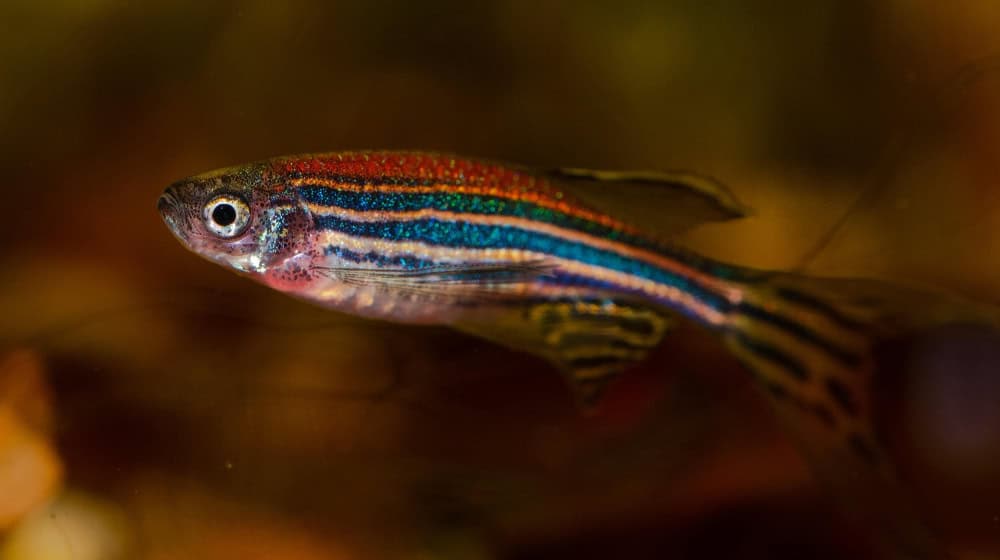
For their study, which was published in the journal Science Advances, the scientists used zebrafish larvae. These small fish have a special characteristic: their tail fins grow back quickly after an injury. In addition, the larvae are so transparent that researchers can look directly into the tissue.
What they observed was surprising. Just 100 milliseconds after the injury, which is significantly faster than the blink of an eye, cells simultaneously changed their electrical potential over a distance of around 200 micrometers. This refers to the electrical voltage at the cell membrane, i.e. the envelope of each individual cell. The cells briefly became more "positive", their membrane voltage shifted. Experts refer to this as depolarization. This was followed shortly afterwards by a chemical wave of calcium that spread through the tissue within a few seconds.
"We wanted to understand which electrical signals arise after an injury and how they enable healing," says Jinghui Liu, postdoctoral researcher and one of the first authors of the study.
The protein that understands the current
But how does the cell translate this electrical impulse into real growth? The researchers found the answer in a protein called voltage sensing phosphatase, or VSP for short. This protein is located in the cell membrane and reacts to changes in electrical voltage. As soon as it is activated, it changes its structure and triggers signaling pathways inside the cell that promote cell division and tissue growth.
If the VSP gene was switched off using the CRISPR gene scissors, the tail fins regenerated significantly less well. If, on the other hand, VSP was activated to a greater extent, the organs grew larger than usual. This shows how central this protein is for the translation of electrical signals into growth.
First author Elisa Nerli explains that the protein is widespread throughout the animal kingdom - an indication that it could be an evolutionarily conserved mechanism. Rita Mateus, head of the research group at the MPI-CBG and PoL, summarizes: "Overall, we were able to show that rapid cell division after an injury arises directly from the interaction of electrical and chemical processes in the tissue. This opens up new perspectives on how the membrane potential controls the size and proportions of organs.
The results thus provide an important basis for new approaches in regenerative medicine. In the future, the targeted influencing of bioelectrical signals could help to better control tissue healing and organ growth.
Original publication:
Jinghui Liu, Elisa Nerli, Charlie Duclut, Amit S. Vishen, Naomi Berbee, Sylvia Kaufmann, Cesar Ponce, Aristides B. Arrenberg, Frank Jülicher, Rita Mateus. Injury-induced electrochemical coupling triggers organ growth. Science Advances (2026).

