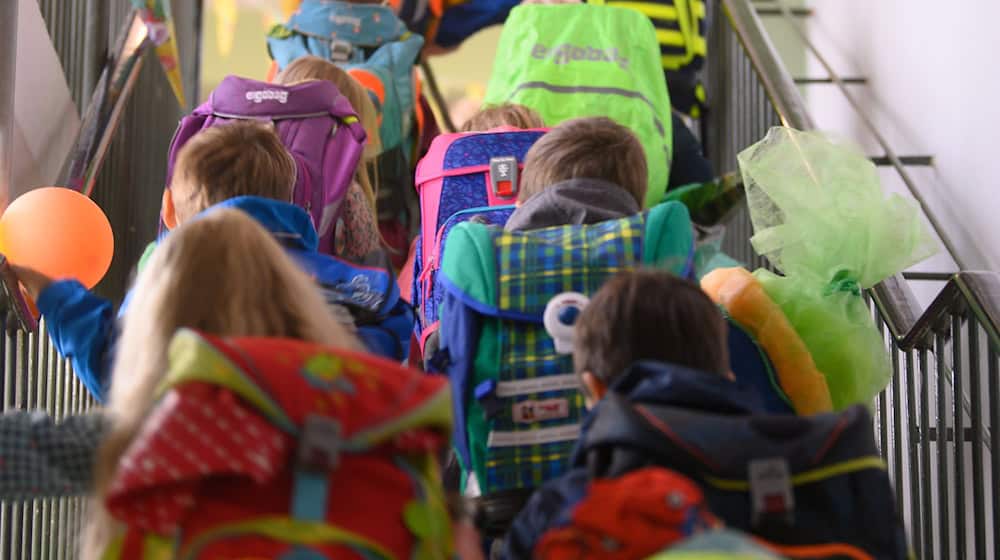
Despite compulsory schooling, hundreds of children and young people in Saxony have no school place. As of November 17, there were 645, according to the "Right to School for All in Saxony" alliance, citing figures from the State Office for Schools and Education. All of them did not have a German passport.
Month-long waiting times
At the end of the last school year, the number was 1,083. According to the information, it has fallen due to a lower influx. Statistics do not record how long the children and young people concerned wait from their arrival in Saxony until they are admitted to school. However, previous research by the Alliance shows that the waiting time can exceed six months. In addition to the requirements of international law, the EU Reception Directive requires equal access to school no later than two months after the application is submitted.

Greens and Left Party call for guaranteed school places
The situation is extremely stressful for the children concerned and their families, said Christin Melcher, education policy spokesperson for the Green parliamentary group, according to a press release. "When children are excluded from education for so long, they lose valuable learning time, but also social contacts and a sense of belonging." It is not a matter of individual cases, but a structural problem.
The Green parliamentary group wants to ensure a binding school place guarantee and reliable transitional solutions for all children with a motion in the state parliament. They are calling for transparent monitoring of the allocation of school places that systematically records waiting times, makes bottlenecks visible at an early stage and thus enables targeted countermeasures to be taken in good time, said Melcher.
The Left Party supported the Greens' motion. "The right to education is independent of origin, residence status or prospects of staying," said Luise Neuhaus-Wartenberg, education policy spokesperson for the left-wing parliamentary group. Not granting children a place at school violates the Saxon constitution and the UN Convention on the Rights of the Child.
Copyright 2026, dpa (www.dpa.de). All rights reserved