

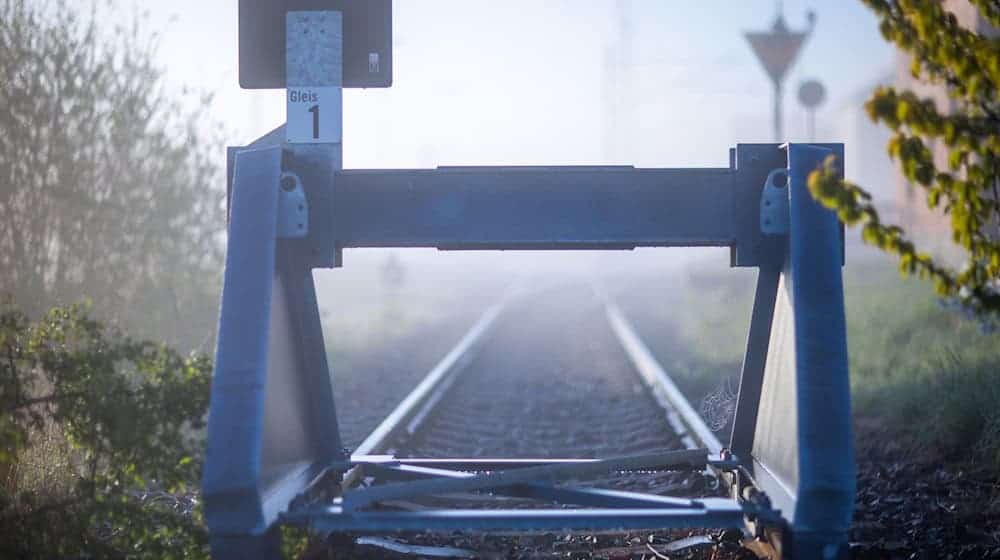
Saxon railroad lines will be left empty-handed in the 2026 federal budget. This is causing displeasure in Saxony. "The federal budget has been adopted and unfortunately gives me cause for considerable criticism. Because how can it be, I ask myself as Transport Minister of the Free State of Saxony, that no provision has been made in the federal transport budget to finally be able to put urgently needed projects such as the new Dresden-Prague line or the electrification of Dresden-Görlitz on the proverbial track," CDU politician Regina Kraushaar told the German Press Agency. "We really had hope: the coalition agreement at federal level explicitly states that the transport infrastructure to Poland and the Czech Republic will be "rapidly expanded"," Kraushaar emphasized. This expansion is of central importance - not only for the economy, but also for Germany's international connectivity and the achievement of climate targets. "Reliability is the most valuable asset in politics. Both internally and externally - with a view to our neighbors the Czech Republic and Poland, who are also waiting for these rail connections - the federal government is failing to make a smart decision here." Marko Schiemann, European policy spokesman for the CDU parliamentary group, also expressed his disappointment and is calling on the federal government to finally provide clarity for the Dresden-Görlitz and Dresden-Prague lines. "These rail links of European importance need a binding commitment to expansion. The fact that funding is once again not provided for in the 2026 federal budget is a disaster for Saxony and will also be met with incomprehension in Poland and the Czech Republic." He had clearly sensed this attitude during recent talks in the Czech Republic and with Polish representatives. "We must finally switch from slow trains to fast trains on both lines. Electrification and new construction are more than just rail projects - they are credibility projects for the German government. That's why we now need a clear financial commitment," Schiemann told dpa. Germany currently has 28 electrified cross-border rail links - only three of which are in the eastern German states. Kraushaar had already recently complained about the sluggish expansion of rail transport in eastern Germany. "It is a fatal signal to the people if they feel they are being sidelined by transport policy," said the minister. Copyright 2025, dpa (www.dpa.de). All rights reservedKraushaar: Federal government is failing to make a smart decision here
CDU politician points to lack of understanding in Poland and the Czech Republic


