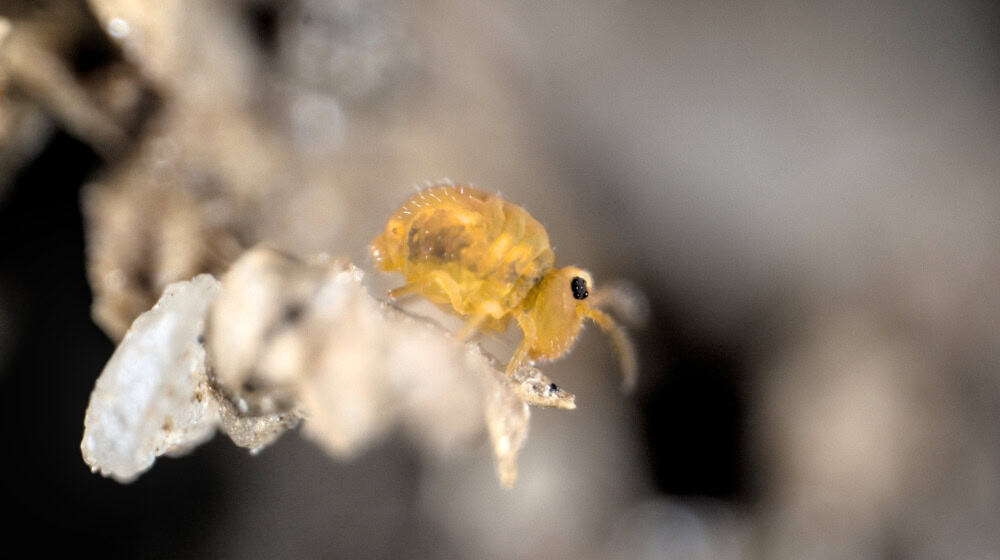
Under every step through the forest, things are scurrying. Earthworms dig burrows, springtails nibble on leaves, threadworms hunt through the soil. What looks like a chaotic bustle actually follows clear rules. An international research team led by Prof. Anton Potapov from the Senckenberg Museum of Natural History in Görlitz has now systematically described these rules for the first time. The scientists investigated how energy flows through the soils of different forests.
The researchers collected data at 32 locations between 2013 and 2021. From the southern taiga in Russia to German forests and tropical rainforests in Indonesia and Vietnam, they counted soil animals, measured their size and analyzed their diet. From this, they calculated how much energy flows through the underground food webs. "The energy flow is closely linked to their biodiversity and functionality," explains Potapov. What the scientists found were two fundamentally different systems.
Brown versus green
In temperate forests such as in Saxony, the "brown" system dominates. Here, fallen leaves accumulate on the ground. Fungi and bacteria slowly decompose this litter, and soil animals mainly feed on it. The energy flows slowly.
The situation is different in the tropics. The "green" system prevails there. Leaves are broken down so quickly that hardly any litter remains. The soil animals have to switch to fresh plants, dead wood or soil substance that is difficult to decompose. "Regardless of this, there is always more energy flowing in tropical forests than in temperate forests," says Potapov.
Earthworms play an important role
The distribution of biomass was also surprising. In the tropics, mass and energy are concentrated mainly in large animals. There are more predator-prey relationships and more herbivores. In almost all forests, earthworms make up the majority of the biomass. These animals change the soil itself and thus influence the entire food web.
"We therefore also refer to them as food web engineers," adds the Görlitz researcher. The study shows that temperature and metabolism determine the geographical patterns. Locally, however, individual key species such as the earthworm can change everything.
Original publication:
Publication: Potapov, A.M., Semenyuk, I., Bluhm, S.L. et al. Energy and biomass distribution in soil food webs of temperate and tropical forests. Nat Commun 17, 417 (2026).