loading

Nachrichten werden geladen...

News zu #tracking

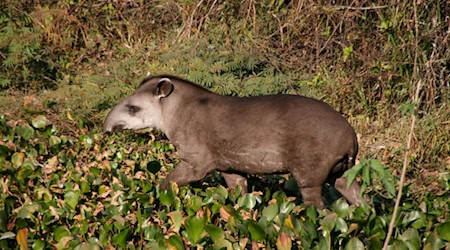
Lowland tapir in the Pantanal: The researchers in Görlitz use movement data of such animals to better assess their chances of survival. M. Zanferrari/Wikimedia Commons, CC BY-SA 2.0

How animal movements influence the survival of entire species

A new road cuts through the habitat of endangered tapirs. Will the population survive? Researchers from CASUS in Görlitz have developed a new model with Brazilian colleagues that can answer such questions. For the first time, it links the movement patterns of individual animals with the dynamics of entire populations - an important step for species conservation.

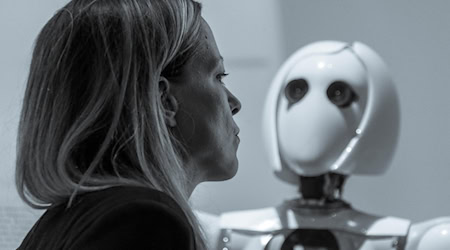
Where are you looking? Children around the world understand gaze directions in the same way - a study from Leipzig shows. © AI-generated with ChatGPT

Children all over the world "read" gazes in the same way

How do children understand where others are looking? Researchers at the Max Planck Institute in Leipzig have studied 1,377 children from 14 countries. Their findings reveal a universal thought process that works in the same way all over the world. However, the study also reveals surprising differences between individual children.

Together at work: in future, robots will be able to recognize where people are looking and adapt their behaviour accordingly. ® pixabay/wal_172619

When robots understand where we are looking

In factories, humans and robots often work side by side. But the machines do not know where their human colleague is looking. A new research group at Chemnitz University of Technology wants to change this. In future, robots will use eye-tracking technology to recognize where humans are focusing their attention. This could make collaboration safer and more efficient.