

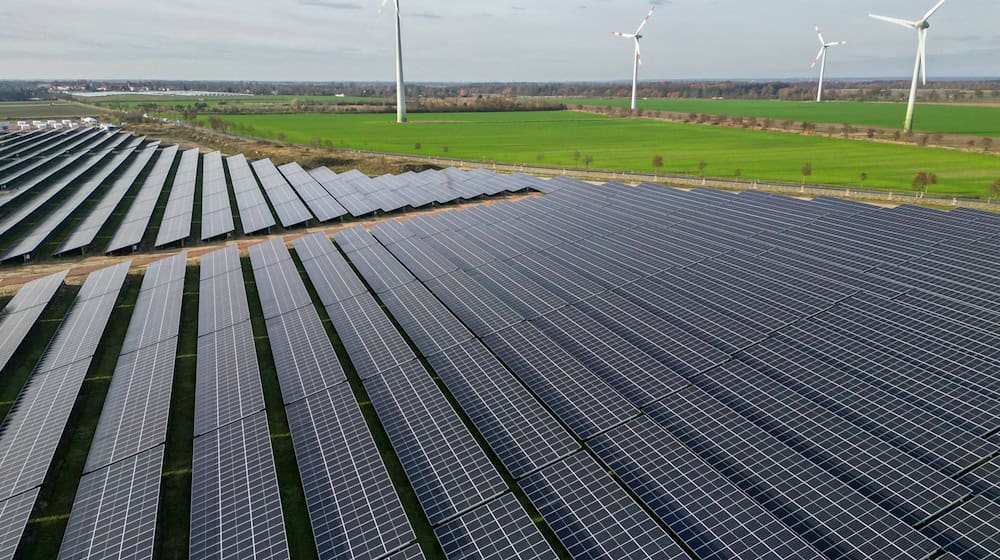
If plants have to stand idle during windy hours, even though they could actually supply clean electricity, this seems like a waste at first glance. In fact, this is a central problem of the energy transition: Electricity is not always generated where it is needed - and the grids are often too weak to absorb it all. This is precisely where the planned "grid package" from Federal Minister for Economic Affairs and Energy Katherina Reiche (CDU) comes in. This could have noticeable consequences for Saxony - for investors, for companies and ultimately also for electricity customers. This is indicated by feedback from the Saxon Ministry of Economic Affairs and Energy, grid operators, municipal energy suppliers and industry associations. In Germany, wind and solar power plants have to be throttled back again and again because lines are overloaded. These interventions are called redispatch. Until now, operators have been paid for this - the costs are considered grid costs and are paid for by electricity customers via the grid fees. In future, heavily congested regions will be able to be considered "capacity-limited". New plants there would no longer receive compensation if they are shut down. The idea is to direct more investment to areas where grid capacity is still available - and to reduce the billions in costs for redispatch. Saxony's Energy Minister Dirk Panter (SPD) sees the plans as an opportunity for a fundamental debate: "This discussion is necessary and overdue in order to be able to generate and transport sufficient energy in the future and to keep it affordable for all consumers and companies." At the same time, the ministry warns of side effects. Additional burdens should "not lead to the expansion of renewable energies coming to a standstill". According to the Ministry of Energy, the state is lagging behind the rest of Germany in the expansion of renewables, but needs cheap electricity for industry and new settlements. At the same time, the grids in some regions are already weak. This makes both new wind and solar parks and the connection of new companies more difficult. According to the ministry, the threshold specified in the draft could lead to large parts of the state - particularly in the east - being considered capacity-limited. The result would be a dilemma: although new plants could be built, they would carry a significantly higher economic risk. This is precisely where municipal utilities see the problem. Chemnitz-based energy supplier Eins warns that without compensation, projects would be "reassessed, postponed or not implemented". This is because the payments have so far cushioned the impact of plants having to temporarily shut down due to a lack of grid capacity. If they are discontinued, financing will become more difficult. This could also have consequences for community energy - where local citizens invest together in wind or solar power plants and benefit from the proceeds. This often works with lower returns. Rising connection costs could lead to investors jumping ship. The industry association VEE Sachsen therefore expects projects to become significantly less profitable. Banks would demand higher risk premiums and some of the projects would become uneconomical. The German Wind Energy Association even speaks of an impending loss of planning and investment security and warns of an "expansion standstill in the affected regions". There is also approval. "The planned instruments of the announced grid connection package are largely a systemic necessity," Leipzig's municipal utilities stated when asked. The market no longer functions properly if negative electricity prices occur more and more frequently - a sign of overproduction with a lack of grid capacity. Other municipal utilities are more critical of the plans. Sachsenenergie points out that both the elimination of redispatch compensation and construction cost subsidies would affect the profitability of new projects. The Chemnitz-based energy supplier Eins warns that investments could be postponed or abandoned altogether because the compensation payments have so far helped to cushion grid bottlenecks economically. In the short term, the package could help to limit the costs of redispatch - and therefore also dampen the price of electricity in the long term. At least that is the aim of the draft legislation from the Federal Ministry of Economics. In the long term, a lot depends on whether further investment is made in new plants. Municipal utilities such as the energy supplier Eins are warning that projects could be postponed or abandoned altogether without compensation payments. The industry association VEE Sachsen also expects higher risks to make financing more difficult and thus slow down expansion. For local regions, this is also about participation and value creation. According to Eins, community energy projects could become less attractive if costs rise and returns fall. Or, as the Saxon Ministry of Economic Affairs and Energy puts it: A "secure, affordable and domestic energy supply is crucial" for the location. Copyright 2026, dpa (www.dpa.de). All rights reservedThe basic problem: full lines, expensive interventions
Why this could affect Saxony in particular
What this means for investments
Why some utilities nevertheless welcome the plans
And what does this mean for people?


