


Rash judgments at the polling station: Why information is more important than outrage
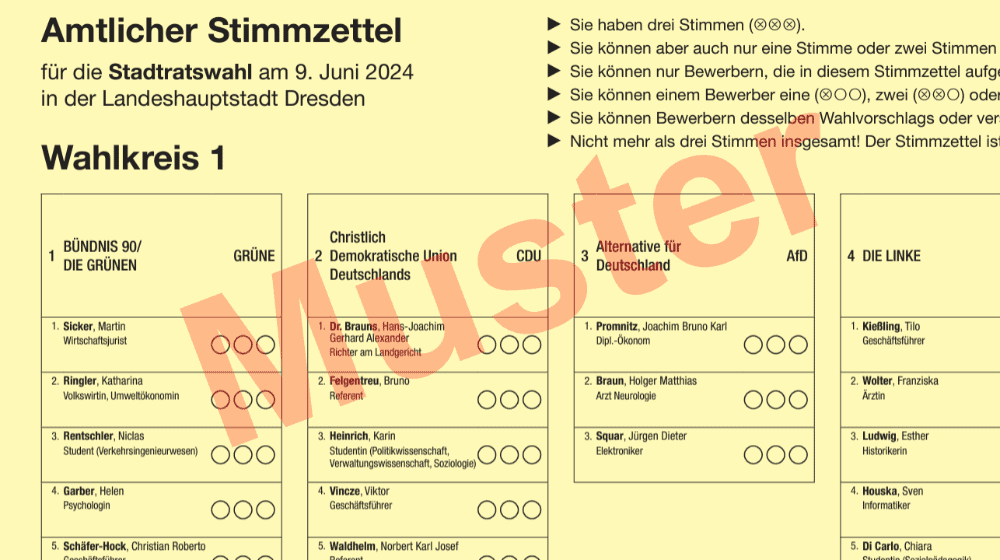
An experience at a polling station in Saxony shows how quickly outrage can arise. A couple complains about the placement of the AfD on the ballot paper. Why information rather than outrage is the better way forward.
A remarkable scene occurred at a polling station for today's local and European elections in Dresden. A couple complained loudly about the fact that the AfD was not in first place on the ballot paper for the city council and district council elections. "They don't know the alphabet, do they?" they grumbled. The election worker patiently explained the system behind it: The order on the ballot papers is based on the number of votes the parties and voter associations achieved in the last city council election. As not all parties and voter associations were admitted in all constituencies, there are gaps on some ballot papers.
Despite this explanation, the couple seemed irritated and took the ballot papers into the polling booths with skeptical looks. This brief scene at the polling station was indicative of a widespread reflex: the immediate outrage and suspicion of a conspiracy without first finding out the background. It is exciting to see how quickly the outrage mechanism kicks in when something does not meet one's expectations. But often, as in this case, there is a plausible explanation.
This experience is an impressive example of the fact that in almost all situations in life, you should first inform yourself before making a judgment. At a time when fake news and conspiracy theories are booming, it is all the more important to check the facts and obtain comprehensive information. A judgment is quickly made, which is then difficult to revise if the supposed injustice turns out to be a misunderstanding.
It is essential to have trust in the processes and systems, especially in elections, a fundamental component of our democracy. The electoral rules and the placement of parties on the ballot paper follow clear, transparent rules designed to prevent abuse. Automatically suspecting a conspiracy without knowing these rules undermines trust in the democratic system and promotes a culture of mistrust.
The couple's behavior at the polling station is a call for prudence and information. It is understandable that we sometimes look for quick answers in a complex world. But it is precisely this fast pace that harbors the danger of misjudgments and unnecessary outrage. Instead of immediately ranting and voicing suspicions, we should pause for a moment and inform ourselves. In most cases, it will turn out that there is a simple, logical explanation.
The poll worker at the polling station showed an example of how to deal with such situations: calmly, objectively and informatively. His explanation may not have immediately allayed the skepticism of those outraged, but it gave them the opportunity to learn the facts and form an informed opinion.
In conclusion, we all benefit from getting into the habit of asking questions before we judge. Information is the key to understanding and trust - in politics, in society and in everyday life. Outrage may sometimes be the easier path, but an informed view takes us further.
Source:
City of Dresden
Author:
Thomas Wolf

