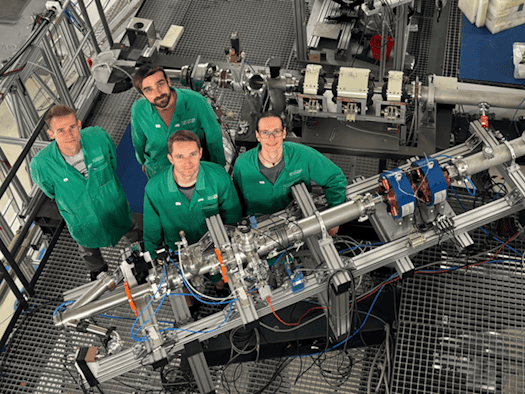
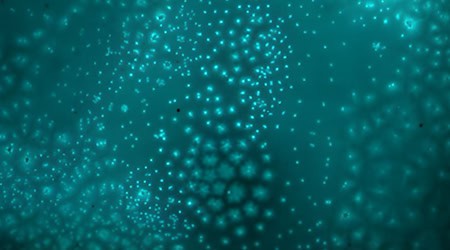
Everything around us is made up of hydrogen and helium, which were formed in the first few minutes after the Big Bang. A new experimental facility is now beginning operations at TU Dresden to study precisely this early phase of the universe in the laboratory. | more
How do electrons behave under conditions similar to those inside a planet? Researchers subjected aluminum to extreme pressure and high temperatures – and discovered that key models in physics are surprisingly inaccurate. | more
Nur bis zum 20. September warten in den Marken-Outlets Schwarzheide-Mitte zahlreiche zusätzliche Aktionen. Besonders spannend sind die drei neuen Stores von PUMA, MARC O’POLO und ONLY & SONS. Zum Finale verbindet der verkaufsoffene Sonntag Shopping und Wasserturmfest zu einem erlebnisreichen Familienausflug | more
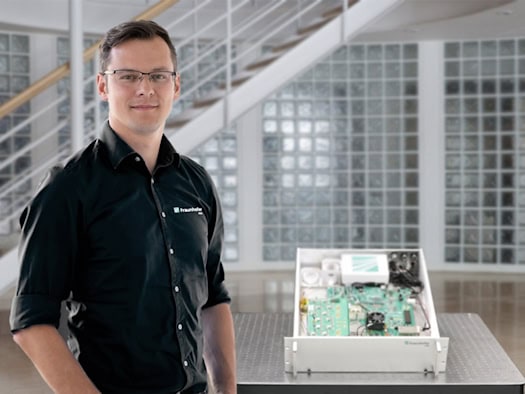
True random numbers are at the heart of all secure encryption. Researchers at Fraunhofer IPMS in Dresden have developed Q-Dice, a generator that derives randomness directly from quantum physics. This makes it significantly more difficult for hackers to attack passwords and bank data. | more
Printed solar cells are seen as a beacon of hope for affordable and flexible photovoltaics. Researchers at Chemnitz University of Technology have now discovered that they can remain efficient even with extremely little material. | more
A new research center dedicated to one of humanity’s oldest questions is set to be built in Dresden: How does life organize itself? Germany’s Science Council has recommended funding of up to €77 million for the project, with construction scheduled to begin in 2027. | more
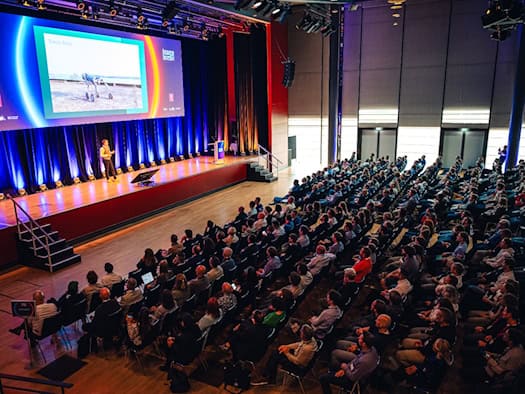
Am 14. und 15. September 2026 wird Dresden erneut zum Treffpunkt für angewandte Künstliche Intelligenz. Bei der Brains on Silicon 2026 im ICD Dresden sprechen Expertinnen und Experten von Unternehmen wie SAP, GitHub und You.com darüber, wie KI aus Pilotprojekten in echte Geschäftsprozesse kommt. | more
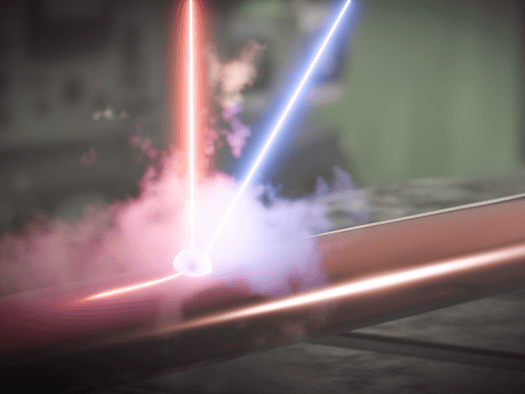
A hair-thin copper wire is struck by one of the world’s most powerful lasers – and vaporizes in trillionths of a second. Dresden researchers have captured the process in unprecedented detail, with implications for future fusion reactors. | more
Every human being begins as a single cell. Researchers at TU Dresden have now deciphered how this becomes a complete organism. Their discovery: the first cell divisions function through controlled chaos. Thread-like structures called microtubules divide the cell material - although they are actually unstable. The study published in Nature also shows why different animal species use different developmental strategies. | more
Medizin, die man anfassen kann – die interaktive Ausstellung „Medizin der Zukunft“ macht im TGZ Bautzen Station und lädt alle Neugierigen ein. Von Organzüchtung bis zur Blicksteuerung: Hier wird Zukunft nicht nur erklärt, sondern hautnah erlebbar. | more