


New technology for secure encryption from Dresden
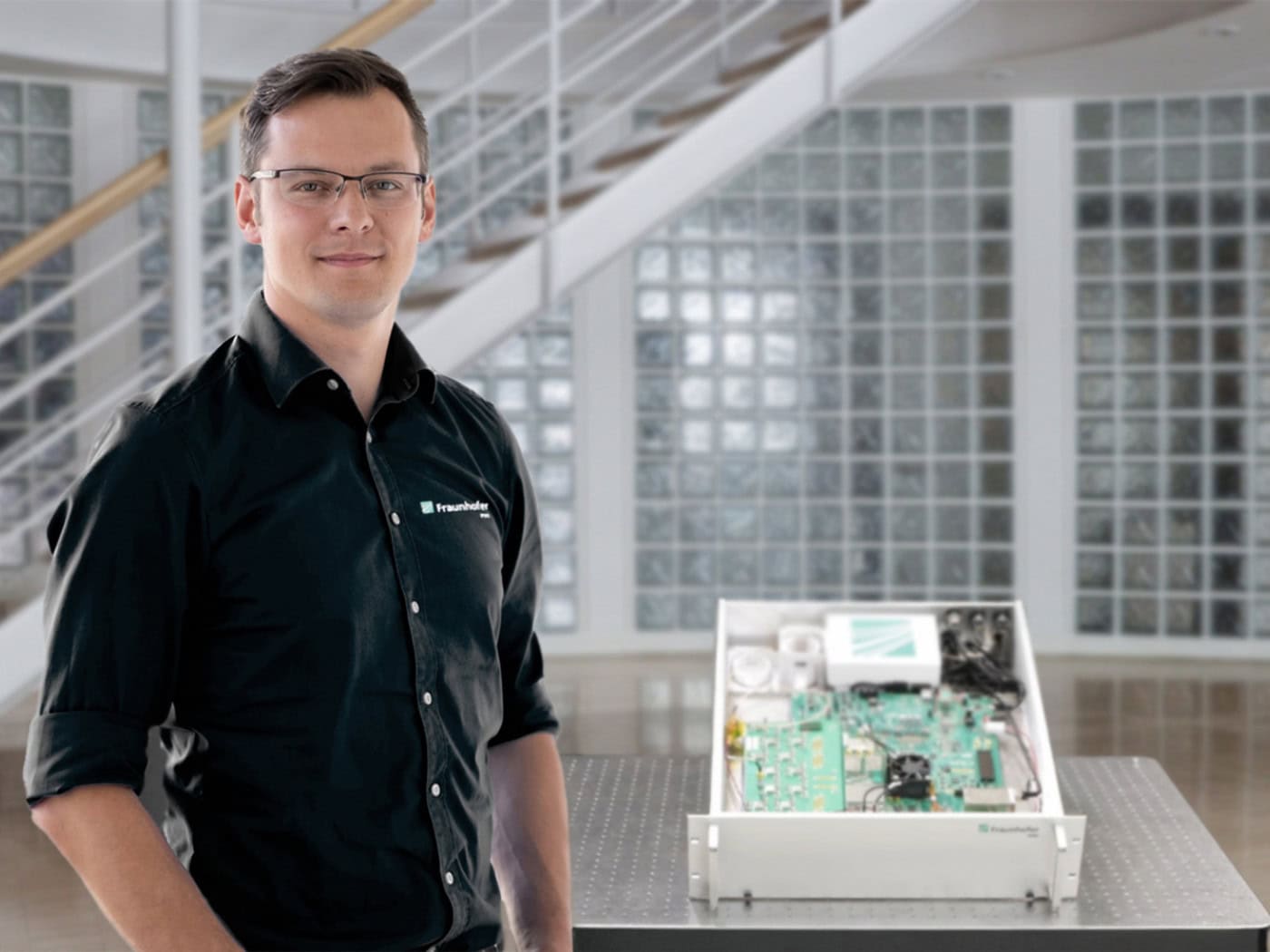
Every time someone shops online, encrypts a message, or logs into a system, a random number generator is working in the background. It generates the secret keys used to protect data. But many of these encryption generators ultimately follow an algorithm – that is, a set of computational rules. And anything that can be calculated can, in theory, also be predicted or cracked.
Researchers at the Fraunhofer Institute for Photonic Microsystems (IPMS) in Dresden have developed a solution to this problem. It’s called Q-Dice and uses the laws of quantum physics to generate random numbers that aren’t based on computable algorithms and are therefore considered particularly secure.
Randomness from Nothing and How It Works
Q-Dice is based on what are known as quantum vacuum fluctuations. That sounds complicated, but at its core, it is a fascinating natural phenomenon. Even in a completely empty space, there is constant, random movement on the smallest scale. These processes cannot be predicted, even with complete knowledge of the system. This is precisely where their value for encryption lies.
Q-Dice measures precisely this noise from nowhere and converts it into random numbers – at a speed of more than 4 gigabits per second. In ten seconds, this generates a volume of data on the order of a DVD. That is sufficient to continuously supply even large IT systems with random numbers for secure encryption methods.
“With Q-Dice, we are making high-quality quantum randomness practically usable and accessible,” says Dr. Alexander Noack, Head of the Data Communication & Computing at Fraunhofer IPMS. The quality of the generated numbers was verified using internationally recognized test procedures, including standards from the German Federal Office for Information Security (BSI).
For Data Centers and the Cloud
Q-Dice can be used in various ways. The researchers have developed the system both as a device for data centers and for applications that access it via the Internet. This allows the technology to be integrated into various digital systems.
Fraunhofer IPMS developed all key components in-house – from the generation of quantum signals to the processing of random numbers. This enabled the researchers to precisely control every step and verify the quality of the generated data.
The next step is to investigate how the technology can be used in practice. Potential applications include data encryption, secure communication systems, and digital access systems that require a particularly high level of protection against attacks.

