


Printed circuit boards made from mushroom waste
Every smartphone, every computer, and even many toys contain printed circuit boards. These boards hold the electronic components that make the device work. These very boards are usually made of a glass-fiber-reinforced plastic that is difficult to recycle.
A team at TU Bergakademie Freiberg has now developed a compostable alternative. The raw material for this is a byproduct of citric acid production.
A circuit board made from fungal residue
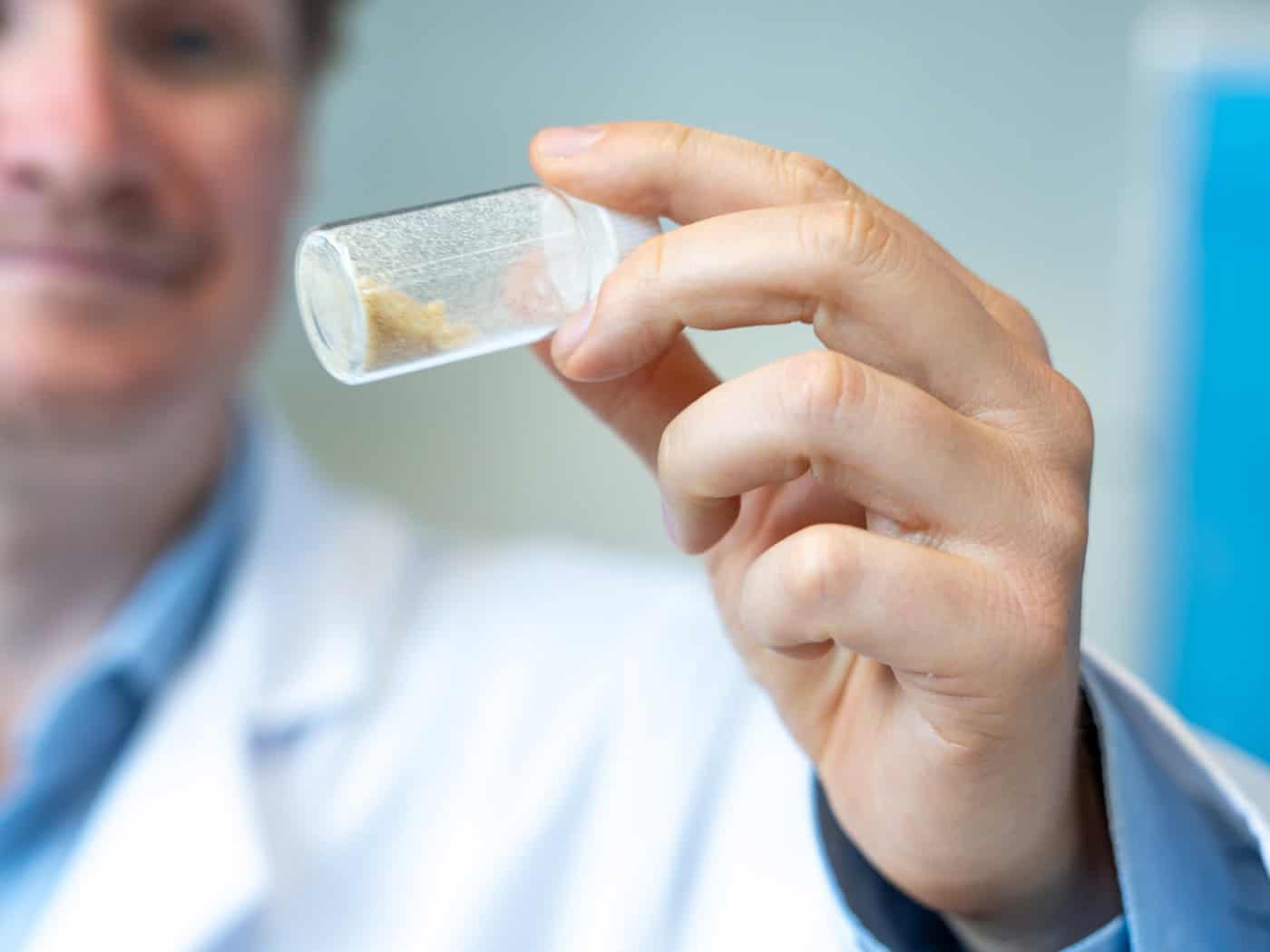
The production of citric acid leaves behind a network of fine fungal threads. Experts call this fungal mycelium. It comes from the mold Aspergillus niger and has mostly been discarded until now.
The Freiberg researchers use it to form a plastic-like material. They shape the fungal mass and air-dry it. This creates a board with a density similar to that of conventional printed circuit boards. The team then attaches electronic components directly to the new material.
According to Nina Oehlsen, a doctoral student at TU Freiberg and the study’s lead author, the material proved to be stable and heat-resistant in laboratory tests. It is already suitable for initial prototypes and simple electronic applications such as environmental sensors, toys, or everyday products. However, before it can replace conventional printed circuit boards, the material must undergo further testing and be improved so that it absorbs less water.
An idea for more sustainable electronics
According to the “Global E-waste Monitor,” approximately 82 million metric tons of electronic waste could be generated worldwide by 2030. The new circuit board, called AnimatPCB, could help make electronics more sustainable. It is completely biodegradable. The transistors mounted on it could even be removed while still functional and reused.
“We’ve created a high-quality, functional material from an industrial waste product – without using any additional fossil-based raw materials,” explains Linus Stegbauer, assistant professor of biogenic engineering materials at TU Bergakademie Freiberg. "Compared to a conventional printed circuit board, fungal mycelium has a carbon footprint that is up to 56 percent smaller and can ultimately be easily dissolved in water without leaving any hazardous residues."
Economist Simon Glöser-Chahoud from the TU Bergakademie Freiberg also sees great potential in this. He has calculated the new material’s carbon footprint over its entire life cycle. In the long term, the material could help make electronics more sustainable. Instead of additional fossil-based raw materials, an industrial waste product that is biodegradable would then be used.

