When you’re almost done with your work on the computer, that’s exactly when the nightmare begins: The screen freezes, the mouse cursor spins, and nothing works anymore. That’s exactly what now threatens quantum computers as well – though for a completely different reason.
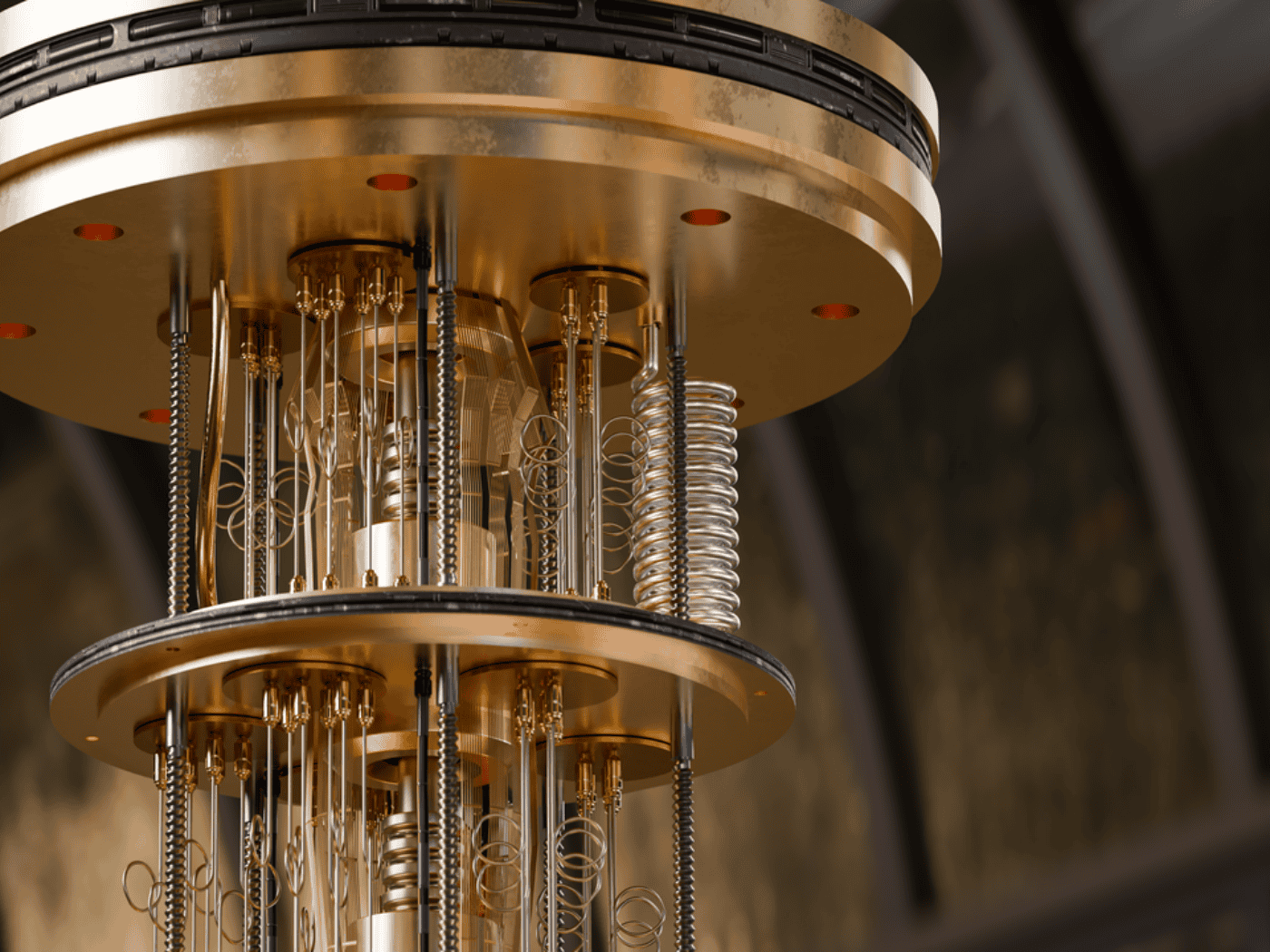
Quantum computers are designed to solve problems that even today’s supercomputers are too slow to handle. In the future, they could help optimize supply chains or simulate molecules for new drugs. The computational units of a quantum computer are called qubits. The more qubits a quantum computer has, the more powerful it is expected to become. Researchers at the Helmholtz-Zentrum Dresden-Rossendorf (HZDR) are now describing a problem that, in extreme cases, can bring computational processes to a near standstill.




Small disturbances, big impact
Nevertheless, disturbances can never be completely avoided. The more qubits are connected to one another, the more sensitively the system reacts to even the slightest influences from the environment. This is precisely when the so-called quantum Zeno effect occurs. Even tiny disturbances act like an unwanted control and interrupt the computational process. In extreme cases, the computation comes to a near-complete standstill.
A cake illustrates this well. If someone keeps opening the oven door, the cake stays flat. In the same way, every disturbance disrupts the quantum state until the computer fails to achieve its goal.
However, researchers are not entirely defenseless against this effect. One option is the so-called spin-echo method. In this method, short electrical or magnetic pulses help partially counteract disturbances and better shield the qubits from their environment. In the future, powerful quantum computers will therefore need more than just more qubits. It is equally important to protect them as effectively as possible from even the smallest disturbances in their environment.
Original publication:
N. Ahmadiniaz, D. Kraft, G. Schaller, R. Schützhold: Quantum Zeno effect versus adiabatic quantum computing and quantum annealing, in New Journal of Physics (2026)