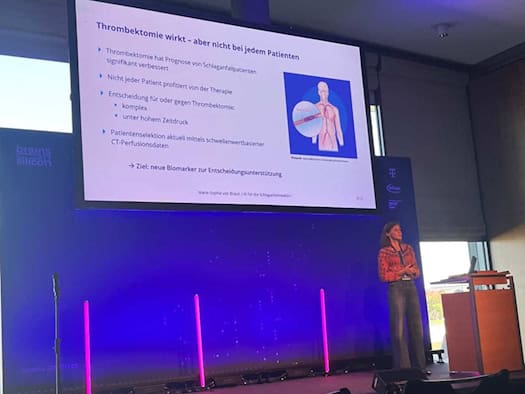
Dresden. Researchers at ScaDS.AI are developing an AI model for stroke care. It is intended to help assess which patients are suitable candidates for thrombectomy on a more individualized basis. | more
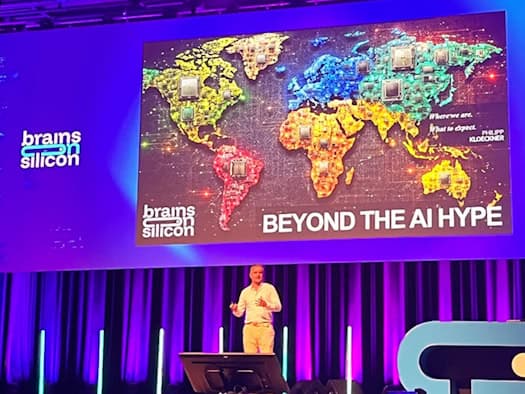
More Investment Than Apollo & ISS Combined: Why AI Data Centers Are Booming, Companies Are Failing, and What Risks Really Lurk, According to Philipp Klöckner. | more
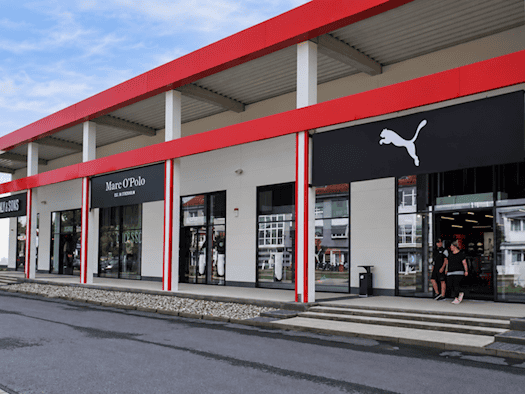
Mit PUMA, MARC O’POLO und ONLY & SONS sind gleich drei neue Marken in die Outlets Schwarzheide-Mitte eingezogen. Beim Flash Sale können Besucher die neuen Stores kennenlernen und sich bis zum verkaufsoffenem Sonntag am 20. September zahlreiche zusätzliche Angebote sichern. Zum Abschluss verbindet der verkaufsoffene Sonntag den Einkaufsbummel mit dem beliebten Wasserturmfest. | more
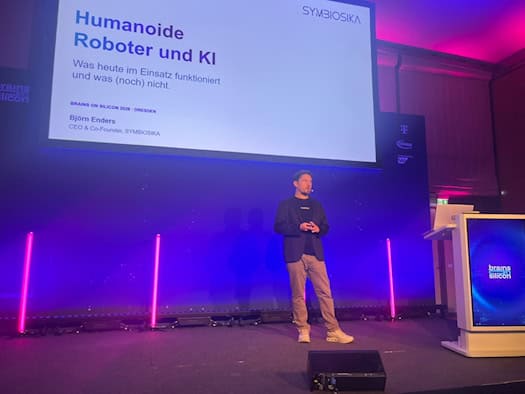
At the "Brains on Silicon" conference, a robotics entrepreneur offers a sober assessment of humanoid robots. His conclusion: there are hardly any real-world applications, and the German data advantage is a myth. | more
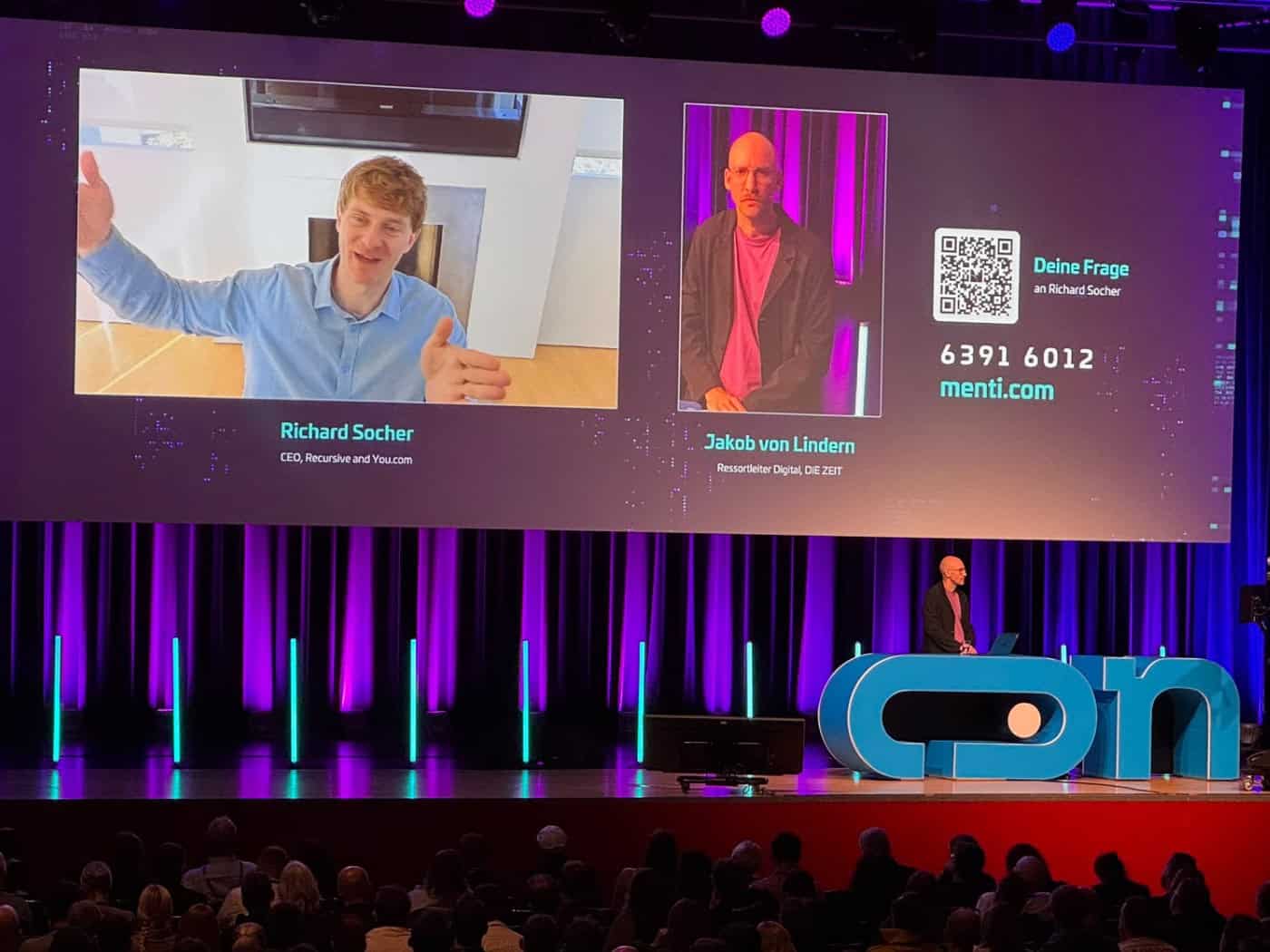
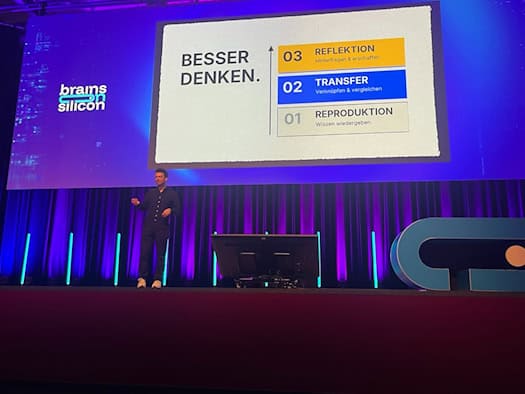
AI takes work off our hands, but it can also dull our own thinking. At the Brains on Silicon conference in Dresden, a journalist explained how to stay in control despite this. | more
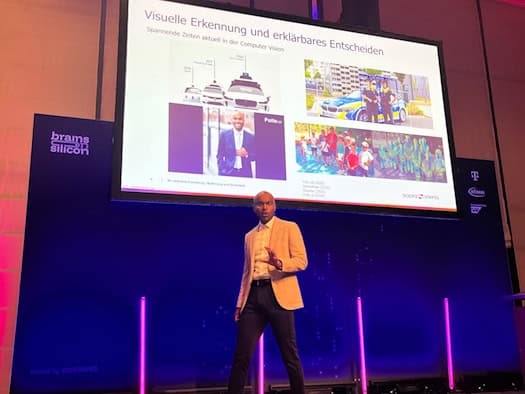
AI systems can already tell the difference between people at a train station who are just roughhousing and those who are seriously fighting. How today’s technology is designed to prevent dangers on the platform - and what grim downside investigators fear. | more
Schon wieder zu viel gegessen oder eine wichtige Aufgabe aufgeschoben? Oft reagieren wir auf solche Verhaltensweisen mit Selbstkritik. Doch damit bekämpfen wir meist nur das sichtbare Symptom – und übersehen, was wir in diesem Moment wirklich brauchen. | more
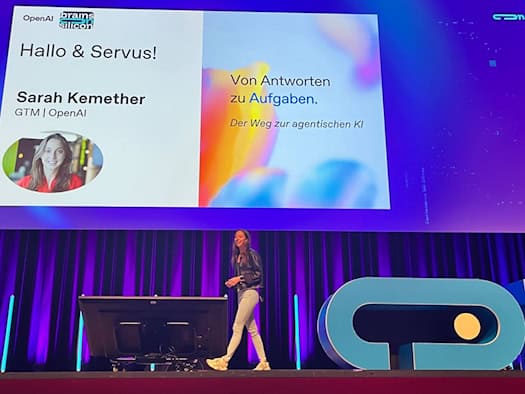
Germany leads Europe in ChatGPT usage—but its benefits are hardly being felt in the workplace. At the “Brains on Silicon” conference, OpenAI GTM Sarah Kemether explains why the rigid question-and-answer game must come to an end. | more
While more than half of all companies nationwide use AI, the proportion in the east is just under two-fifths. The Ifo Institute sees a structural lag in the adoption of new technologies | more
Gute Nachrichten tun gut. In unserem freitäglichen Good Newsletter bündeln wir die Geschichten, die Mut machen, inspirieren und zeigen, was in Sachsen vorangeht. Jetzt abonnieren und positive Nachrichten direkt ins Postfach bekommen. | more
For the first time, a university is allowed to conduct tests at the Nürburgring: Mittweida University is collecting real-world racing data using a BMW M2 and using it to build digital twins for the cars of tomorrow. | more
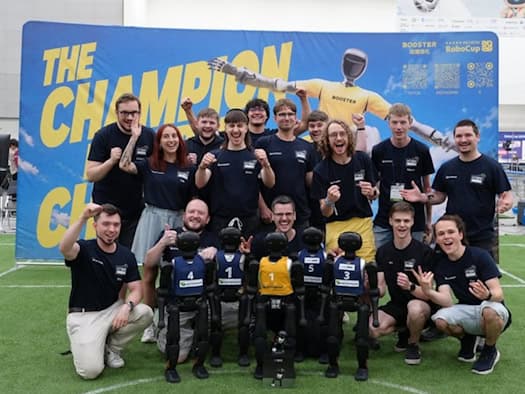
At the 2026 RoboCup in South Korea, the robot soccer team from HTWK Leipzig took home the runner-up title. In the final, the HTWK Robots lost by a narrow margin to a team from Bremen. Thanks to new AI-controlled robots, the team still returned home with many new insights. | more
In jedem Verein, in jeder Straße, in jedem Treppenhaus gibt es diesen einen Menschen, der einfach da ist – ohne Bezahlung, ohne Applaus, oft ohne ein einziges Dankeschön. DIE SACHSEN NEWS startet eine neue Serie und sucht genau diese Menschen: Sachsens Alltagshelden. Und die Chancen stehen gut, dass Sie selbst schon eine oder einen kennen. | more
Why do we make certain decisions? A research team from Dresden, Berlin, and Basel is using large language models to uncover the reasons behind our everyday and major decisions. | more
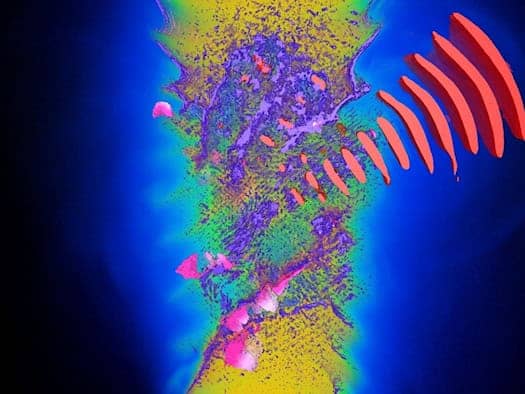
HZDR researchers from Dresden and Görlitz have been selected as the only non-American team to receive early access to the U.S. supercomputer Discovery. Their AI-powered simulation program, PIConGPU, could help improve cancer treatments and generate clean energy. | more
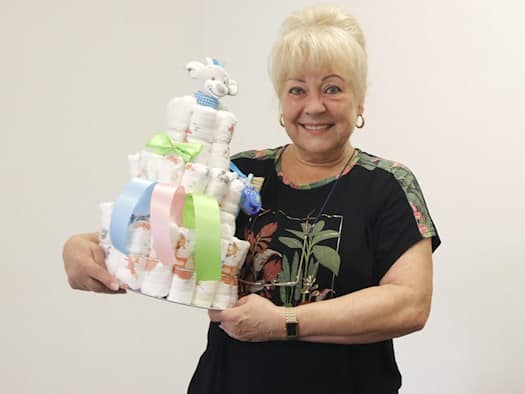
In Dresden-Pieschen fertigt Andrea Rehn im Zentralwerk personalisierte Geschenke für frischgebackene Eltern und deren Familien. Besonders gefragt sind bestickte Windeln mit Geburtsdaten sowie kreative Windeltorten – und das nicht nur online, sondern auch deutschlandweit über DM-Märkte. Jetzt gibt es 10 Prozent Rabatt im Shop. | more
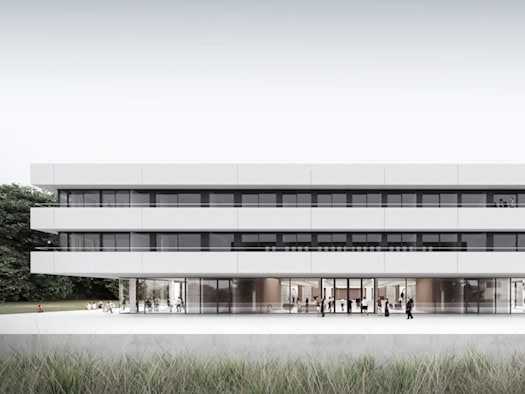
A new research building for digital sciences is being constructed at TU Dresden. In the future, up to 600 people are expected to work there on topics such as artificial intelligence and high-performance computing. The EU and the Free State of Saxony are investing 101 million euros. | more
Deepfakes – AI-generated fakes of images, videos, and voices – have become a common part of everyday life. This is shown by a new study from the University of Leipzig. However, public awareness of this phenomenon is growing more slowly than the technology itself. What this means for our trust in the media – and how we can protect ourselves. | more
Zahnbehandlungen können in Deutschland schnell zur finanziellen Belastung werden. Besonders bei Implantaten, Kronen, Brücken oder umfangreichem Zahnersatz liegen die Kosten häufig im vierstelligen Bereich. Viele Patienten stehen dann vor einer schwierigen Entscheidung: Behandlung durchführen lassen und hohe Eigenanteile zahlen – oder den Eingriff aufschieben, obwohl er medizinisch sinnvoll wäre. | more
An AI agent that independently analyzes patient records, orders tests, and prepares diagnoses: Researchers at TU Dresden and the University Hospital have developed MIRA. In a series of tests, the system even surpassed doctors in diagnostic accuracy. | more
Every time a smart device “thinks,” a data point travels to the data center and back. Zittau/Görlitz University of Applied Sciences wants to change that in collaboration with partners from industry and academia. As part of the EdgeVision joint project, they are developing an AI chip that performs computations directly within the device – quickly, efficiently, and without an internet connection. | more
Mit PUMA, MARC O’POLO und ONLY & SONS sind gleich drei neue Marken in die Outlets Schwarzheide-Mitte eingezogen. Beim Flash Sale können Besucher die neuen Stores kennenlernen und sich bis zum verkaufsoffenem Sonntag am 20. September zahlreiche zusätzliche Angebote sichern. Zum Abschluss verbindet der verkaufsoffene Sonntag den Einkaufsbummel mit dem beliebten Wasserturmfest. | more
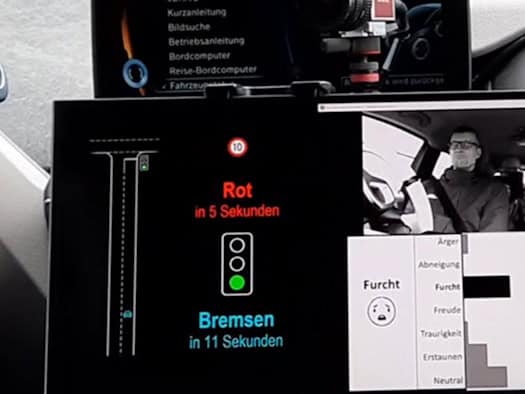
Self-driving cars that can tell when their passengers are feeling unwell—and react immediately: As part of the STADT:up project, researchers at Chemnitz University of Technology have developed a system that analyzes facial expressions in real time and is designed to make autonomous driving in the city safer and more comfortable. | more
Tiny chips are set to revolutionize the medicine of tomorrow. The Dresden-based research cluster SEMECO is developing semiconductors that will make hospitals safer, medical devices smarter, and treatments more effective. With 15 million euros in funding, the project is now entering a crucial phase. | more
Schon wieder zu viel gegessen oder eine wichtige Aufgabe aufgeschoben? Oft reagieren wir auf solche Verhaltensweisen mit Selbstkritik. Doch damit bekämpfen wir meist nur das sichtbare Symptom – und übersehen, was wir in diesem Moment wirklich brauchen. | more
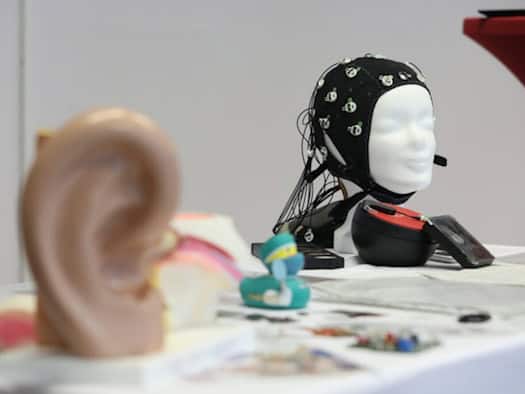
AI programs like ChatGPT can simulate anxiety, sadness, and stress and respond to breathing exercises. Researchers at TU Dresden are demonstrating how large language models could serve as a new tool in psychology. | more
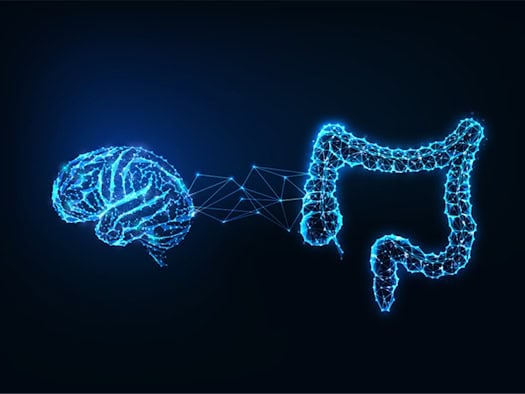
Children born prematurely are diagnosed with autism far more often than those born at term. Yet this group has received relatively little attention in research so far. The EU-funded project MICRO-NEST aims to change that. With the involvement of TU Dresden, researchers are searching for biological clues that could point to autism long before a diagnosis is made. | more
Gute Nachrichten tun gut. In unserem freitäglichen Good Newsletter bündeln wir die Geschichten, die Mut machen, inspirieren und zeigen, was in Sachsen vorangeht. Jetzt abonnieren und positive Nachrichten direkt ins Postfach bekommen. | more
Smart control systems can save energy and resources. But when nobody understands how they make decisions, trust quickly disappears and operators may switch them off. Researchers at Chemnitz University of Technology have developed a new AI-based approach to make these systems more transparent. Their work has now been accepted at one of the world's leading conferences on artificial intelligence. | more
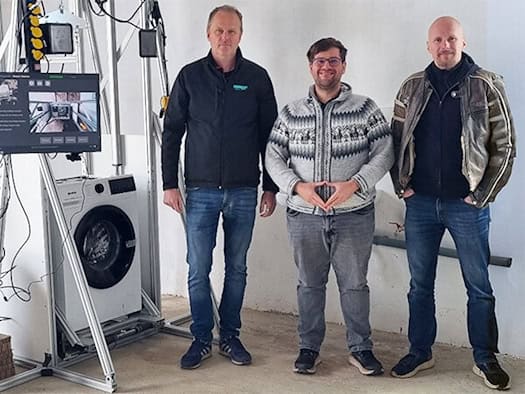
Just throw away old washing machines? That may soon no longer be necessary. Researchers at Chemnitz University of Technology have developed a station that guides workers through the dismantling of appliances step by step using AI and digital instructions. Why this matters for the circular economy — and how far the technology has already come. | more
In jedem Verein, in jeder Straße, in jedem Treppenhaus gibt es diesen einen Menschen, der einfach da ist – ohne Bezahlung, ohne Applaus, oft ohne ein einziges Dankeschön. DIE SACHSEN NEWS startet eine neue Serie und sucht genau diese Menschen: Sachsens Alltagshelden. Und die Chancen stehen gut, dass Sie selbst schon eine oder einen kennen. | more
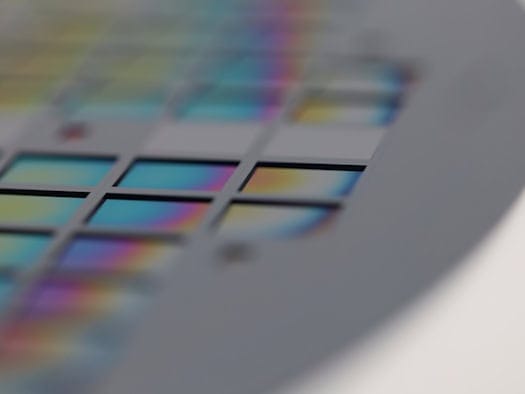
Chips are in almost everything we use every day. But how do you make them even more powerful without making them bigger? Researchers at the Fraunhofer IPMS in Dresden have taken a decisive step. They embed tiny chip components in silicon so precisely that a compact overall system is created - with a huge impact for AI, smartphones and more. | more
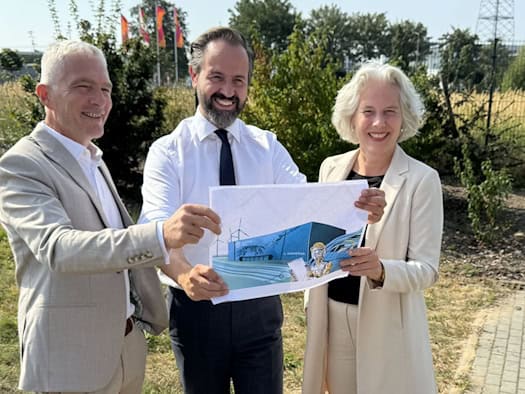
A new AI computing center is set to be built on the site of Leipzig’s former trade fair grounds. Planning has now been completed, and construction is expected to be finished by 2028. The project is intended to strengthen research infrastructure and support cooperation across Leipzig’s scientific and economic region. | more
In Dresden-Pieschen fertigt Andrea Rehn im Zentralwerk personalisierte Geschenke für frischgebackene Eltern und deren Familien. Besonders gefragt sind bestickte Windeln mit Geburtsdaten sowie kreative Windeltorten – und das nicht nur online, sondern auch deutschlandweit über DM-Märkte. Jetzt gibt es 10 Prozent Rabatt im Shop. | more
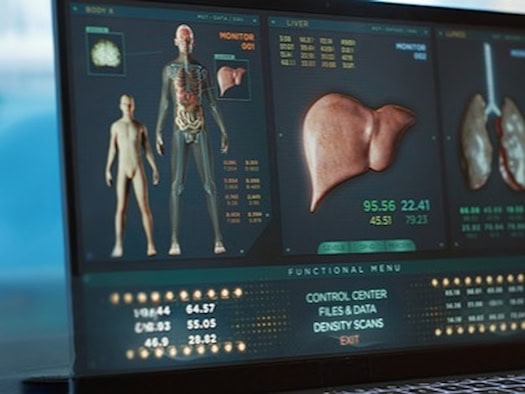
Liver cancer is often detected too late. Researchers at the EKFZ at TU Dresden have developed an AI model that uses routine clinical data to estimate individual risk – potentially enabling earlier diagnosis. | more