


Recycling with AI: How old washing machines are dismantled
Every year, millions of old household appliances are disposed of in Germany alone. Washing machines, fridges and dryers. Many of them end up in the shredder. Yet these appliances contain valuable materials and components that could be reused. Researchers at Chemnitz University of Technology are working to change this.
Disassemble step by step
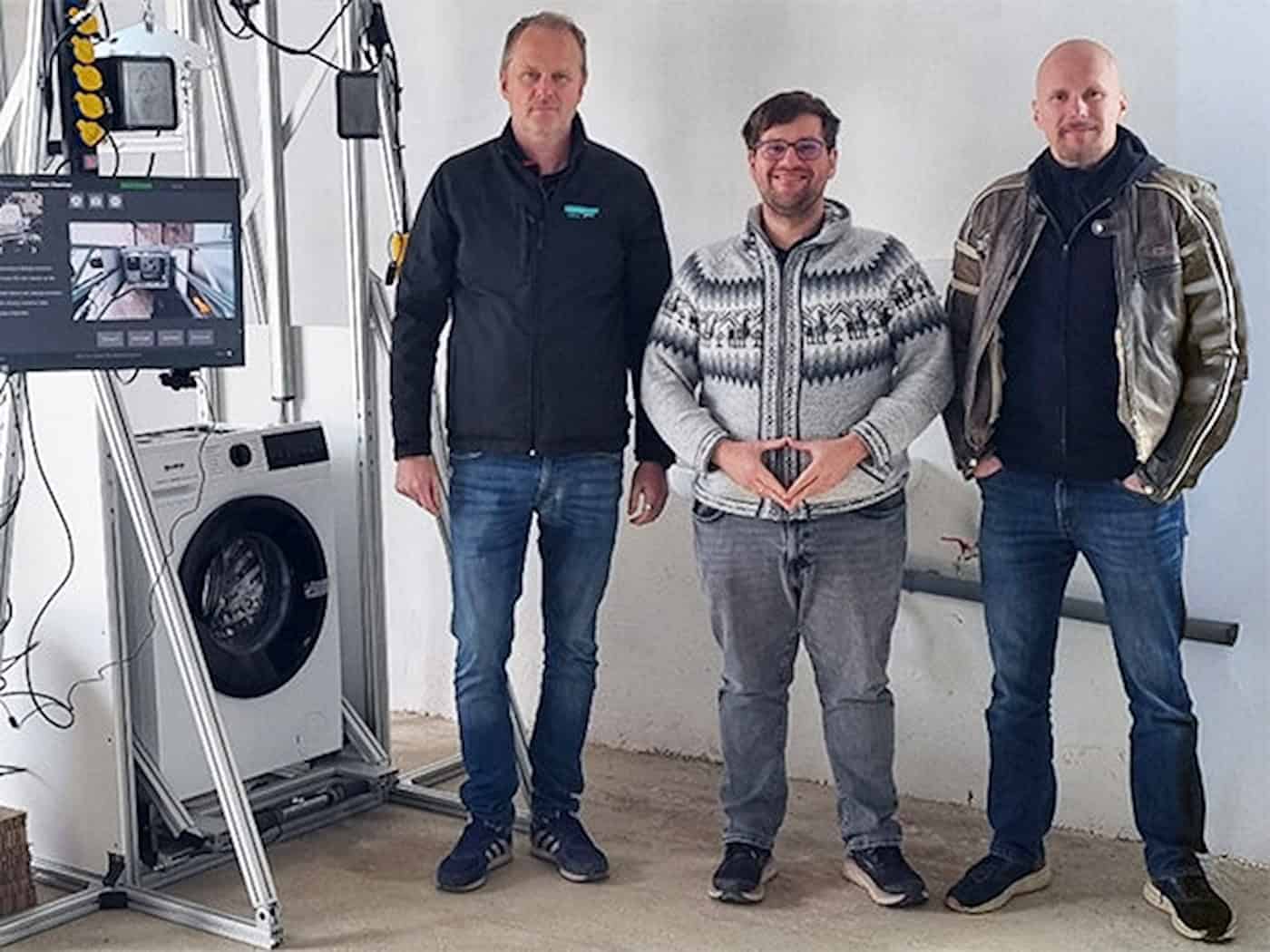
In April 2026, a team from the Chair of Production Systems and Processes traveled to the Slovenian headquarters of household appliance manufacturer Gorenje. They were accompanied by a self-developed station for dismantling washing machines. Disassembly means dismantling appliances in a targeted manner in order to reuse as many parts as possible instead of simply destroying them.
The station uses a touchscreen with videos, images and texts to show employees step by step which action is required next. Artificial intelligence checks whether the disassembly is carried out in the correct order. The software also uses the serial number to decide in advance which components can still be used. A lifting device tilts the washing machine so that work can be carried out ergonomically and no one has to lift heavy loads.
Data from everyday life helps to decide
Whether a disassembled part is reused or scrapped could in future also depend on what data the washing machine has collected during its use. Many modern appliances already send information about running times or faults to manufacturers via the internet. In future, such data could help to assess how well individual components are still in good condition. "Over the next few months, employees in the Gorenje pilot hall will test on site how reliably the technology works. We will collect and evaluate the data for this purpose," explains Mario Lorenz from Chemnitz University of Technology.
The disassembly station is part of the EU project DiCiM ("Digitalized Value Management for Unlocking the Potential of the Circular Manufacturing System with Integrated Digital Solutions"). Since January 2023, twelve partners from eight countries have been working on making Europe's recycling infrastructure for electrical and automotive waste more digital and efficient. The project has a budget of six million euros, around 609,000 euros of which will go to Chemnitz University of Technology. The Chemnitz dismantling station is one of three practical tests within the project. Lorenz is already looking further ahead. "In the future, the dismantling system could also be extended to other appliances such as dishwashers, fridges and dryers after appropriate adjustments."

