


Autonomous Driving: Vehicle Detects Stress in Facial Expressions
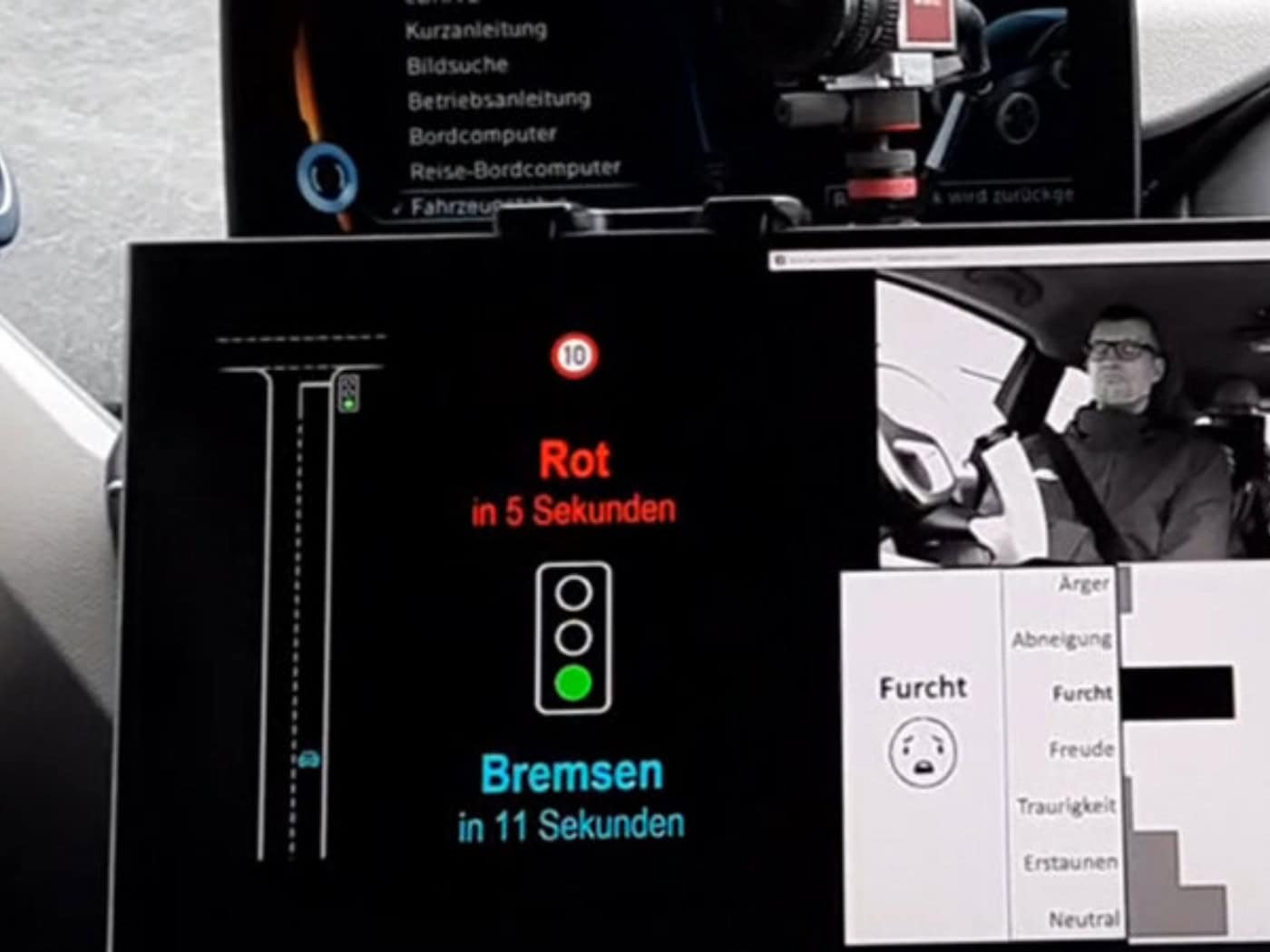
Sometimes a glance at someone’s face is enough to tell that they’re feeling uncomfortable. What humans can do intuitively, cars are now learning to do as well. Researchers at Chemnitz University of Technology have developed a system as part of the STADT:up project that analyzes the facial expressions of vehicle occupants in real time—and automatically responds when they feel uncomfortable.
This is intended to make autonomous driving less stressful.
Facial Expressions as Sensors
The car of the future should not only drive but also recognize how its passengers are feeling. Specifically, this means: Cameras inside the vehicle monitor the passengers’ faces. Algorithms use this to determine whether someone is startled, feeling unwell, or anxious. This happens in real time, meaning without delay.
"By handing over the task of driving to the vehicle, new aspects of comfort arise in automated driving, such as trust in the technology, perceived safety, naturalness of the driving style, or awareness of the vehicle’s upcoming maneuvers,” says project leader Dr. Matthias Beggiato from the Chair of Applied Gerontopsychology and Cognition at Chemnitz University of Technology.
Three departments at Chemnitz University of Technology collaborated to improve precisely these aspects. In addition to Gerontopsychology, the departments of Ergonomics and Telecommunications Engineering were involved. Facial recognition is intended to help identify situations in which passengers feel uncomfortable, even before they express this themselves. If the system detects corresponding signals, the vehicle can react accordingly.
Less Stress Through More Information
The key to this is simple. People who know what’s coming next are less likely to be startled. The researchers found that additional information about upcoming driving maneuvers, time estimates, or important objects in the surroundings can reduce discomfort in urban driving situations by up to 50 percent.
If the system detects signs of discomfort via the camera, it immediately initiates countermeasures. The vehicle adjusts its driving style or displays additional information. This helps maintain trust in the technology.
At the closing event of the STADT:up collaborative project at the "Aldenhoven Testing Center" near Aachen, guests were able to experience the system firsthand. In the Carai 3 test vehicle from the Department of Communications Engineering, the car drove autonomously toward a traffic light turning red, and the display system reacted in real time to the occupants’ responses.
The project was funded for three years by the Federal Ministry for Economic Affairs and Energy and involved 20 partners. The goal was to make automated driving suitable for everyday use, specifically in complex urban traffic. Unlike on highways, vehicles there must react to pedestrians, cyclists, intersections, and constantly changing traffic situations.
This is considered one of the greatest challenges in mobility research.

