


Help for newt, toad and co: many volunteers active
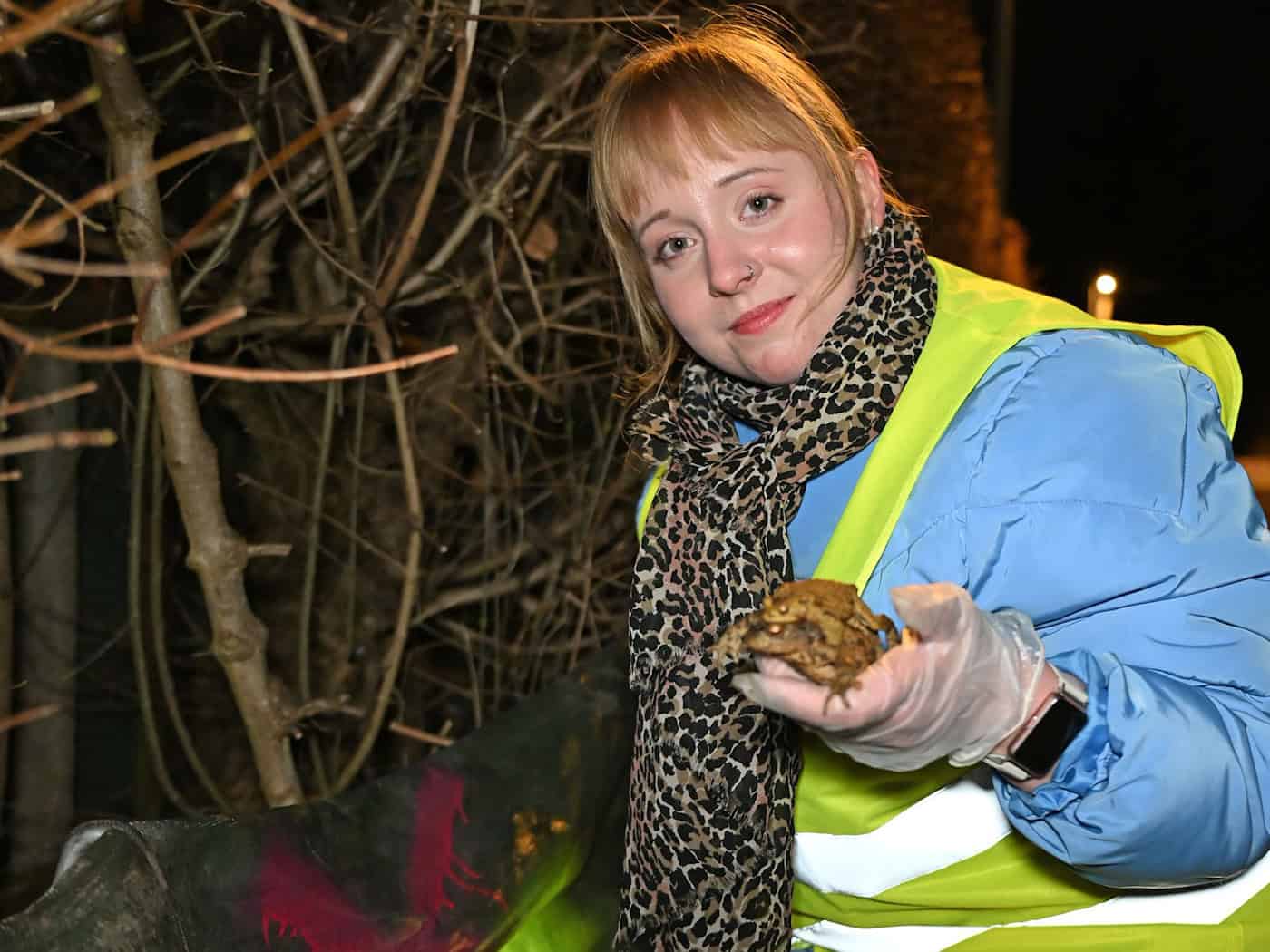
The sun has disappeared behind the horizon and the single-digit temperatures are now making people shiver. But Anne Selle has equipped herself with a thick jacket and a high-visibility vest. The student shines her flashlight on a hedge at the side of the road. A few weeks ago, helpers erected an amphibian fence here in the Rabenstein district of Chemnitz to prevent the annual migration of newts, frogs and toads from coming to an abrupt end on the road. Now the 25-year-old is off to check the buckets dug into the fence. When the temperatures rise in spring, amphibians awaken from their winter torpor. They have spent the cold months in cavities such as tree roots and holes in the ground, under leaves or piles of wood. Now they are drawn to ponds and pools to mate. Depending on the species, they cover distances of between a few hundred meters and several kilometers. The sun has been providing mild temperatures for several weeks. However, it was only the recent rain that really got the toad migration going in many places in Saxony. Selle quickly makes a find that evening. Right in the second bucket, she discovers several newts among withered leaves in the light of her flashlight. She puts on a glove and carefully removes the animals. "These are northern crested newts," she explains after a brief inspection, "all females." She notes the species, number and sex in a table. Then it's off to the next bucket. The road to their spawning grounds is dangerous for amphibians. Not only are they easy prey for predators such as raccoons. Their path is also often blocked by roads. Sometimes there are special toad tunnels that are created during road construction. Where these are not available, local authorities and conservationists erect amphibian fences at hotspots in spring, as here in Chemnitz-Rabenstein. However, the trapping buckets then have to be checked and emptied twice a day - in the morning and in the evening. This would not be possible without volunteers, emphasizes Jens Börner, Head of the Lower Nature Conservation Authority. In the past, the almost 20 sites in the city area were looked after by people doing community service. But with the end of compulsory military service, these helpers disappeared. Since then, the city has relied on volunteers - and has met with growing interest. More and more volunteers are getting involved in protecting the amphibians. This year there are 90 helpers, explains Börner. "That's a record. We've never had so many before." Instead of spending the evening on the couch, Selle also prefers to help protect newts, toads and the like, armed with a flashlight, notepad and bucket. This is her second year. "I think the animals are really cute," she says, "I'm a frog fan." She read about the need for volunteers for these tasks on the streetcar. The helpers are instructed accordingly before their deployment. Their equipment includes gloves and disinfectant. This is to prevent the helpers from spreading pathogens that could be dangerous to the animals. "Amphibian conservation in Saxony works above all thanks to the great volunteer commitment," explains Robert Beske, spokesperson for the nature conservation association Nabu in Saxony. Many teams have many years of experience and reliably take care of fence construction and daily checks. "Whole families, school classes, working people and pensioners work together. It's obviously fun to do something useful for animals together." In Leipzig, for example, there are also many volunteers who help to bring amphibians safely across roads and count them at 15 locations. "The groups usually organize themselves in an uncomplicated way via Messenger." According to the information, increasing droughts are affecting amphibians, as is the loss of suitable habitats. In addition, roads are interrupting important migration routes for the animals. To save them from dying on the asphalt, conservationists warn that car drivers and motorcyclists should drive particularly carefully on marked stretches of road. They should also reduce their speed to under 30 kilometers per hour. According to Nabu, the data from recent years gives cause for concern. Significant declines have recently been observed even in the once common common toad. Yet amphibians are important for the ecosystem. They not only regulate insect populations, but are also food for many animals themselves. In addition to northern crested newts, Selle and her team are also taking pond newts and several common toads out of the catch buckets this evening. The toads are already traveling in pairs - the female carries the male. Human help shortens their journey. The helpers take them directly to their actual destination near the reed pond. A new generation of newts and toads can then grow up here and make their way there again next year.Amphibian migration gains momentum
Record number of volunteers in Chemnitz
Amphibians suffer from loss of habitats
Copyright 2026, dpa (www.dpa.de). All rights reserved

