

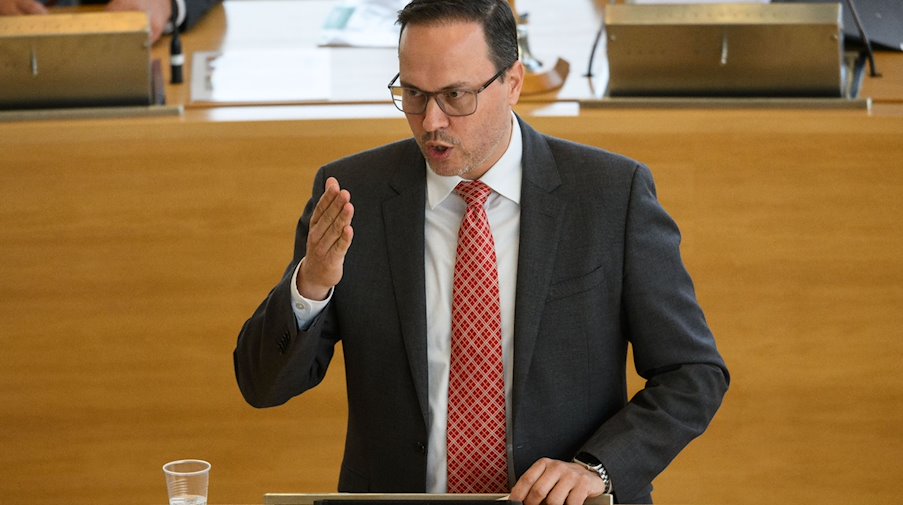
The SPD in the Saxon state parliament is already gearing up for the finale a year before the state elections. "We give 100 percent for the final spurt," faction leader Dirk Panter expressed his determination on Friday after a faction retreat in Chemnitz. He said that opportunities must be seized instead of grumbling. He was referring to the ongoing criticism of government leader Michael Kretschmer (CDU) of the work of the traffic light coalition in the federal government. The Germany Pact of Chancellor Olaf Scholz (SPD) is a great opportunity for Saxony as well, he said. "The Prime Minister should meet the offer with seriousness instead of party tactically motivated ruckus." "We want to use the last year in this legislature to make Saxony further fit for the future. Whether procurement law, medical care, shortage of teachers or even the competitiveness of our industry. There is still a lot to do, and for the entire coalition," said Panter. "That's why it's a matter of tackling and participating, here in Saxony as well as in cooperation with the federal government." In Saxony, a new state parliament will be elected on Sept. 1, 2024. In the latest election poll, the AfD was ahead of the CDU with 35 percent. Behind it were the Left (9 percent), SPD (7), Greens (6) and FDP (5). This would not be enough for a new edition of the current coalition of CDU, Greens and SPD. In principle, however, polls only reflect the opinion at the time of the survey and are not forecasts on the election outcome. Copyright 2023, dpa (www.dpa.de). All rights reserved


