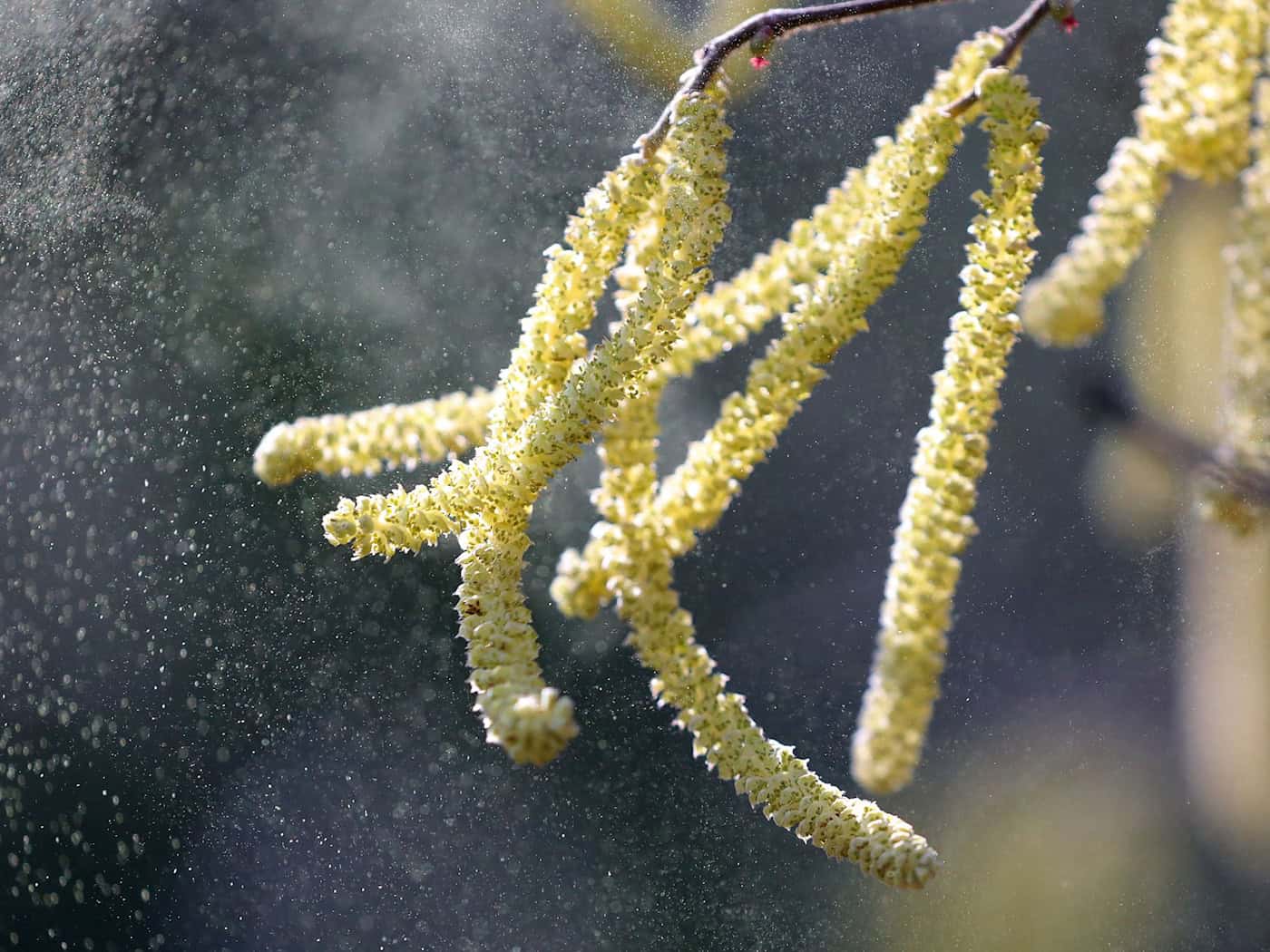
The comparatively cold winter has delayed the start of the pollen season in Saxony, Saxony-Anhalt and Thuringia. However, according to experts, this is not an all-clear for allergy sufferers. Overall, the development is somewhat delayed, "but that does not mean that the burden will be less", the Center for Medical Meteorological Research of the German Weather Service (DWD) said on request. Especially in the current rather mild, dry and windy weather, the concentration of alder pollen could "very quickly become very high". The hazel blossom has already begun and the main blossom is imminent. This will be followed by ash and, from April, birch - the peak of the season for many sufferers. Pollen allergies have been a major issue for years, says Dresden allergist Christian Vogelberg from the University Hospital. "We are seeing increasing rates of pollen allergy sufferers among both adults and children. It's a huge issue and has long since reached the status of a widespread disease." Climate change is causing pollen seasons to shift and symptoms to last longer. People who react to several allergens are often "in season all year round". The cold winter does nothing to change this: "Ultimately, these are always just temporal shifts that occur as a result." According to the University Medical Center Magdeburg, allergies are also at a high level in Saxony-Anhalt. Around 20 to 25 percent of the population are affected. It is noticeable that the disease now occurs more frequently for the first time in later adulthood. In addition to longer pollen seasons, the clinic cites environmental factors such as air pollutants as causes. These could damage the mucous membranes and increase the allergenic potential of the pollen. In addition, new, highly effective allergens such as ragweed - an introduced, particularly allergenic weed - are spreading. University Medicine Halle also points to climate change with more intense pollen counts and longer exposure times. There are more sensitizations in cities than in the countryside, meaning more people whose immune systems react to harmless substances such as pollen. The number of treatments has also risen significantly in Thuringia. At the Jena Allergy Center, the number of cases of allergic rhinitis in the ENT outpatient clinic has roughly tripled over the past ten years. More asthma patients are also being treated. New plant species such as ragweed mean that the pollen season now extends into September. "As a result, pollen allergy sufferers can now have symptoms for nine months of the year," says the university hospital. According to the DWD and the clinics, it is not yet possible to reliably predict how strong the season will actually be. After a weaker previous year, the flowering of early bloomers could be stronger in some regions. Medical experts advise those affected to seek early diagnosis and consistent treatment. In addition to antihistamines and nasal sprays, specific immunotherapy can treat the cause of the allergy and reduce the risk of asthma. In addition, pollen count forecasts help to adapt everyday life. Copyright 2026, dpa (www.dpa.de). All rights reserved"Common disease" with an increasingly long season
More allergies in adulthood
Significantly more treatments in outpatient clinics
Exposure depends heavily on the weather
Treat early - don't wait