


How people coped with crises 3,000 years ago
Even 3,000 years ago, people faced challenges that sound familiar to us today: Hunger, new neighbors or the death of a loved one. A new study led by researchers from Leipzig now shows just how flexible and interconnected the societies of the late Bronze Age really were.
If you want to know how people lived in the past, you have to look into the earth. Bones, ashes and ancient DNA tell stories that no book has handed down. A research team led by the Max Planck Institute for Evolutionary Anthropology in Leipzig has now done just that. They examined skeletons and remains from burial sites in Germany, the Czech Republic and Poland. Excavation sites in central Germany - Kuckenburg and Esperstedt in Saxony-Anhalt - also provided important data. These excavations were carried out by the Saxony-Anhalt State Office for the Preservation of Monuments and Archaeology.
The era in question is called the Urnfield Period. It lasted from around 1300 to 800 BC. It takes its name from a widespread practice at the time. People were cremated, their ashes collected in urns and buried. It was precisely this custom that posed a problem for researchers for a long time. This is because cremation destroys biological material and therefore also the DNA, the genetic blueprint of a person. This period was therefore a blind spot for science for a long time.
Old bones, new answers
Researchers therefore concentrated on the rare cases in which people from this period were not cremated but buried as bodies. They extracted ancient DNA from these skeletons. They also analyzed so-called isotopes, which are tiny chemical traces in bones and teeth. They reveal where someone grew up and what they ate. These results were also compared with isotope data from cremation burials at the same sites. The result is a detailed picture of a long-gone society.
"This study allows us to understand how people experienced change," says Eleftheria Orfanou, PhD student at the Max Planck Institute and lead author of the study. The Late Bronze Age was not experienced as a single moment of change, but as a series of decisions about diet, burial and social relationships. "These communities were closely connected to their landscape, but also networked across regions."
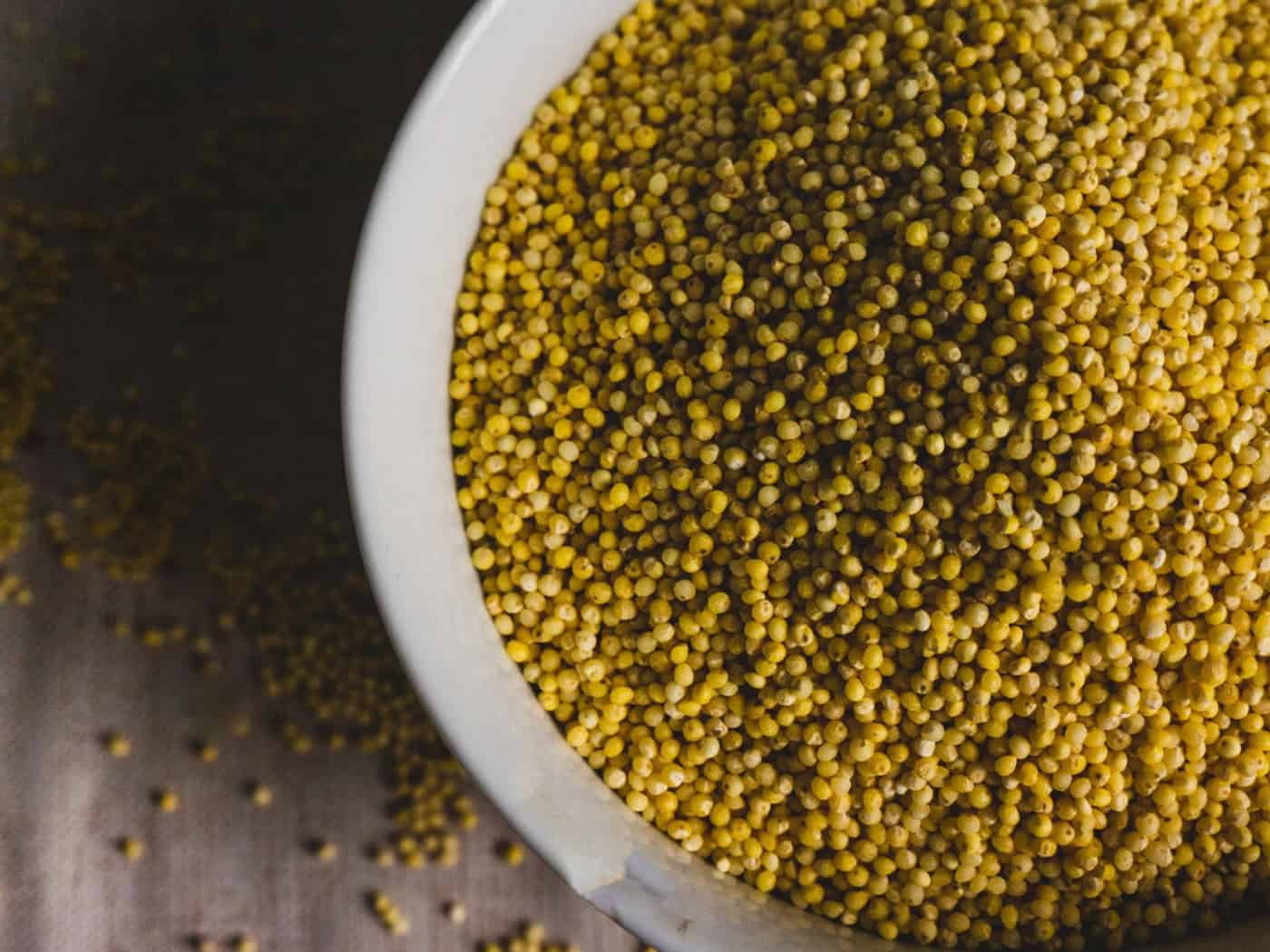
One particularly surprising result concerns food. In the early phase of the Urnfield period, people suddenly began to eat millet, a grain that had recently arrived in Europe from northeast China. This was apparently a reaction to poor harvests or economic pressure. Later, millet disappeared from the diet again and wheat and barley returned. Researchers interpret this as a sign of adaptability and not a sign of hardship.
Burial was not a uniform matter
The way death was dealt with is also surprising. In one and the same community, there were cremations, normal burials in the ground, but also the sole burial of individual skulls or multi-stage rituals. "These practices do not appear to have been marginal phenomena," explains Orfanou, "but part of a broader repertoire from which people could choose during the Urnfield period."
The scientists also analyzed the genetic data. According to this, there were gradual, regionally varying changes in ancestry, with increasing connections to the Middle Danube region, without local traditions being suppressed. At that time, new ideas spread primarily through contact and exchange rather than by moving entire population groups. Most people lived and died where they were born.
There is no evidence of widespread epidemics. Life was physically hard, but overall most people seem to have been comparatively stable in terms of health. "Change and innovation were integrated into existing traditions," summarizes Wolfgang Haak, project leader at the Max Planck Institute. "These communities actively shaped their ways of life."
Original publication:
Eleftheria Orfanou et al. Reconstruction of the lifeways of Central European Late Bronze Age communities using ancient DNA, isotope and osteoarchaeological analyses
Nature Communications, 24 February 2026.

